

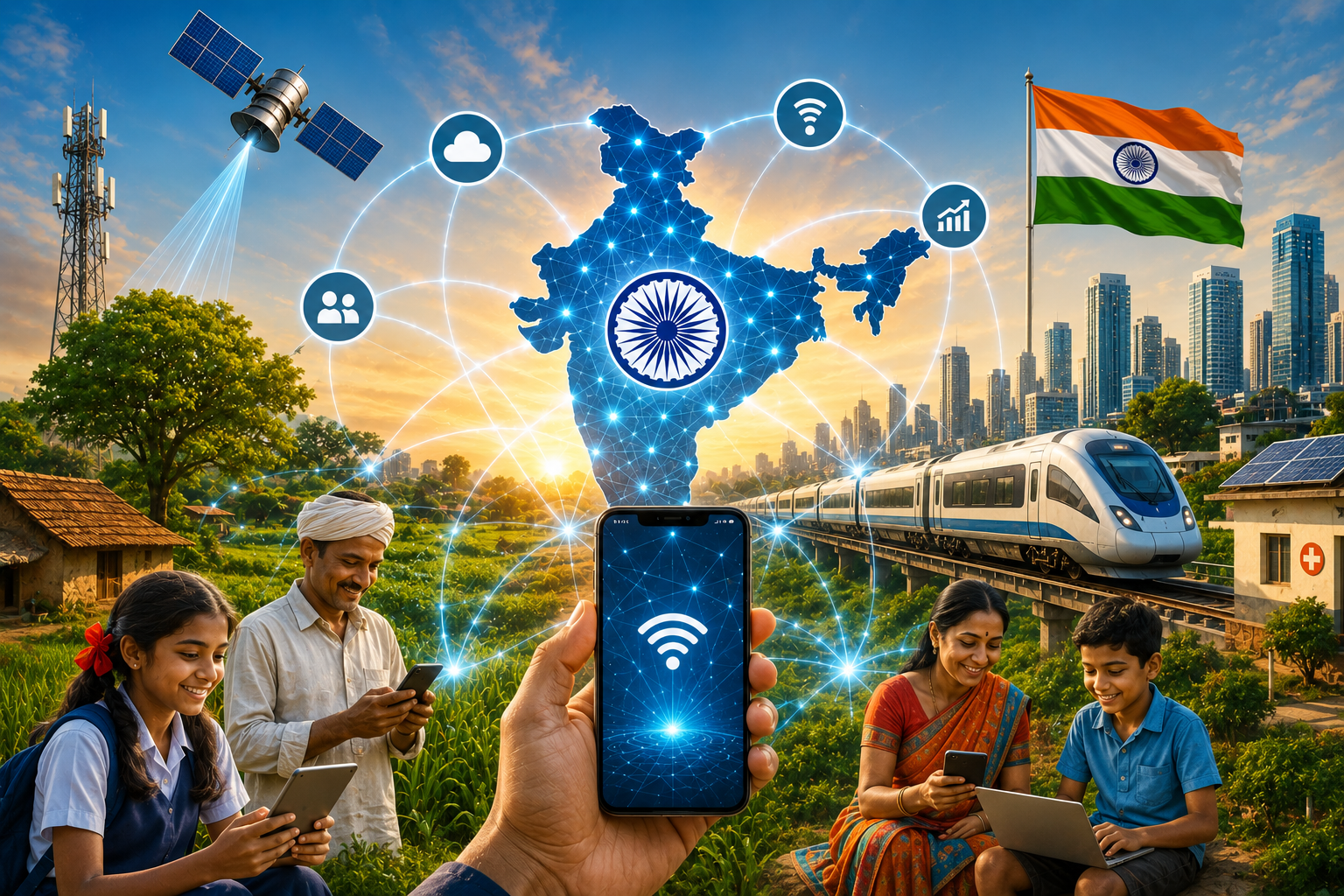
Digital India and Its Impact
Technology in the 21st century has become a key element of economic development, social development, and good governance. The Government of India recognized the transformative potential of digital technology and launched the Digital India initiative in July 2015. This ambitious program was envisioned with a simple yet powerful objective—to transform India into a digitally empowered society and a knowledge-based economy.
Digital India has significantly transformed the lives of citizens by improving access to government services, financial transactions, education, and communication. From major metropolitan cities to remote villages, digital technologies are gradually becoming an integral part of everyday life. While challenges remain, the initiative has had a profound impact on various aspects of Indian society.
What is Digital India?
Digital India is a nationwide initiative focused on developing digital infrastructure, improving internet connectivity, and delivering government services electronically. The project is built around three major objectives:
- Building digital infrastructure as a core utility for every citizen.
- Providing governance and services on demand.
- Empowering citizens through digital literacy and technology.
The program aims to bridge the gap between urban and rural India by ensuring that digital services and technological opportunities reach every corner of the country.
Transforming Public Services
One of the most visible impacts of Digital India has been the improvement of government services. Earlier, citizens often had to visit multiple government offices, complete lengthy paperwork, and wait for extended periods to access basic services.
Today, many services are available online. Citizens can apply for passports, download important certificates, file taxes, and access government schemes digitally. This has reduced paperwork, increased transparency, and saved valuable time.
For example, students can apply for scholarships online without repeatedly visiting government offices. Similarly, digital records have made government processes faster and more efficient.
Revolutionizing Digital Payments
The rise of digital payments is one of the most remarkable achievements of Digital India. Digital payment systems have transformed the way Indians conduct financial transactions.
Today, individuals can transfer money, pay utility bills, shop online, and make everyday purchases using smartphones. Street vendors, small businesses, and retailers increasingly accept digital payments through QR codes and mobile payment platforms.
A common example can be seen in local markets, where customers simply scan a QR code to complete transactions within seconds. This shift has promoted financial inclusion and encouraged more people to participate in the formal financial system.
Impact on Education
Digital India has greatly influenced the education sector. Online learning platforms, digital classrooms, educational applications, and virtual resources have expanded access to knowledge.
Students in remote areas can now attend online lectures, access study materials, and learn from experts located far away. This has helped reduce geographical barriers to education.
The importance of digital education became especially evident during the COVID-19 pandemic. When schools and colleges were closed, technology enabled learning to continue through virtual classrooms and online assessments.
For instance, a student living in a remote village can now access educational videos and online tutorials to prepare for competitive examinations that were previously difficult to access.
Boosting Economic Growth and Employment
Digital India has contributed significantly to economic development by promoting innovation, entrepreneurship, and digital businesses. The growth of e-commerce platforms, online services, and technology startups has created numerous employment opportunities.
Small businesses can now market and sell their products across the country through online platforms. Entrepreneurs can leverage digital marketing, social media, and e-commerce marketplaces to expand their businesses without requiring substantial investments.
For example, a handicraft artisan from a small town can showcase products online and reach customers nationwide. This has created new income opportunities and supported local industries.
Empowering Rural India
One of the key goals of Digital India is to bridge the digital divide between urban and rural areas. Improved internet connectivity and digital infrastructure have enabled rural communities to access education, healthcare, banking, and government services.
Farmers can use mobile applications to check weather forecasts, market prices, and modern agricultural techniques. Access to this information helps them make informed decisions and improve productivity.
A practical example is seen in many villages where farmers receive real-time updates about crop prices through mobile phones, allowing them to secure better returns for their produce.
Improving Healthcare Services
Technology has also enhanced access to healthcare services. Telemedicine platforms allow patients to consult doctors remotely without traveling long distances.
This has been particularly beneficial for people living in rural areas where healthcare facilities may be limited. Digital health records and online appointment systems have further improved efficiency within the healthcare sector.
For example, a patient in a remote area can consult a specialist in a major city through a video call, saving both time and travel expenses.
Challenges of Digital India
Despite its achievements, Digital India faces several challenges. Internet connectivity remains inconsistent in some rural and remote regions. Digital literacy is another significant concern, as many citizens still lack the skills needed to effectively use digital services.
The expansion of digital platforms has also increased cybersecurity risks, online fraud, and data privacy concerns. Educating users about safe online practices is essential to protect them from cyber threats.
Additionally, the affordability of digital devices and reliable internet access continues to be a challenge for certain sections of society.
The Road Ahead
The future of Digital India appears promising. Emerging technologies such as artificial intelligence, cloud computing, 5G networks, and the Internet of Things are expected to further accelerate digital transformation.
Continued investment in digital infrastructure, cybersecurity, and digital literacy will be crucial to ensuring that technology benefits every citizen. The long-term success of Digital India will depend not only on technological innovation but also on inclusive access and responsible use.
Conclusion
Digital India has emerged as one of the most significant initiatives in India’s journey toward modernization and development. It has transformed governance, education, healthcare, financial services, and business operations, making everyday life more convenient and efficient.
Although challenges such as digital literacy, cybersecurity, and infrastructure gaps remain, the overall impact of Digital India has been overwhelmingly positive. As technology continues to evolve, Digital India has the potential to create a more connected, inclusive, and prosperous future for the nation. It demonstrates how digital transformation can improve lives and contribute to national development on a large scale.