

Introduction
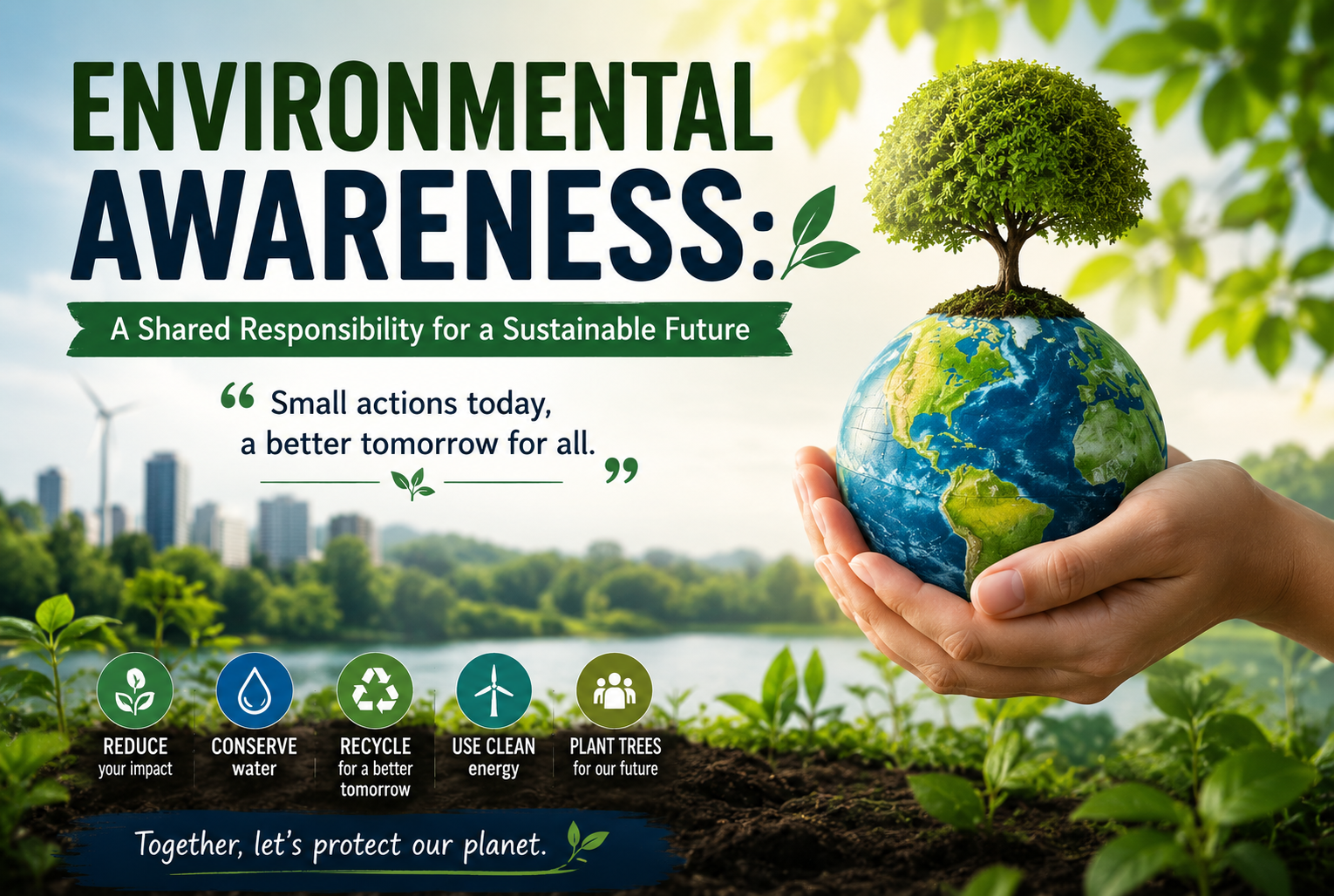
Environmental awareness refers to understanding the importance of protecting nature and recognizing how human activities affect the environment. In recent years, environmental issues have become a major global concern. Problems such as pollution, climate change, depletion of natural resources, and loss of biodiversity are threatening ecosystems and human well-being.
Many people develop a connection with nature through everyday experiences, such as spending time in parks, enjoying fresh air, or appreciating natural landscapes. These experiences remind us that human life is closely connected to the environment. A healthy environment supports good health, economic development, and overall quality of life. Therefore, protecting the environment is not only a global responsibility but also a personal commitment that every individual should embrace.
The Importance of Environmental Awareness
Environmental awareness helps people understand the consequences of their actions on the planet. It encourages responsible behavior and promotes sustainable practices that help preserve natural resources for future generations.
When people become aware of environmental challenges, they are more likely to adopt eco-friendly habits such as conserving energy, reducing waste, recycling materials, and protecting natural habitats. Awareness also inspires communities, organizations, and governments to work together toward environmental protection.
Building awareness is the first step toward creating a more sustainable and environmentally responsible society.
Air Pollution: A Growing Threat
Air pollution is one of the most serious environmental challenges facing the world today. It occurs when harmful substances such as smoke, dust, chemicals, and toxic gases are released into the atmosphere. Major sources of air pollution include vehicles, industrial activities, construction projects, and the burning of fossil fuels.
The effects of air pollution are particularly visible in urban areas where air quality often reaches unhealthy levels. Breathing polluted air can cause respiratory diseases, allergies, heart problems, and other serious health conditions. Children, older adults, and individuals with existing health issues are especially vulnerable.
Clean air is essential for a healthy life. Reducing air pollution requires collective efforts such as using public transportation, adopting cleaner technologies, increasing green spaces, and supporting environmental regulations. Planting more trees can also help improve air quality by absorbing harmful pollutants and producing oxygen.
Water Crisis: Protecting a Precious Resource
Water is one of the most valuable natural resources on Earth. Despite its importance, many regions around the world are experiencing severe water shortages. Rapid population growth, pollution, excessive consumption, and climate change have placed significant pressure on water supplies.
The water crisis affects agriculture, industry, public health, and daily life. Contaminated water can spread diseases, while water scarcity can reduce food production and hinder economic development. In many communities, access to clean drinking water remains a daily struggle.
Water conservation is essential for addressing this challenge. Simple actions such as fixing leaking taps, using water efficiently, harvesting rainwater, and avoiding unnecessary waste can make a significant difference. Protecting water resources today helps ensure that future generations will also have access to this vital resource.
Deforestation and Its Consequences
Forests play a crucial role in maintaining environmental balance. They absorb carbon dioxide, release oxygen, protect soil, regulate rainfall, and provide habitats for countless plant and animal species.
However, deforestation continues to threaten ecosystems around the world. Trees are often removed for agriculture, urban expansion, infrastructure development, and commercial activities. While economic development is important, uncontrolled deforestation can result in soil erosion, biodiversity loss, climate change, and ecosystem disruption.
The destruction of forests affects not only wildlife but also communities that depend on forest resources for their livelihoods. Reforestation programs, sustainable land management practices, and stronger environmental policies are necessary to preserve forest ecosystems and maintain ecological balance.
Renewable Energy: A Sustainable Alternative
One of the most promising solutions to environmental challenges is the adoption of renewable energy sources. Unlike fossil fuels, renewable energy comes from naturally replenished resources such as sunlight, wind, water, and biomass.
Renewable energy helps reduce greenhouse gas emissions, decrease dependence on non-renewable resources, and combat climate change. Technological advancements have made renewable energy systems more affordable and accessible in many parts of the world.
Examples of renewable energy include solar panels, wind turbines, hydroelectric power plants, and bioenergy systems. As governments and businesses continue investing in clean energy technologies, the transition toward a more sustainable future becomes increasingly achievable.
Renewable energy demonstrates how innovation can support economic growth while protecting the environment.
The Role of Youth in Environmental Protection
Young people play a vital role in environmental conservation. As future leaders, innovators, and decision-makers, they have the ability to influence meaningful change and promote sustainable practices.
Environmental awareness among youth has grown significantly in recent years. Many students and young adults actively participate in conservation projects, environmental campaigns, recycling initiatives, and community clean-up programs. Their involvement helps spread awareness and encourages others to take action.
Young people can contribute by reducing waste, conserving resources, using environmentally friendly products, and educating their peers about environmental issues. Tree-planting drives, awareness campaigns, and volunteer activities provide valuable opportunities to make a positive impact.
The energy, creativity, and determination of young people are powerful tools in addressing environmental challenges and building a more sustainable future.
Sustainable Practices for Everyday Life
Environmental protection begins with small actions taken every day. Individuals can contribute by reducing plastic use, recycling waste, conserving electricity, using public transportation, and supporting sustainable products.
Simple habits such as carrying reusable bags, avoiding single-use plastics, planting trees, and reducing food waste can collectively create significant positive environmental impacts. When adopted by large numbers of people, these practices help conserve resources and reduce pollution.
Sustainability is not about making drastic changes overnight; it is about consistently making responsible choices that benefit both people and the planet.
Conclusion
Environmental awareness is essential for addressing the challenges facing our world today. Air pollution, water scarcity, deforestation, and climate-related concerns threaten both environmental stability and human well-being. At the same time, solutions such as renewable energy, conservation efforts, and sustainable living practices offer hope for a healthier future.
Protecting the environment requires cooperation among governments, businesses, communities, and individuals. Among these groups, young people have a particularly important role in driving positive change and promoting environmental responsibility.
By increasing awareness, adopting sustainable habits, and supporting environmental initiatives, society can work toward preserving natural resources and ensuring a better quality of life for future generations. Ultimately, environmental protection is not only about saving nature—it is about securing a sustainable and prosperous future for humanity itself.