

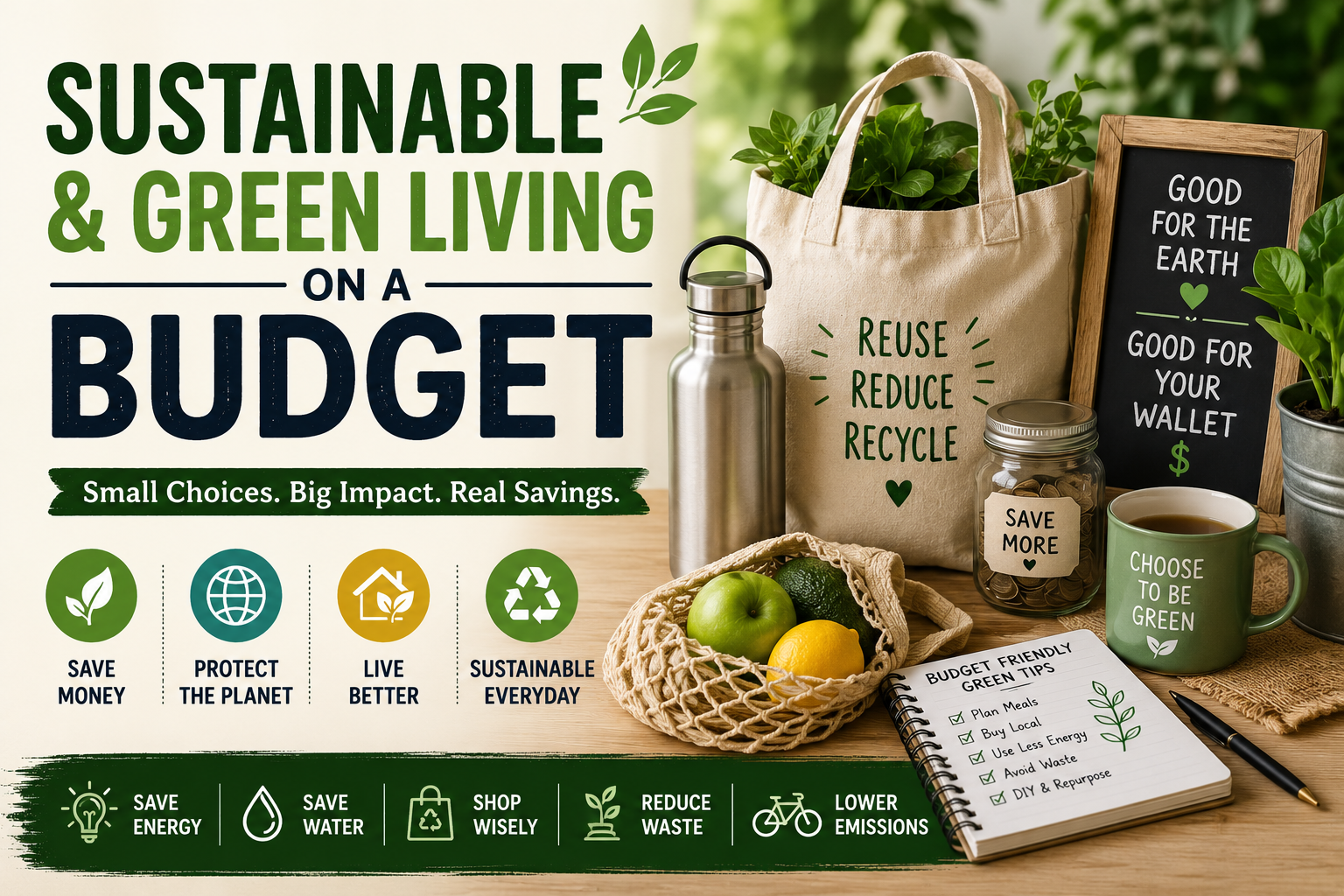
Sustainable and Green Living on a Budget
Introduction
Sustainable living has become increasingly important as people become more aware of environmental challenges such as climate change, pollution, and the depletion of natural resources. Many individuals want to adopt eco-friendly habits but often assume that living sustainably is expensive. While some environmentally friendly products may require a higher initial investment, sustainable living does not have to place a burden on your budget.
In fact, many green lifestyle choices can help save money while reducing environmental impact. By making small changes to daily habits, individuals and families can contribute to a healthier planet while improving their financial well-being. Sustainable living is not about achieving perfection; it is about making practical choices that benefit both the environment and personal finances.
Understanding Sustainable Living
Sustainable living involves making choices that reduce waste, conserve natural resources, and minimize harm to the environment. It encourages people to use resources responsibly so that future generations can meet their needs as well.
This lifestyle focuses on reducing consumption, reusing materials whenever possible, and making environmentally conscious decisions. Sustainable living can be practiced in many areas of life, including energy use, transportation, food consumption, shopping habits, and waste management.
The good news is that many sustainable practices are simple, affordable, and easy to incorporate into everyday routines.
Reduce, Reuse, and Recycle
One of the most effective principles of sustainable living is the concept of reducing, reusing, and recycling. Reducing unnecessary consumption is often the most affordable and environmentally friendly option.
Before purchasing new items, consider whether they are truly necessary. Avoiding impulse purchases not only saves money but also reduces waste and resource consumption.
Reusing products whenever possible can further reduce expenses. Glass jars, storage containers, shopping bags, and household items can often be repurposed instead of being discarded. Recycling materials such as paper, plastic, metal, and glass helps conserve resources and reduce landfill waste.
Small changes in consumption habits can create a significant positive impact over time.
Save Energy at Home
Reducing energy consumption is one of the easiest ways to live sustainably while lowering household expenses. Simple actions such as turning off lights when leaving a room, unplugging unused electronics, and using energy-efficient appliances can significantly reduce electricity bills.
Replacing traditional light bulbs with LED bulbs is another cost-effective solution. Although LED bulbs may cost slightly more initially, they consume less energy and last much longer, resulting in substantial long-term savings.
Using natural daylight whenever possible, adjusting thermostat settings, and improving home insulation can also help reduce energy use and minimize environmental impact.
Make Sustainable Food Choices
Food consumption plays a major role in environmental sustainability. Fortunately, many eco-friendly food choices can also help save money.
Planning meals in advance reduces food waste and prevents unnecessary grocery purchases. Buying seasonal fruits and vegetables is often more affordable than purchasing out-of-season produce. Shopping at local farmers’ markets can also provide fresh and reasonably priced food options.
Reducing food waste is equally important. Leftovers can be transformed into new meals, and proper food storage helps extend the life of groceries. Growing herbs, vegetables, or fruits at home can further reduce food expenses while promoting sustainability.
Choose Reusable Products
Disposable products contribute significantly to environmental pollution and ongoing household expenses. Switching to reusable alternatives can reduce waste and save money over time.
Reusable water bottles, coffee cups, food containers, cloth shopping bags, and reusable cleaning cloths are practical examples. Although these products may require a small initial investment, they often pay for themselves through long-term use.
By replacing single-use items with durable alternatives, individuals can reduce both their environmental footprint and monthly spending.
Shop Smart and Buy Less
Sustainable living encourages mindful consumption rather than constant purchasing. Before buying something new, consider whether the item is truly necessary and whether a secondhand option is available.
Thrift stores, online marketplaces, and community exchange groups often provide quality items at lower prices. Purchasing secondhand clothing, furniture, books, and electronics can significantly reduce expenses while preventing usable products from ending up in landfills.
Choosing high-quality products that last longer can also save money over time. While cheaper items may seem attractive initially, frequent replacements often result in higher overall costs.
Reduce Transportation Costs and Emissions
Transportation is another area where sustainable choices can benefit both the environment and personal finances. Walking, cycling, carpooling, and using public transportation can reduce fuel expenses and lower carbon emissions.
Combining errands into a single trip can further minimize transportation costs. For individuals who work remotely, reducing unnecessary travel can lead to significant savings while supporting environmental goals.
Whenever possible, choosing transportation methods that require less fuel helps create a more sustainable lifestyle.
Create Sustainable Habits
Living sustainably does not require dramatic lifestyle changes. Small, consistent habits often produce the greatest long-term results. Carrying reusable bags, conserving water, reducing energy use, and avoiding unnecessary purchases are simple actions that can become part of daily routines.
Involving family members in sustainability efforts can make these habits more enjoyable and effective. When everyone participates, positive environmental and financial outcomes become even more meaningful.
The key is to focus on gradual improvements rather than attempting to change everything at once.
Conclusion
Sustainable and green living does not have to be expensive. In many cases, environmentally friendly choices can actually reduce household expenses and improve financial stability. By reducing waste, conserving energy, making thoughtful purchasing decisions, and adopting reusable products, individuals can live more sustainably without exceeding their budgets.
The journey toward sustainability begins with small, practical steps. Over time, these habits can lead to meaningful environmental benefits, lower living costs, and a healthier future for both individuals and the planet. Sustainable living is not about spending more money—it is about making smarter choices that create lasting value for generations to come.