

Introduction
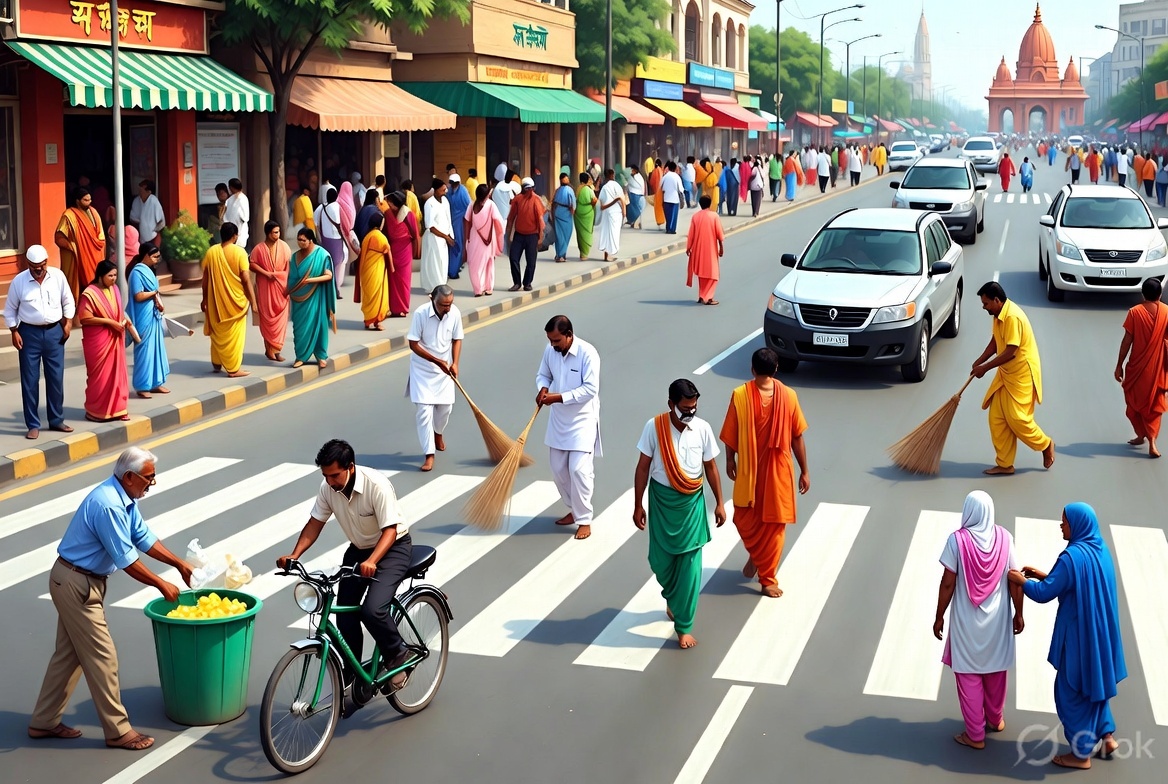
Civic sense refers to the basic social behavior and responsibility that every citizen should follow in public life. It includes simple habits like maintaining cleanliness, following traffic rules, respecting public property, and being considerate towards others. In a country like India, where diversity and population are vast, civic sense plays a crucial role in maintaining order and harmony. However, the issue of poor civic sense is often discussed, raising concerns about its impact on society and development
Understanding Civic Sense
Civic sense is not something that is enforced by law alone; it is a reflection of a person’s values, upbringing, and awareness. It involves understanding one’s duties as a citizen and acting responsibly in public spaces.
Examples of good civic sense include:
Throwing garbage in dustbins
Standing in queues
Following traffic rules
Respecting public places
Helping others in need
These small actions collectively create a positive and disciplined society.
Current Situation in India
In many parts of India, civic sense remains a challenge. Issues like littering, spitting in public places, breaking traffic rules, and damaging public property are commonly seen. Despite having laws and regulations, people often ignore them.
Overcrowding, lack of awareness, and weak enforcement of rules contribute to this problem. Sometimes, people believe that individual actions do not make a difference, which further worsens the situation.
Reasons for Lack of Civic Sense
There are several reasons behind the lack of civic sense in India:
1. Lack of Awareness
Many people are not fully aware of their responsibilities as citizens.
2. Poor Education on Values
Civic sense is not always emphasized in education systems.
3. Weak Law Enforcement
Rules exist, but strict implementation is often missing.
4. Social Attitude
Some individuals follow rules only when forced, not out of responsibility.
5. Population Pressure
High population makes it difficult to manage public spaces effectively.
Impact on Society and Development
The lack of civic sense affects both individuals and the nation as a whole. Dirty surroundings can lead to health issues, including the spread of diseases. Traffic rule violations cause accidents and loss of lives.
It also impacts the image of the country globally. Tourists and investors often judge a nation by its cleanliness and discipline. Poor civic sense can discourage tourism and economic growth.
Importance of Civic Sense
Civic sense is essential for building a better society. It promotes discipline, cleanliness, and mutual respect among citizens. When people follow rules, public spaces become safer and more organized.
Good civic behavior also reduces the burden on government authorities. For example, if people avoid littering, there is less need for frequent cleaning and maintenance.
Ultimately, civic sense contributes to national development and improves the quality of life.
Role of Education and Family
Education plays a key role in developing civic sense. Schools should teach not only academic subjects but also values and responsibilities. Activities like cleanliness drives and awareness programs can help students understand the importance of civic duties.
Families also have a strong influence. Children learn by observing their parents. If parents follow good civic practices, children are more likely to adopt them.
Government Initiatives
The government has taken several steps to improve civic sense in India. Campaigns like Swachh Bharat Abhiyan aim to promote cleanliness and hygiene.
Strict traffic rules and penalties have also been introduced to ensure road safety. Public awareness campaigns through media help educate people about their responsibilities.
However, the success of these initiatives depends largely on public participation.
Role of Individuals
Every individual has a responsibility to practice civic sense. Change does not require big actions; small steps can make a big difference.
People should:
Avoid littering and use dustbins
Follow traffic rules
Respect public property
Help maintain cleanliness
Be considerate towards others
When individuals take responsibility, society as a whole improves.
Way Forward
Improving civic sense in India requires a combined effort from individuals, society, and the government. Awareness programs should be increased, and strict action should be taken against rule-breakers.
Technology can also play a role by spreading awareness through social media and digital platforms. Encouraging community participation can create a sense of responsibility among citizens.
Most importantly, a change in mindset is needed. People must understand that civic sense is not just a duty but a way of life.
Conclusion
Civic sense is the foundation of a disciplined and developed society. While India faces challenges in this area, improvement is possible through collective effort and awareness. By adopting simple habits and taking responsibility, citizens can contribute to a cleaner, safer, and more organized nation.
The change begins with each individual. When every person practices good civic sense, the impact can be powerful, transforming not just cities but the entire country
Civic sense refers to the basic social behavior and responsibility that every citizen should follow in public life. It includes simple habits like maintaining cleanliness, following traffic rules, respecting public property, and being considerate towards others. In a country like India, where diversity and population are vast, civic sense plays a crucial role in maintaining order and harmony. However, the issue of poor civic sense is often discussed, raising concerns about its impact on society and development.