

Introduction
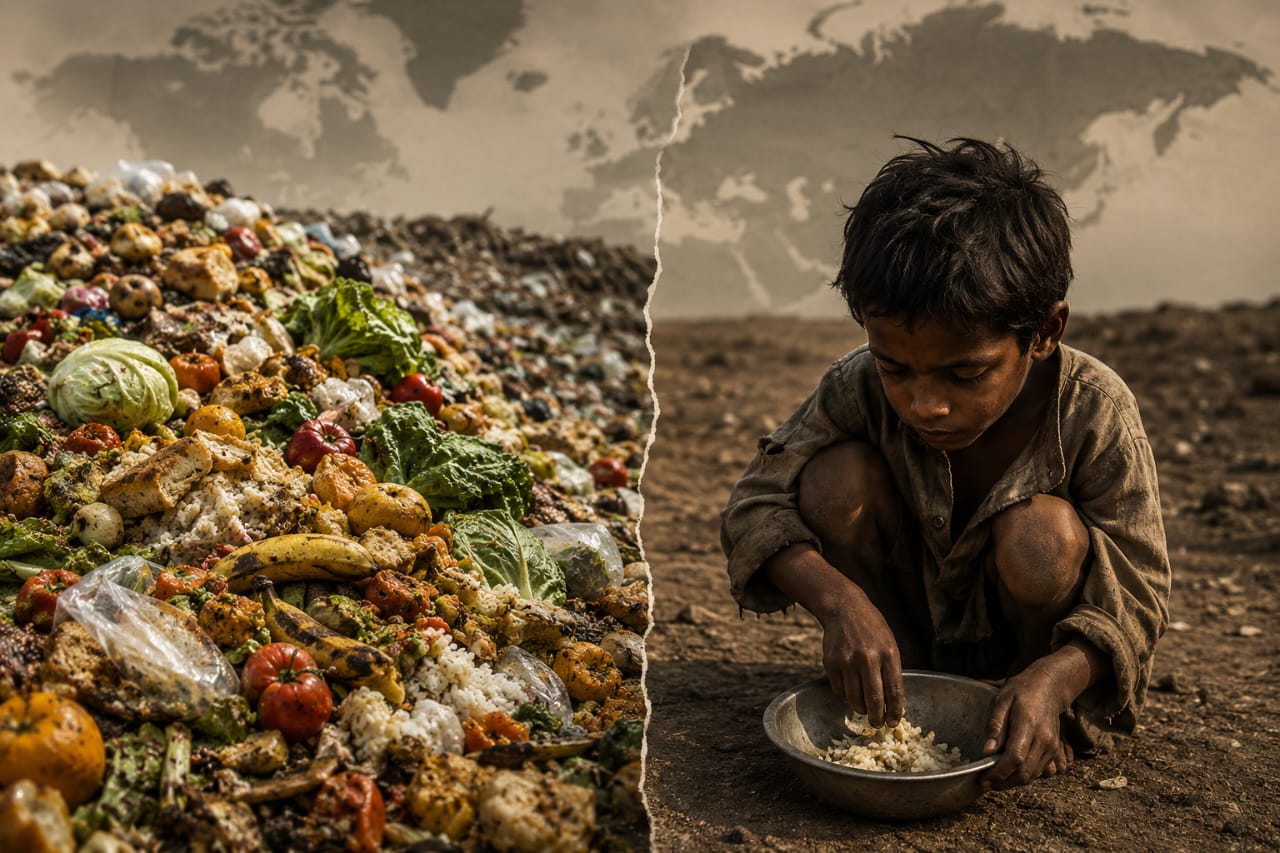
Every day, millions of people around the world struggle to find enough food to eat. At the same time, enormous amounts of perfectly edible food are thrown away. This contrast highlights one of the most troubling issues of our time: food waste. While hunger remains a major global challenge, food waste continues to grow in households, restaurants, supermarkets, and farms. Addressing this problem is not only a moral responsibility but also an important step toward creating a more sustainable and equitable world.
What Is Food Waste?
Food waste refers to food that is discarded, lost, or left uneaten despite being safe for consumption. According to international estimates, roughly one-third of all food produced globally is wasted each year. This wasted food includes fruits, vegetables, grains, dairy products, and cooked meals. Meanwhile, millions of people face food insecurity and do not have reliable access to nutritious meals. The imbalance between excess and scarcity demonstrates how inefficient the global food system can be.
Causes of Food Waste
One of the main causes of food waste is consumer behavior. Many people purchase more food than they actually need, often attracted by discounts or bulk offers. As a result, food expires before it can be consumed and ends up in the trash. In households, leftovers are frequently discarded instead of being stored properly or reused in future meals. Lack of meal planning and misunderstanding food expiration labels also contribute significantly to waste.
Restaurants and food service businesses are another major source of food waste. Large portions, buffet systems, and strict quality standards often result in edible food being thrown away. Similarly, supermarkets discard products that are close to their expiration dates or do not meet cosmetic standards, even though they are still safe to eat. Fruits and vegetables with unusual shapes or minor imperfections are often rejected despite being perfectly nutritious.
Food waste also occurs earlier in the supply chain. Farmers may lose crops due to poor storage facilities, transportation issues, or unfavorable weather conditions. In developing countries, inadequate infrastructure can lead to significant food losses before products even reach consumers. These challenges show that food waste is not only a consumer issue but a systemic problem affecting every stage of food production and distribution.
Environmental Consequences of Food Waste
Beyond the ethical concerns, food waste has serious environmental consequences. Producing food requires land, water, energy, and labor. When food is wasted, all these valuable resources are wasted as well. Additionally, food that ends up in landfills decomposes and releases methane, a powerful greenhouse gas that contributes to climate change. Therefore, reducing food waste can help conserve natural resources and lower environmental pollution.
Economic Impact
The economic impact of food waste is equally significant. Households lose money by purchasing food that is never consumed, while businesses face financial losses from unsold products. Governments and communities also bear the costs associated with waste management and environmental damage. By reducing food waste, individuals and organizations can save money while helping society become more efficient and sustainable.
Solutions to Reduce Food Waste
Fortunately, there are many practical solutions to this problem. Individuals can start by planning meals, creating shopping lists, and buying only what they need. Proper food storage can extend the shelf life of many products, while leftovers can be repurposed into new meals. Learning the difference between “best before” and “use by” dates can also prevent unnecessary disposal of safe food.
Businesses and governments have important roles to play as well. Supermarkets can donate surplus food to food banks and charitable organizations instead of discarding it. Restaurants can offer flexible portion sizes and partner with food recovery programs. Governments can invest in better storage, transportation, and food distribution systems to reduce losses throughout the supply chain. Educational campaigns can also raise awareness about the social, economic, and environmental costs of food waste.
Conclusion
In conclusion, food waste is a global issue that exists alongside widespread hunger. While millions of people struggle to obtain adequate nutrition, vast quantities of food are discarded every day. Reducing food waste requires collective action from individuals, businesses, and governments. By making smarter choices and improving food management practices, society can move closer to a future where fewer resources are wasted and fewer people go hungry. Every meal saved is a step toward a more sustainable and compassionate world.