

Introduction
For centuries, people have looked up at the night sky and wondered what lies beyond our planet. What once seemed like an impossible dream has gradually become a reality through scientific breakthroughs, technological innovation, and human curiosity. From the first satellite launched into orbit to astronauts walking on the Moon, space exploration has continually expanded our understanding of the universe.
Today, we stand at the beginning of an exciting new chapter. Governments, private companies, and international organizations are working together to explore deeper into space than ever before. Missions to the Moon are being planned, humans are preparing for future journeys to Mars, and scientists continue searching for signs of life beyond Earth.
The future of space exploration is not just about discovering new planets—it’s about advancing technology, inspiring future generations, and finding solutions that could benefit life on Earth. As technology continues to evolve, the possibilities for exploring the cosmos are becoming more realistic than ever.
A New Era of Space Exploration
Unlike the early years of space exploration, today’s missions involve collaboration between public space agencies and private companies. This partnership is accelerating innovation, reducing costs, and making space more accessible.
Reusable rockets, advanced spacecraft, and improved communication systems have transformed how missions are planned and executed. These developments are paving the way for more frequent and ambitious space missions.
Returning to the Moon
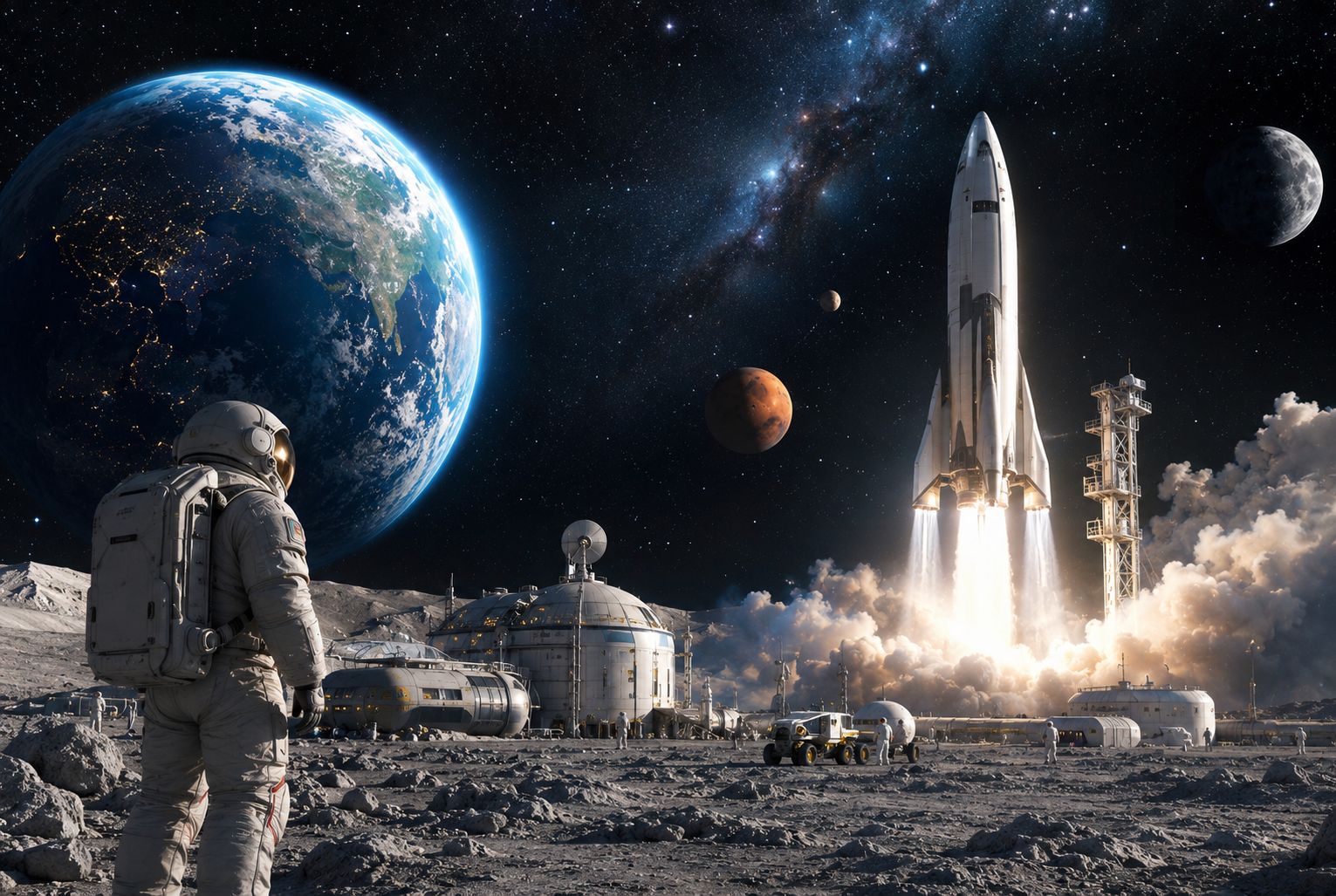
The Moon is once again becoming a major focus for space exploration. Scientists see it as an ideal location for testing new technologies, conducting research, and preparing for future missions to Mars.
Future lunar missions may lead to permanent research stations where astronauts can live and work for extended periods. These bases could also help scientists learn how humans can survive in deep space.
The Dream of Reaching Mars
Mars has long fascinated scientists because of its similarities to Earth. Although sending humans to the Red Planet presents significant challenges, advances in spacecraft design, life-support systems, and robotics are bringing that goal closer.
A successful mission to Mars would represent one of humanity’s greatest achievements and could open the door to future exploration of other planets.
Space Tourism Is Becoming a Reality
Space travel is no longer limited to professional astronauts. Commercial space tourism is creating opportunities for private individuals to experience spaceflight.
Although currently expensive, technological advancements may make space travel more affordable in the coming decades, allowing more people to witness Earth from orbit.
Searching for Life Beyond Earth
One of the most exciting goals of space exploration is the search for extraterrestrial life. Scientists continue studying distant planets and moons that may contain the conditions necessary for life.
Powerful telescopes and robotic missions are helping researchers analyze planetary atmospheres, search for water, and investigate environments where microscopic life might exist.
The Role of Artificial Intelligence and Robotics
Artificial intelligence and robotic technology are transforming space exploration. Robots can perform tasks in dangerous environments, collect valuable scientific data, and explore locations that humans cannot currently reach.
Artificial intelligence also helps scientists process enormous amounts of information gathered by satellites, telescopes, and space probes, making discoveries faster and more accurate.
Challenges Ahead
Despite remarkable progress, space exploration still faces several obstacles. Long-distance travel requires reliable life-support systems, protection from cosmic radiation, and sustainable energy sources.
Funding, international cooperation, and ethical considerations regarding the use of space resources will also play important roles in shaping future missions.
Overcoming these challenges will require continued innovation and collaboration among scientists, engineers, governments, and private organizations.
Why Space Exploration Matters
Many technologies we use every day, including satellite navigation, weather forecasting, medical imaging, and advanced communication systems, have benefited from space research.
Exploring space also inspires scientific curiosity, encourages innovation, and helps us better understand our own planet. The knowledge gained from future missions may lead to breakthroughs that improve life for generations to come.
Conclusion
The future of space exploration is filled with exciting possibilities. From establishing lunar bases and sending astronauts to Mars to advancing robotics and searching for life beyond Earth, humanity is entering an era of discovery unlike any before.
While significant challenges remain, our determination to explore the unknown continues to drive progress. Every mission teaches us something new, pushing the boundaries of science and technology. As we continue reaching for the stars, space exploration will not only deepen our understanding of the universe but also inspire future generations to dream bigger, innovate further, and explore farther than ever imagined.