

Remembering a Historic Achievement
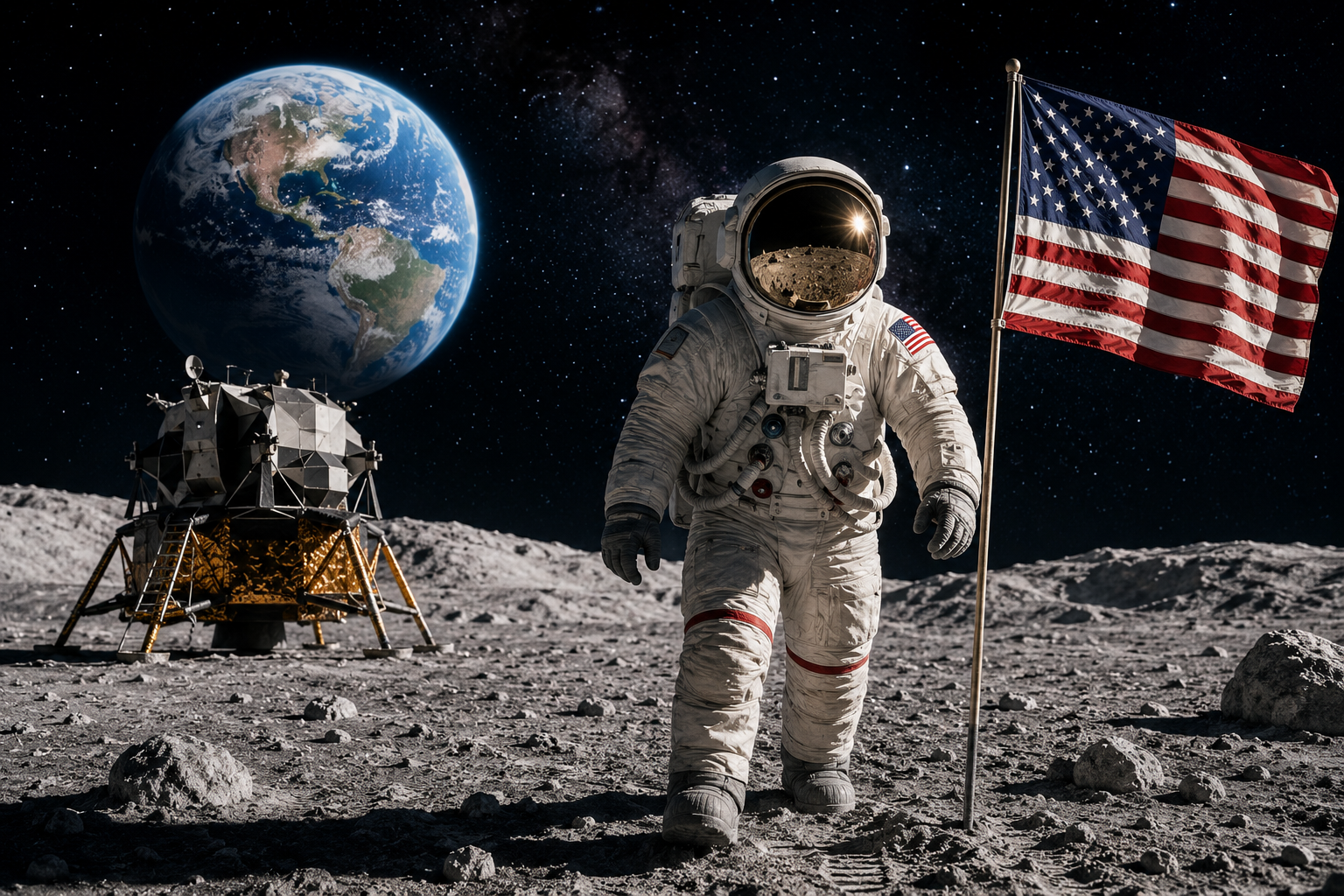
International Moon Day is observed every year on 20 July to commemorate one of humanity’s greatest achievements in space exploration—the first human landing on the Moon. The day marks the anniversary of the historic Apollo 11 mission, when humans successfully set foot on the lunar surface in 1969.
The observance highlights the importance of scientific discovery, international cooperation, and the peaceful exploration of outer space. It also encourages people to learn more about the Moon and the future of space exploration.
The History of International Moon Day
International Moon Day was established by the United Nations in 2021. The date was chosen to honor the landing of the Apollo 11 Moon Landing on 20 July 1969.
The Apollo 11 mission carried astronauts Neil Armstrong, Buzz Aldrin, and Michael Collins. Armstrong and Aldrin became the first humans to walk on the Moon, while Collins remained in lunar orbit aboard the command module.
Their achievement opened a new chapter in space exploration and inspired generations of scientists, engineers, and explorers.
Why the Moon Matters
The Moon plays a significant role in Earth’s natural systems. It influences ocean tides, stabilizes Earth’s rotation, and has fascinated civilizations for thousands of years. Moreover, studying the Moon helps scientists better understand the history of our solar system.
Today, many countries and space agencies are conducting lunar research to prepare for future missions and potential long-term human presence on the Moon.
How International Moon Day Is Celebrated
International Moon Day is observed through educational programs, astronomy events, exhibitions, and public discussions about space science. Schools, museums, research institutions, and astronomy clubs often organize activities to inspire curiosity about the universe.
Popular ways to celebrate include:
- Learning about the Apollo 11 mission
- Watching documentaries about space exploration
- Participating in astronomy workshops
- Observing the Moon through telescopes
- Exploring scientific discoveries related to the lunar surface
These activities help people appreciate the achievements of space exploration and the possibilities that lie ahead.
The Future of Lunar Exploration
Interest in lunar exploration continues to grow. Space agencies and private organizations are planning missions to study the Moon, test new technologies, and prepare for future journeys deeper into space.
The Moon is expected to play a key role in advancing scientific research and supporting future exploration missions beyond Earth.
Conclusion
International Moon Day 2026 celebrates the spirit of discovery that led humanity to the Moon. Observed on 20 July, the day honors past achievements while inspiring future generations to explore the mysteries of space. By reflecting on this historic milestone, people around the world can appreciate the power of science, innovation, and international cooperation.
Read More
To explore more important festivals, international observances, and special days celebrated throughout the month, visit: July Festivals and Important Days