

Introduction
Education is often associated with academic success, professional achievements, and career opportunities. While these aspects are important, the true purpose of education extends far beyond textbooks, examinations, and degrees. Education should help individuals become responsible, ethical, and compassionate human beings who contribute positively to society.
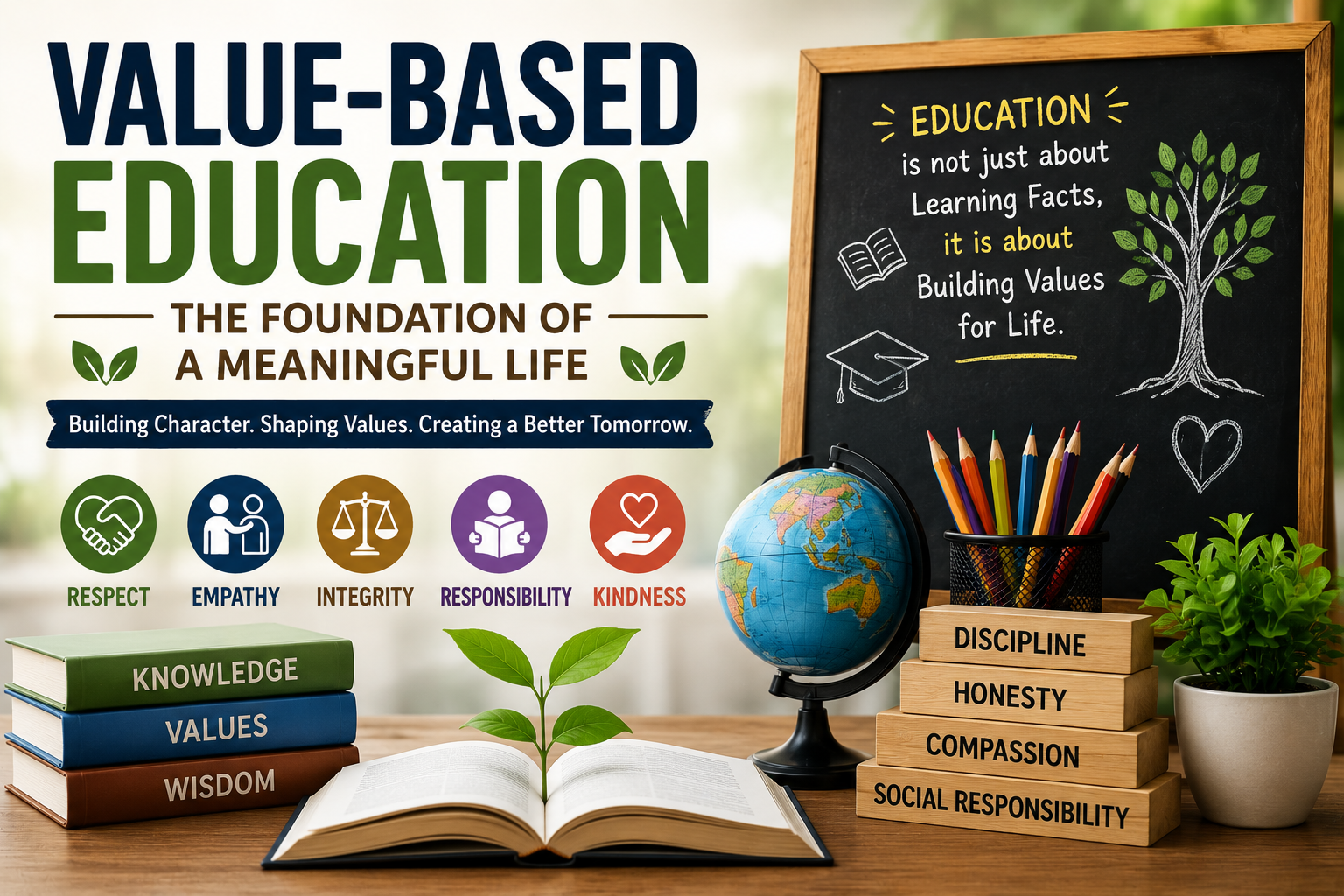
This is where value-based education becomes essential. Value-based education focuses on developing qualities such as honesty, respect, empathy, kindness, discipline, integrity, and social responsibility. In today’s fast-changing and highly competitive world, value-based education helps individuals maintain a strong moral foundation and make thoughtful decisions in both personal and professional life.
A society that values ethics and character is better equipped to face challenges and create a harmonious environment. Therefore, value-based education plays a crucial role in shaping the future of individuals and communities.
Understanding Value-Based Education
Value-based education refers to a learning approach that emphasizes moral and ethical values alongside academic knowledge. It aims to develop a person’s character, attitudes, and behavior while helping them become responsible members of society.
The purpose of value-based education is not only to improve intellectual abilities but also to nurture qualities that guide individuals toward making ethical choices. It encourages students to understand the importance of honesty, compassion, respect, cooperation, and responsibility in everyday life.
By combining knowledge with values, education becomes a powerful tool for creating well-rounded individuals who contribute positively to society.
Role of Education in Building Character
One of the most important functions of education is character building. Schools are not merely places where students learn subjects such as science, mathematics, and languages. They are also environments where values, attitudes, and behaviors are shaped.
Through interactions with teachers, classmates, and the larger school community, students learn cooperation, discipline, honesty, respect, and responsibility. Character is reflected in a person’s actions, decisions, and relationships with others.
Education helps students distinguish between right and wrong and encourages them to act with integrity even when faced with difficult situations. Strong character enables individuals to overcome challenges, maintain ethical standards, and contribute meaningfully to society.
Value-based education is essential because it promotes both intellectual growth and moral development, ensuring that students become capable and ethical individuals.
NEP 2020 and Value-Based Education
The National Education Policy (NEP) 2020 recognizes the importance of value-based learning in shaping responsible and informed citizens. The policy emphasizes holistic development rather than focusing solely on academic performance.
NEP 2020 encourages the integration of values, creativity, critical thinking, ethical reasoning, and social responsibility into the educational process. It promotes experiential learning, community engagement, and activities that help students understand real-life situations and social challenges.
The policy aims to develop qualities such as empathy, environmental awareness, respect for diversity, constitutional values, and a sense of civic responsibility. By incorporating value-based education into the curriculum, NEP 2020 seeks to prepare students not only for careers but also for meaningful participation in society.
Role of Parents in Value Education
Parents are the first and most influential teachers in a child’s life. Long before children enter school, they begin learning values through observation and daily experiences at home.
The behavior, attitudes, and habits of parents often influence children more deeply than formal lessons. Parents teach values through their actions, such as showing respect to others, speaking honestly, helping those in need, and fulfilling responsibilities.
A positive home environment encourages children to develop qualities such as kindness, gratitude, patience, and empathy. When parents and schools work together, value education becomes more effective and meaningful.
By serving as role models, parents play a vital role in shaping the character and moral development of future generations.
Sports as a Tool for Value Education
Sports provide one of the most effective platforms for teaching values in practical situations. Participation in sports helps students learn important life skills such as teamwork, discipline, perseverance, patience, and leadership.
Through sports, students understand the importance of following rules, respecting opponents, accepting victories with humility, and handling failures with grace. These experiences help build resilience and emotional maturity.
Sports also encourage cooperation and mutual respect among individuals from different backgrounds. The values learned on the playing field often remain with students throughout their lives and influence their behavior in various situations.
Value Education Through Art and Music
Art and music play a significant role in emotional and moral development. They encourage creativity, self-expression, sensitivity, and appreciation for beauty and culture.
Through artistic activities, students learn patience, focus, and respect for different perspectives. Music and art also help individuals connect with emotions, develop empathy, and understand cultural diversity.
These creative forms of expression foster emotional intelligence and contribute to the overall development of a balanced and compassionate personality.
Peace Education and Social Harmony
Peace education is another important aspect of value-based education. It teaches students how to resolve conflicts peacefully, respect diversity, and promote understanding among individuals and communities.
In a world where differences in culture, religion, language, and beliefs often lead to misunderstandings, peace education encourages tolerance, cooperation, and mutual respect. It helps students appreciate diversity and recognize the importance of living together harmoniously.
By promoting peaceful coexistence and responsible citizenship, peace education contributes to social harmony and national development.
Benefits of Value-Based Education
Value-based education offers numerous benefits for individuals and society. It helps students develop strong moral principles, improve decision-making skills, and build healthy relationships.
It encourages social responsibility and motivates individuals to contribute positively to their communities. Students who receive value-based education are more likely to demonstrate empathy, honesty, and respect in their personal and professional lives.
Furthermore, value-based education helps create a society where ethical behavior, cooperation, and compassion are valued alongside academic and economic success.
Conclusion
Value-based education is essential for creating compassionate, responsible, and ethical individuals. It helps students develop not only intellectual abilities but also the moral values necessary for leading meaningful lives.
By promoting honesty, respect, empathy, discipline, and social responsibility, value-based education prepares individuals to face life’s challenges with integrity and confidence. The combined efforts of schools, parents, sports programs, artistic activities, and educational policies such as NEP 2020 play a vital role in nurturing these values.
Ultimately, the true success of education lies not only in academic achievement or professional accomplishment but also in its ability to build character and prepare individuals to contribute positively to society. A value-based education system lays the foundation for a better future by shaping individuals who are successful in their careers and responsible in their actions.