


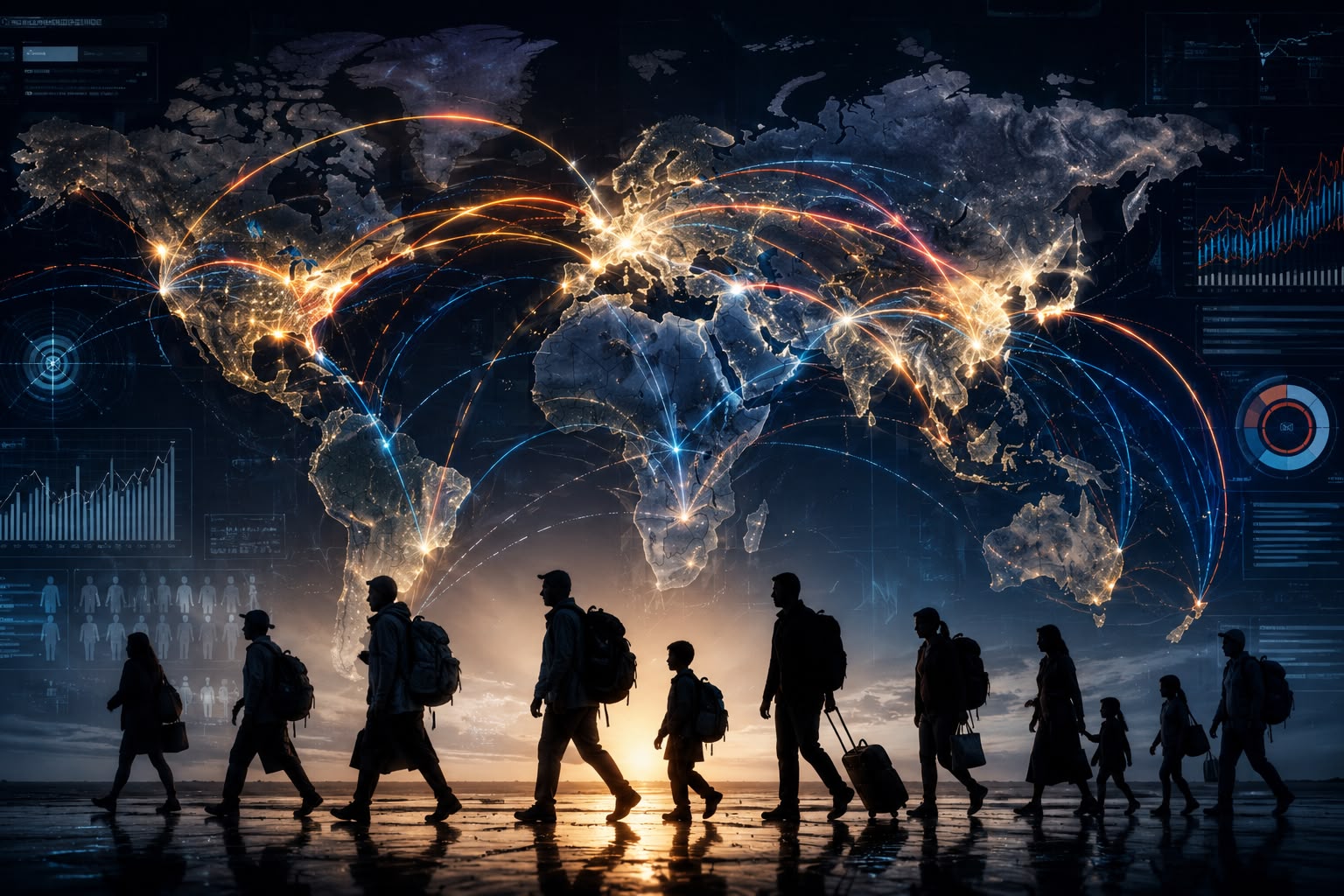
Researchers are using artificial intelligence to uncover previously hidden patterns of global migration, offering policymakers and international organizations a more detailed understanding of how people move around the world. By training a neural network to combine information from multiple datasets, scientists have developed a high-resolution view of migration flows that traditional methods often struggle to capture.
The research relies on advanced AI systems capable of collating and analyzing vast amounts of information from census records, population statistics, migration surveys, economic indicators, and other demographic datasets. By identifying patterns across these sources, the neural network can estimate migration movements with greater precision and reveal trends that may be overlooked when relying on a single source of information.
According to researchers, one of the most significant findings is the ability to identify previously underreported migration routes and shifts in population movement. The AI model has highlighted changes in regional migration trends, urbanization patterns, and cross-border movements that were not fully visible through conventional data collection methods. In some regions where migration data is incomplete, delayed, or unavailable, the system has helped fill important information gaps.
Scientists involved in the project say neural networks are particularly effective at detecting relationships within large and complex datasets. By recognizing patterns that may not be immediately apparent to human analysts, the technology can improve estimates of migration flows and provide a more comprehensive picture of population mobility. Researchers emphasize that the tool is designed to complement existing demographic research rather than replace traditional methods of data collection.
The study comes at a time when global migration is influenced by a wide range of factors, including economic opportunities, labor demand, educational prospects, climate-related displacement, and armed conflicts. Understanding these movements has become increasingly important for governments, humanitarian agencies, and international institutions seeking to plan services and respond to emerging challenges.
Experts suggest that AI-powered migration analysis could have practical applications in public policy and planning. More accurate migration estimates may help authorities improve infrastructure development, allocate public resources, forecast labor market needs, and strengthen humanitarian response efforts. International organizations could also use the technology to better anticipate displacement crises and population shifts.
However, specialists caution that AI-driven analysis is not without limitations. Data quality remains a critical factor, and inaccurate or incomplete datasets can affect outcomes. Some experts have also raised concerns about algorithmic bias and the ethical use of demographic information. Privacy advocates argue that robust safeguards are needed to ensure personal data is protected and that AI systems are used responsibly.
Supporters of the technology believe its benefits outweigh the challenges, provided transparency and oversight remain central to its development. They argue that improved migration insights can support evidence-based policymaking and help governments respond more effectively to changing demographic realities.
As artificial intelligence continues to advance, researchers believe it could play a growing role in demographic research and global policymaking. By offering a clearer picture of how and why people move, AI-powered tools may help decision-makers better understand migration in an increasingly interconnected world.