


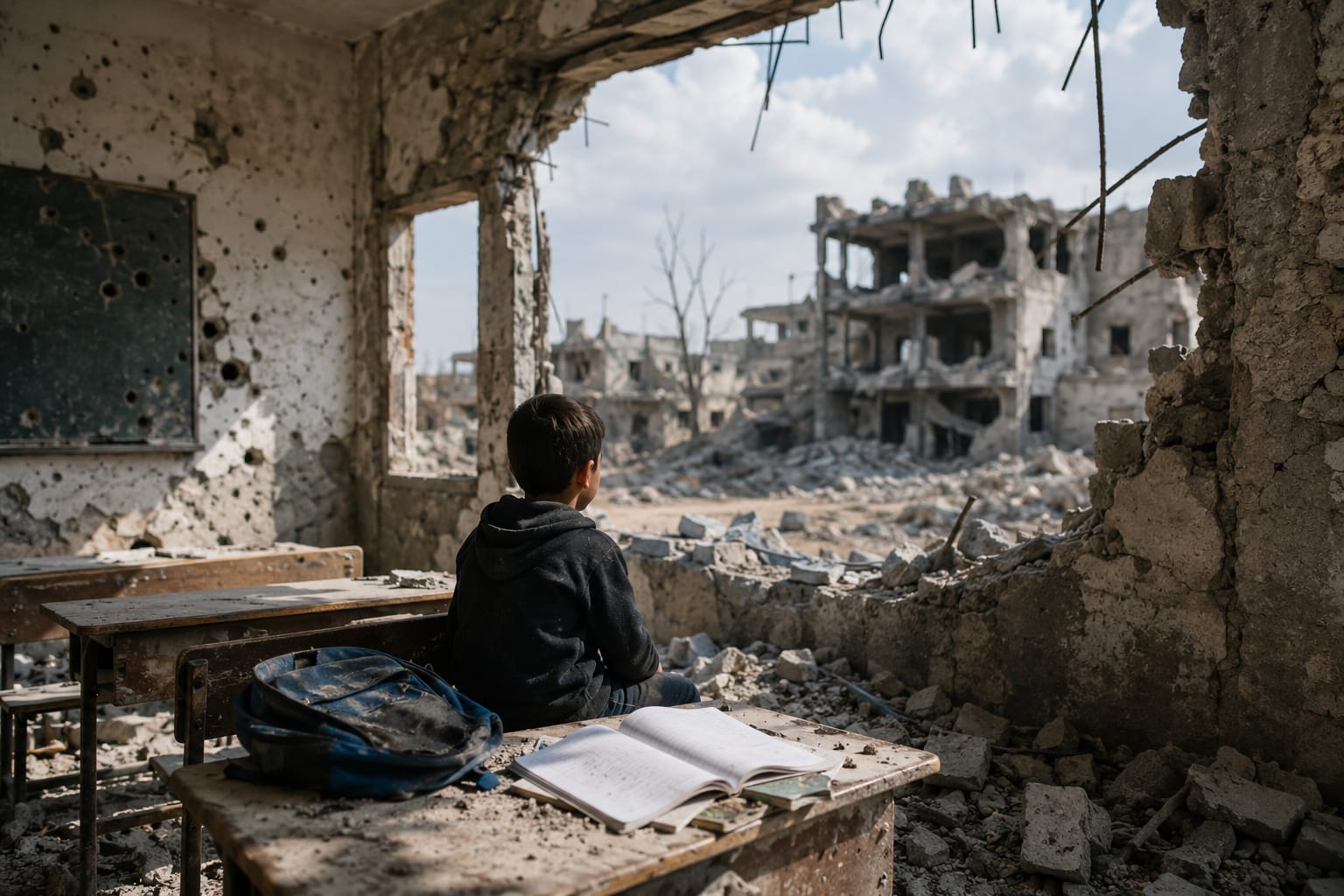
A new report by the Global Coalition to Protect Education from Attack (GCPEA) has revealed a sharp increase in violence targeting education worldwide, with attacks on schools, students, teachers, and educational facilities rising by 40% during the latest reporting period. The report documented incidents in 83 countries and found that at least 10,600 students, educators, and school staff were killed, injured, abducted, or arrested.
According to the GCPEA, attacks included bombings and shelling of schools, military occupation of educational facilities, abductions of students, arrests of educators, and threats or violence directed at academic communities. Many of the incidents occurred in regions affected by armed conflict, political instability, and humanitarian crises, where access to education has become increasingly dangerous.
Education advocates and humanitarian organizations warned that the growing number of attacks threatens not only lives but also the long-term development of affected communities. United Nations officials have repeatedly emphasized that schools should remain safe spaces for learning, even during periods of conflict. Teachers and students in affected regions reported fear, trauma, and disruptions that have forced many children to abandon their education.
The report highlights concerns that repeated attacks on educational institutions can weaken learning outcomes, increase dropout rates, and create lasting mental health challenges. Experts say these disruptions also undermine economic development by limiting future opportunities for young people and reducing access to skills and employment.
International efforts to protect education have included initiatives such as the Safe Schools Declaration, which encourages governments to safeguard students, teachers, and educational facilities during armed conflicts. However, aid agencies note that implementing these protections remains difficult in areas experiencing ongoing violence and insecurity.
GCPEA representatives called for stronger international cooperation, greater accountability for perpetrators, and increased investment in protecting schools. Experts argue that improved monitoring systems, stronger legal safeguards, and sustained humanitarian support are essential to reversing the trend. As conflicts continue across multiple regions, the report serves as a stark reminder of the growing risks facing education systems worldwide.