


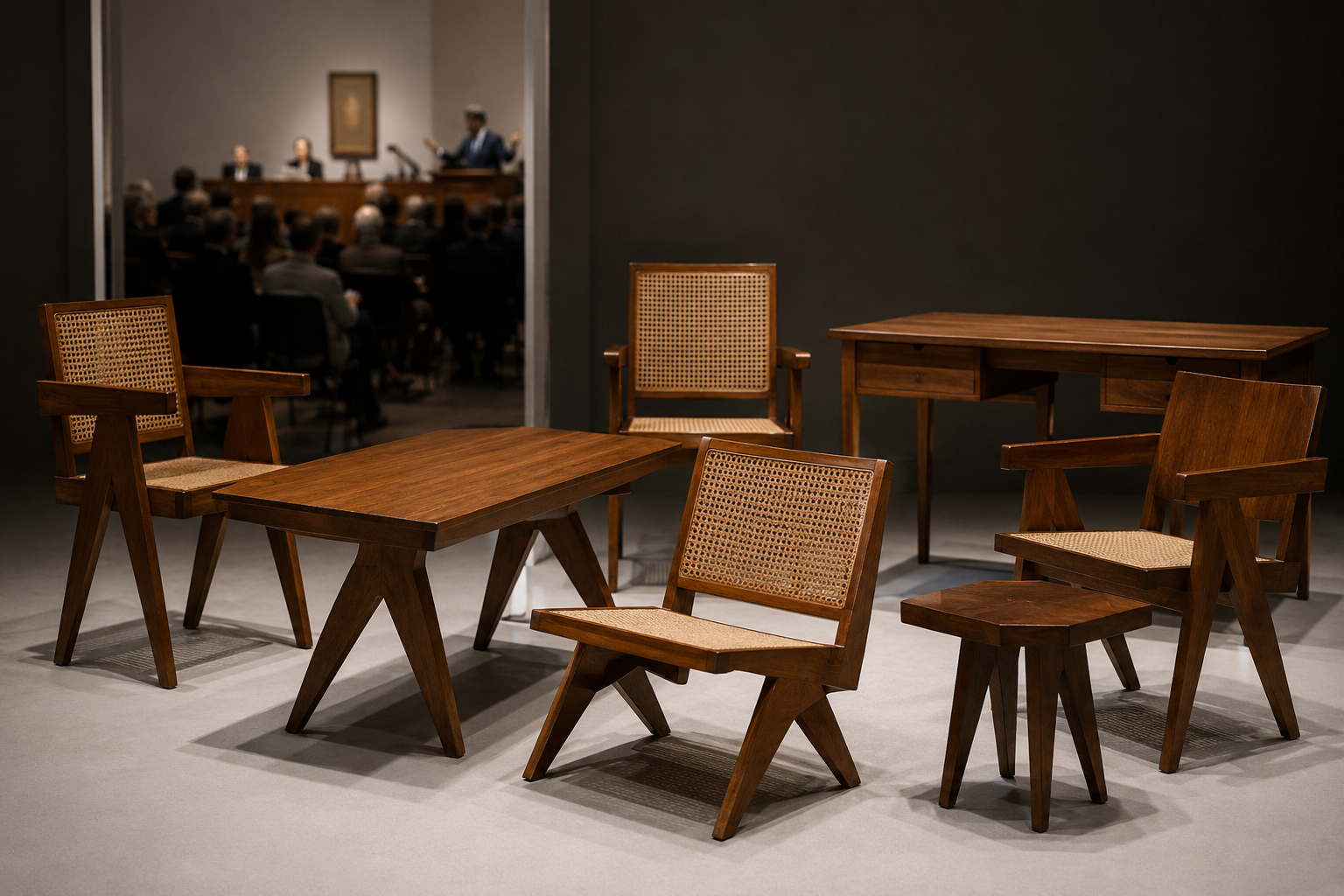
Seven heritage furniture pieces designed by renowned architect Pierre Jeanneret and associated with Chandigarh’s iconic architectural legacy have reportedly been sold at an auction in Brussels, Belgium, for a combined value of approximately ₹1.6 crore. The sale has reignited concerns among heritage conservationists, particularly because representations opposing the auction had reportedly been sent in advance to India’s Ministry of External Affairs (MEA) and Ministry of Culture.
The furniture, including chairs, tables, and other design objects attributed to Jeanneret, formed part of Chandigarh’s post-independence architectural vision. Pierre Jeanneret, a close collaborator of architect Le Corbusier, played a key role in designing the city and creating furniture for government offices, educational institutions, and public buildings. Today, these items are widely regarded as important components of Chandigarh’s modern architectural heritage.
Heritage activist and lawyer Ajay Jagga, along with members of Chandigarh’s Heritage Protection Cell and other conservation advocates, had reportedly urged Indian authorities to explore diplomatic and legal options to prevent the auction. Their representations expressed concern over the continued movement of Chandigarh-linked heritage objects into private collections overseas.
According to reports, the auction proceeded despite these appeals, with seven pieces collectively fetching around ₹1.6 crore. While heritage groups have questioned the circumstances under which such objects reached international markets, no official findings have been announced regarding the provenance, ownership status, export history, or legality of the items sold.
Officials from the Ministry of External Affairs, Ministry of Culture, and Chandigarh Administration have not publicly detailed any intervention related to the auction. Heritage experts argue that the issue highlights the challenges of protecting modern architectural artifacts that may not always receive the same level of legal protection as ancient antiquities.
The sale revives a long-standing debate over the preservation of Chandigarh’s heritage furniture. Conservationists, architects, and historians continue to advocate stronger safeguards to protect culturally significant design objects linked to one of India’s most celebrated planned cities.