


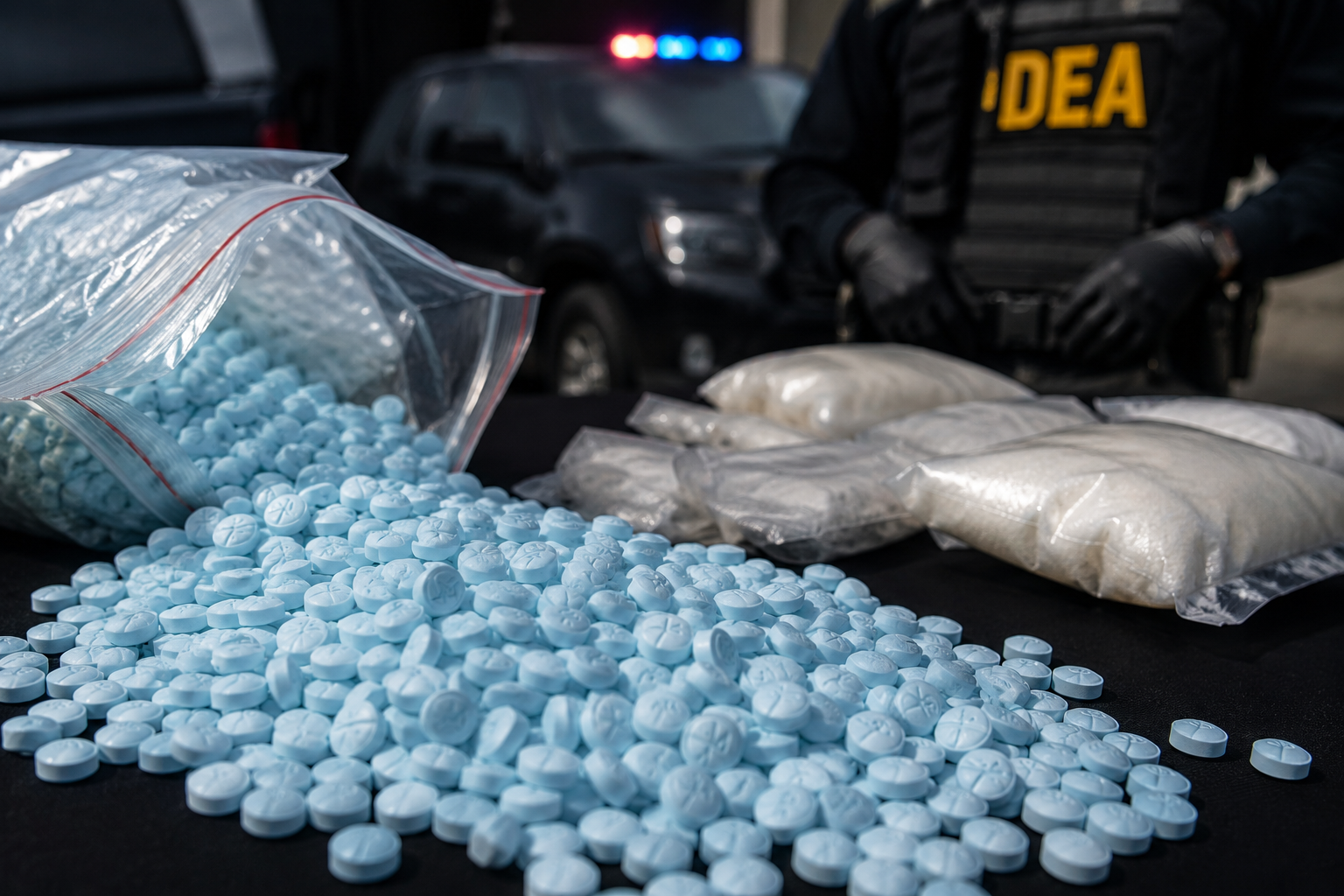
The U.S. Drug Enforcement Administration (DEA) has come under growing scrutiny after reports revealed a sharp decline in fentanyl seizures, even as authorities continue to battle the deadly opioid epidemic. The development has raised concerns among lawmakers, policy experts, and public health advocates who want answers about enforcement efforts and border security.
According to recent reports, authorities intercepted significantly fewer fentanyl pills compared to previous years. Critics argue that the decline does not necessarily indicate a reduction in drug trafficking and may instead reflect changes in enforcement strategies, smuggling routes, or operational priorities.
Fentanyl remains one of the most dangerous synthetic opioids in the United States. Drug cartels often manufacture and distribute the substance illegally, and even small quantities can prove fatal. Public health officials continue to warn that fentanyl drives overdose deaths across communities and remains a major national security and public health challenge.
The reported decrease in seizures has sparked debate in Washington. Some lawmakers have called for greater transparency from federal agencies and requested detailed explanations regarding enforcement operations. They want to know whether traffickers have adapted their methods or whether authorities need stronger tools to combat the flow of illicit drugs.
Meanwhile, DEA officials maintain that they continue to target major trafficking networks and disrupt criminal organizations responsible for distributing fentanyl. The agency now faces increasing pressure to demonstrate that current strategies effectively address the evolving drug threat.
As the opioid crisis continues to impact thousands of families, policymakers and law enforcement agencies remain focused on preventing fentanyl from reaching American communities and reducing the devastating toll of drug-related deaths.