


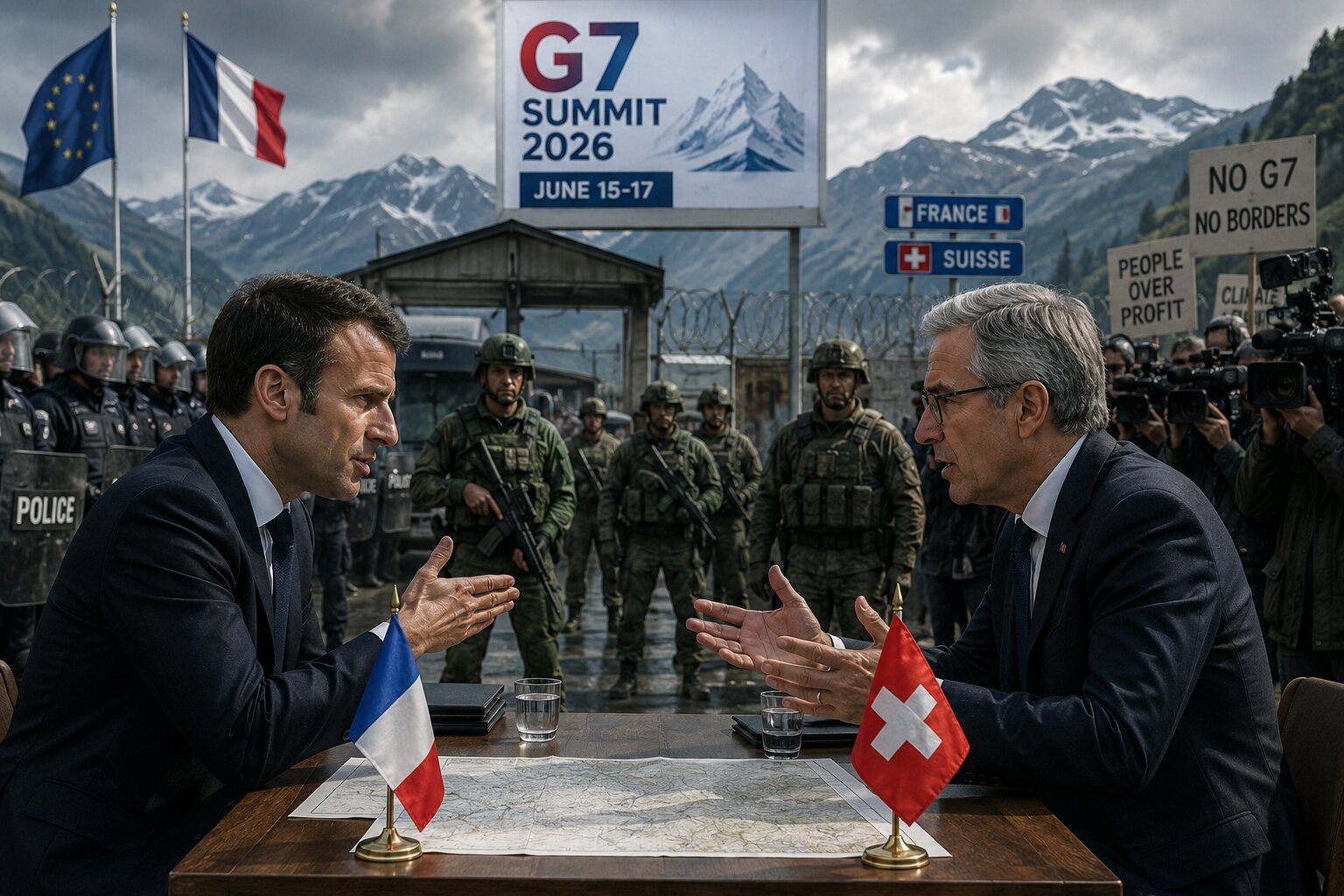
As the G7 Summit 2026 draws closer, a quiet but noticeable tension is building between France and Switzerland—two neighbors usually known for smooth cooperation.
The summit, which will bring together leaders of the world’s most powerful economies, is expected to be a major global event. But behind the scenes, Switzerland is feeling the pressure. Officials there believe they are being asked to do too much on the security front, without being fully included in planning decisions.
Because the summit venue lies close to the France–Switzerland border, both countries need to work closely. However, Swiss authorities say coordination has not been as clear or balanced as expected. They are now preparing to deploy large numbers of police and troops, even though France is officially hosting the event.
France, meanwhile, is moving ahead with tight security arrangements—stepping up surveillance, controlling borders, and working to prevent any disruption. With past G7 meetings often attracting protests, both countries are taking no chances.
There are growing concerns about demonstrations and public unrest, as activist groups across Europe prepare to gather during the summit. Streets near the venue could see heavy police presence, barricades, and strict monitoring to avoid chaos.
Despite the concerns, both sides are still in talks, trying to smooth out differences before world leaders arrive. Situations like this are not uncommon for large international events, but they do show how even close allies can face challenges when responsibilities overlap.
Experts say the issue is less about conflict and more about coordination and fairness—who does how much, and who makes the decisions. Still, it sends a subtle message: even among Western partners, unity isn’t always effortless.
As the summit approaches, the focus will not only be on global issues discussed at the table, but also on how well countries like France and Switzerland manage to work together behind the scenes.