


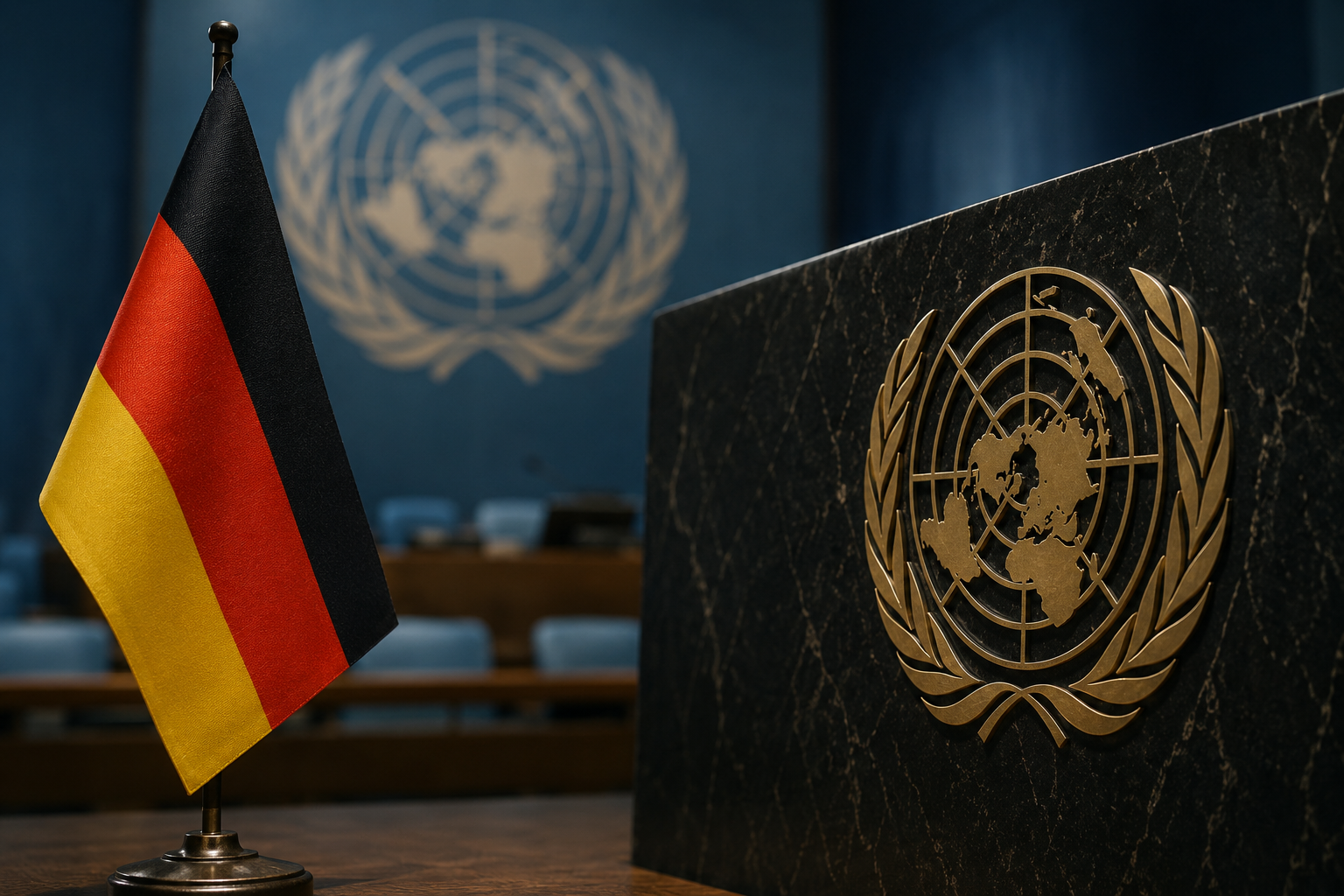
Germany has suffered a significant diplomatic setback after failing to win a non-permanent seat on the United Nations Security Council for the 2027–2028 term. The result marks the first time Germany has failed in its bid for election to the powerful 15-member body, ending a long record of successful campaigns.
During the vote held at the UN General Assembly in New York on June 3, Austria and Portugal secured the two seats allocated to the Western European and Others Group (WEOG). Portugal received 134 votes, Austria secured 131 votes, while Germany managed only 104 votes, falling well short of the required two-thirds majority.
The outcome has been described by German officials as a “bitter defeat.” Foreign Minister Johann Wadephul acknowledged the disappointment and suggested that Germany’s strong support for Ukraine and its long-standing commitment to Israel may have influenced voting patterns among some UN member states. He also alleged that Russia may have campaigned against Germany’s candidacy.
Analysts believe several factors contributed to Germany’s loss. Critics point to growing dissatisfaction among countries in Asia, Africa, and Latin America regarding Berlin’s positions on global conflicts, including the wars in Ukraine and Gaza. Germany’s reductions in foreign aid spending and its relatively late entry into the race compared with Austria and Portugal may also have weakened its chances.
The defeat is particularly notable because Germany is one of the largest financial contributors to the United Nations and has long sought a stronger role in global governance. Despite the setback, Chancellor Friedrich Merz emphasized that Germany remains committed to multilateral cooperation and international diplomacy.
The newly elected Security Council members—Austria, Portugal, Kyrgyzstan, Trinidad and Tobago, and Zimbabwe—will begin their two-year terms on January 1, 2027.