


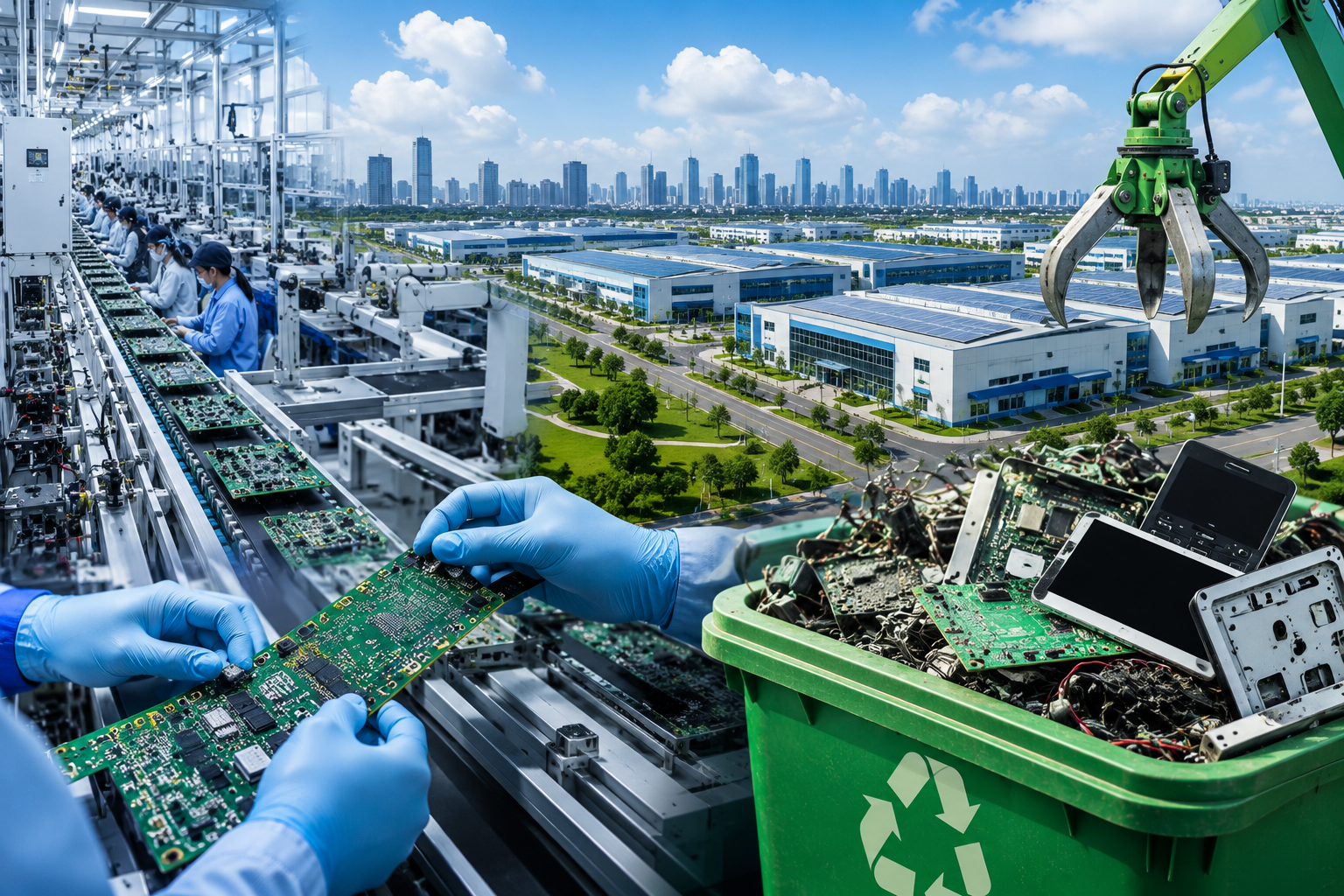
The Haryana government has unveiled draft policies aimed at transforming the state into a major hub for electronics manufacturing and e-waste recycling. Through these initiatives, the state hopes to attract investments worth approximately ₹10,000 crore and create nearly 75,000 employment opportunities over the next five years.
The proposed Electronics Manufacturing Policy seeks to encourage both domestic and international companies to establish production facilities in Haryana. The government plans to offer a range of incentives, including financial assistance, infrastructure support, and ease-of-doing-business measures to attract investors. The policy focuses on promoting the manufacturing of consumer electronics, electronic components, telecommunications equipment, semiconductor-related products, and other high-tech devices.
Alongside manufacturing, the state has also drafted an E-Waste Recycling Policy to address the growing challenge of electronic waste management. The policy aims to establish a robust recycling ecosystem by encouraging scientific disposal, resource recovery, and environmentally sustainable processing of discarded electronic products. It is expected to attract specialized recycling companies and support the development of a circular economy.
Officials believe the twin policies will strengthen Haryana’s position as an industrial and technology-driven state. The initiatives are expected to particularly benefit regions such as Gurugram, Faridabad, Sonipat, and Panipat, which already have strong industrial infrastructure and connectivity.
Apart from generating jobs, the policies are expected to boost exports, attract advanced technology, and promote skill development among the state’s workforce. The move aligns with India’s broader goal of becoming a global manufacturing destination while ensuring sustainable industrial growth and environmental responsibility.
The draft policies are currently open for stakeholder feedback before their final implementation by the state government.