


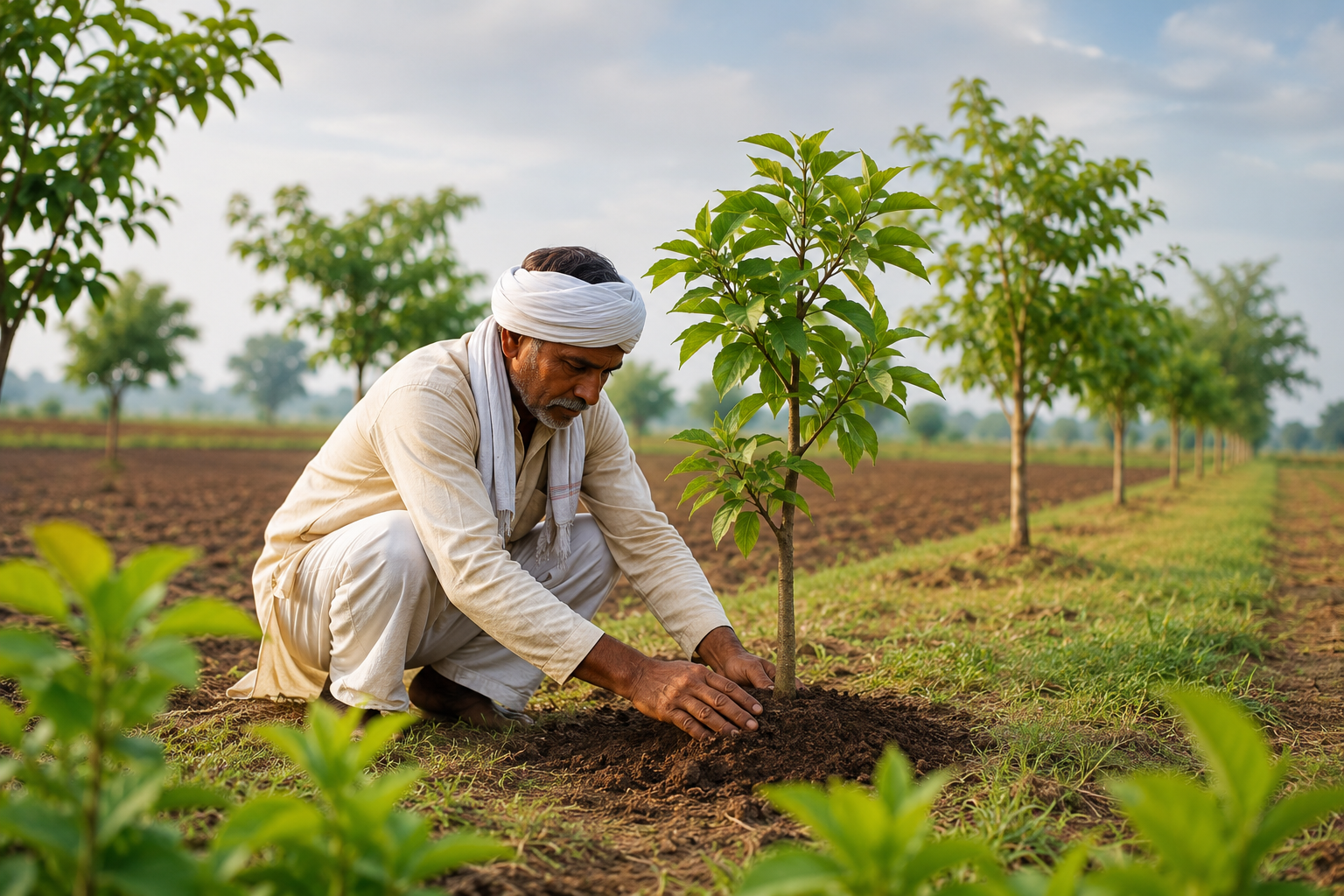
The Haryana government has launched a new environmental incentive scheme under which farmers will receive ₹500 annually for each indigenous tree they protect and maintain on their agricultural land. The initiative is part of the state’s broader efforts to increase green cover, promote biodiversity, and encourage sustainable farming practices.
The scheme focuses on conserving native tree species that are well adapted to Haryana’s climate and play an important role in maintaining ecological balance. Trees such as neem, peepal, banyan, jamun, arjun, and other indigenous varieties are expected to be covered under the program. By offering financial support, the government aims to discourage the cutting of trees and motivate farmers to preserve existing ones while planting more native species.
Officials believe that increasing tree cover on farmlands can provide multiple benefits, including improved soil fertility, better groundwater conservation, reduced soil erosion, and enhanced carbon absorption. Trees also offer shade, support biodiversity, and help mitigate the effects of climate change.
The incentive is expected to benefit thousands of farmers across the state, particularly those practicing agroforestry or maintaining traditional tree cover on their fields. The government will likely implement a verification mechanism to ensure that eligible trees are healthy and properly maintained before payments are disbursed.
Environmental experts have welcomed the move, stating that financial incentives can play a significant role in encouraging community participation in conservation efforts. The scheme aligns with Haryana’s goal of increasing its forest and tree cover while balancing agricultural productivity with environmental sustainability.
The initiative reflects a growing recognition of the role farmers play in protecting natural resources and contributing to long-term ecological health in the state.