


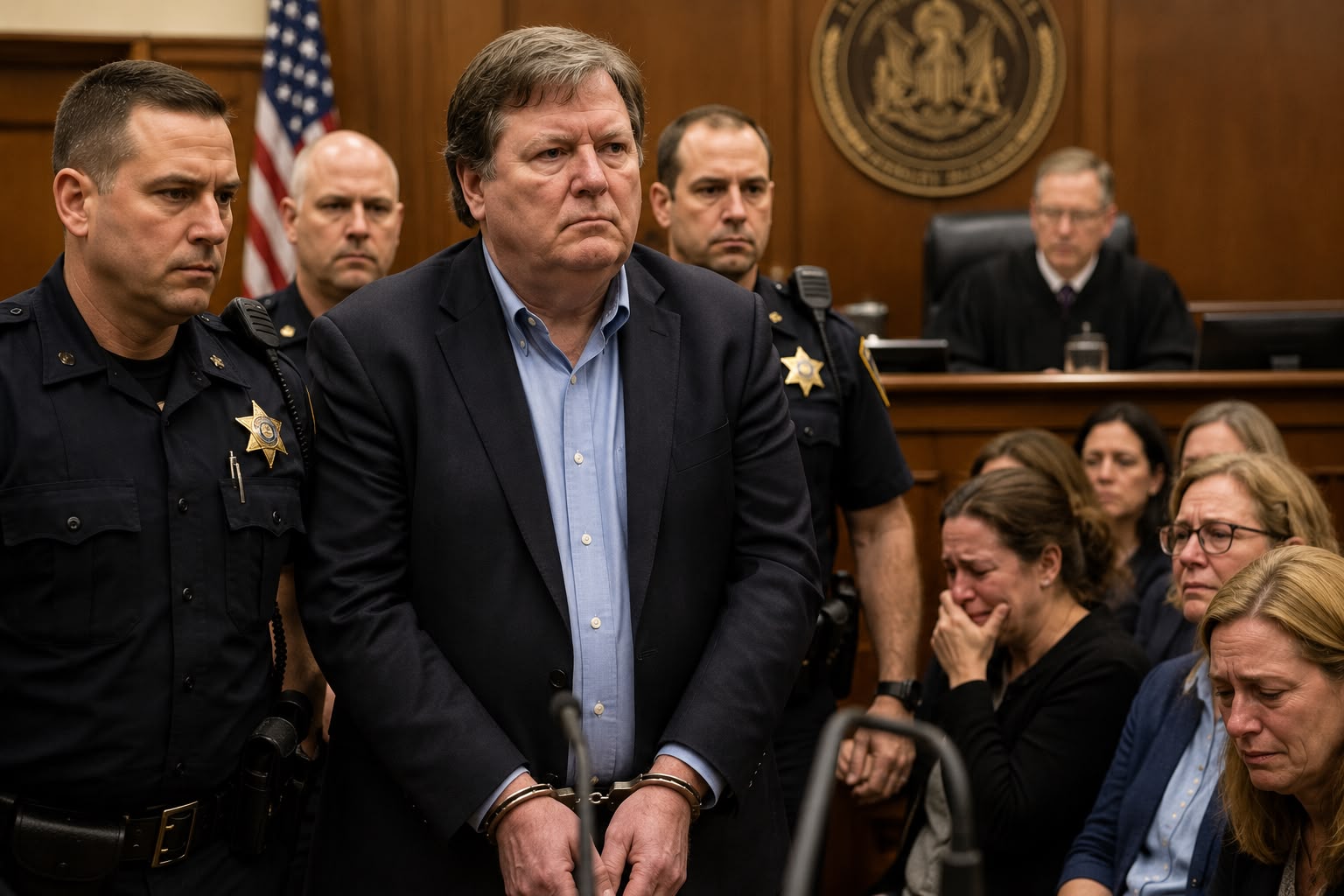
Rex Heuermann, known as the Gilgo Beach serial killer, was sentenced to life in prison on Wednesday after admitting to the murders of eight women whose remains were discovered along remote stretches of Long Island’s coastline. The sentence brings a legal conclusion to one of New York’s most notorious serial murder cases, which remained unsolved for years before investigators identified and arrested Heuermann.
The sentencing hearing took place in Riverhead, Long Island, where Judge Timothy Mazzei imposed the maximum punishment allowed under law. Heuermann received three life sentences for first-degree murder, along with additional consecutive terms of 25 years to life for multiple second-degree murder convictions. The sentences will run consecutively, ensuring that the 61-year-old will spend the remainder of his life behind bars.
Before handing down the sentence, Judge Mazzei sharply condemned Heuermann’s actions. Addressing the convicted killer directly, the judge described him as a “disgusting and despicable” individual and criticized the cruelty of his crimes. Following the sentencing, the courtroom reportedly erupted in cheers from family members and supporters of the victims.
Earlier this year, Heuermann admitted that he had strangled and bound his victims before disposing of their remains in isolated locations near Gilgo Beach. The murders, which occurred over several years, became the focus of an extensive investigation after human remains were discovered along Ocean Parkway on Long Island’s South Shore beginning in 2010.
The case attracted national and international attention due to its complexity and the lengthy period during which investigators struggled to identify a suspect. Advances in forensic technology, digital evidence, and renewed investigative efforts eventually led authorities to Heuermann, an architect from Long Island, whose arrest marked a major breakthrough in the long-running investigation.
During the hearing, relatives of the victims delivered emotional statements detailing the lasting pain caused by the murders. Several family members described years of grief, uncertainty, and trauma, saying the losses had permanently altered their lives. Their testimony underscored the profound impact the crimes had on families who spent years seeking answers and justice.
Heuermann briefly addressed the court before sentencing. Accepting responsibility for the murders, he acknowledged that any apology or explanation would carry little meaning for those affected by his actions. When asked by the judge whether he felt remorse, Heuermann responded, “yes,” though the brief exchange did little to ease the anguish expressed by victims’ relatives.
Prosecutors and law enforcement officials hailed the sentence as a significant moment of accountability in a case that had haunted Long Island communities for more than a decade. While no court ruling can reverse the suffering endured by the victims and their loved ones, officials said the outcome demonstrates the value of persistent investigative work and advances in modern criminal justice techniques.
With the sentence now imposed, Heuermann will spend the rest of his life in prison, closing a major chapter in a case that shocked communities across Long Island and beyond while leaving a lasting mark on New York’s criminal justice history.