


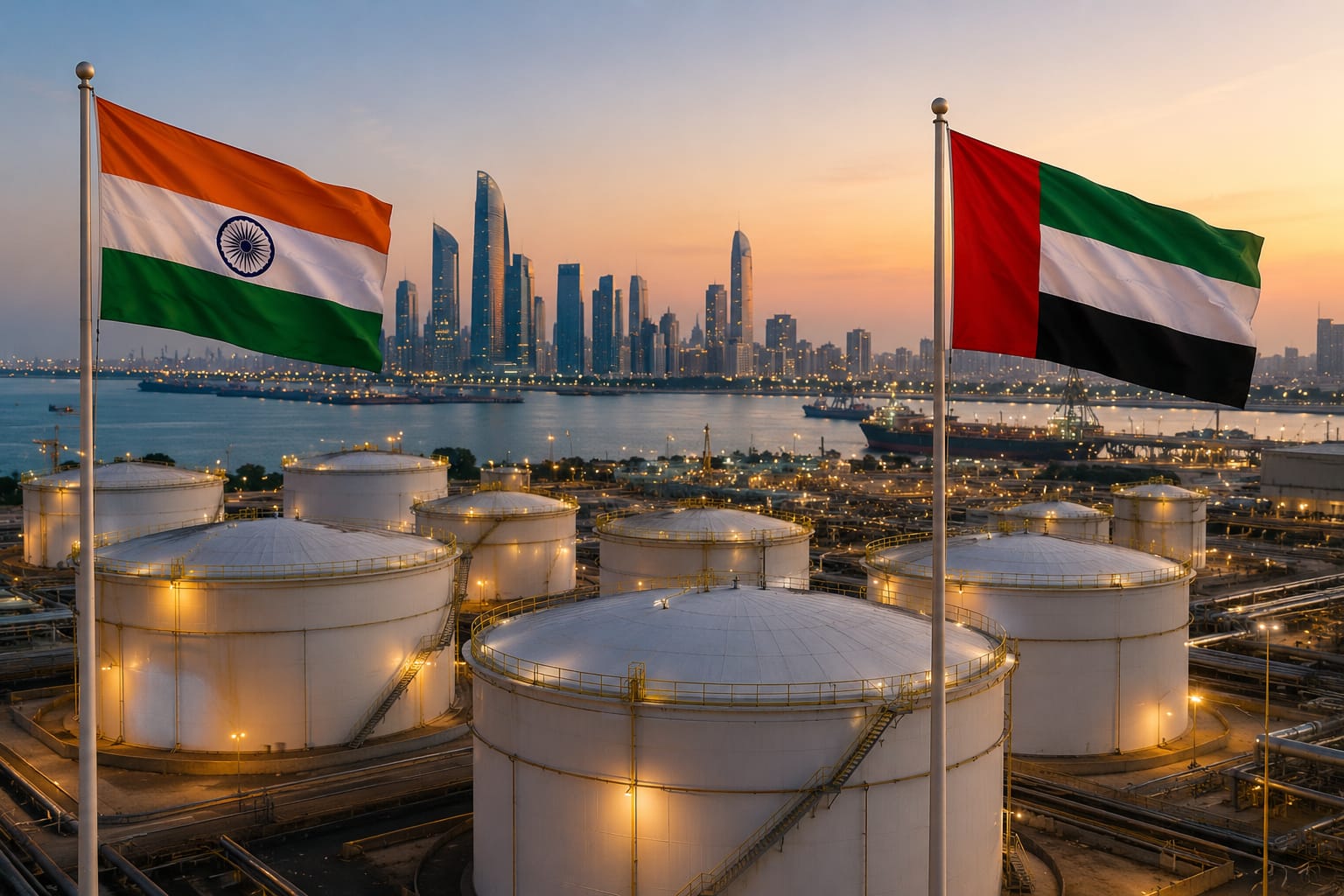
India and the United Arab Emirates (UAE) have begun accelerating efforts to expand strategic crude oil storage capacity as part of a broader initiative aimed at strengthening energy security and enhancing bilateral cooperation. The move follows Prime Minister Narendra Modi’s recent visit to the UAE, during which both countries signed several Memorandums of Understanding (MoUs) focused on energy and infrastructure development.
According to Indian officials, the two nations are working to increase UAE-linked crude oil storage capacity in India from the current 5.8 million barrels to 30 million barrels. The expansion is expected to be achieved through a combination of existing underground storage facilities and the development of new infrastructure projects.
India’s Ambassador to the UAE, Deepak Mittal, stated that both governments are actively coordinating to implement the agreements reached during the high-level discussions. In addition to crude oil storage, the two countries are exploring frameworks for strategic gas reserves and broader energy cooperation.
The initiative comes at a time when India, the world’s third-largest energy consumer, imports nearly 88 percent of its crude oil requirements. This heavy dependence on imported energy has increased the importance of maintaining adequate reserves, particularly amid ongoing geopolitical uncertainties in the Middle East, a region that supplies a significant share of India’s energy needs.
Energy experts note that expanding strategic reserves can help protect the country from supply disruptions, price volatility, and unexpected geopolitical developments. The partnership with the UAE is also expected to strengthen long-term energy ties and provide greater flexibility in managing emergency fuel requirements.
Officials from both countries have emphasized that the project reflects the growing strategic relationship between New Delhi and Abu Dhabi. Analysts believe the initiative could serve as a model for future energy collaboration, including investments in storage infrastructure, renewable energy, and energy transition projects.
While specific timelines for the full expansion have not yet been announced, both sides have indicated that implementation work is already underway. The project is expected to contribute to regional energy stability, improve supply security, and support economic resilience in an increasingly uncertain global energy environment.