

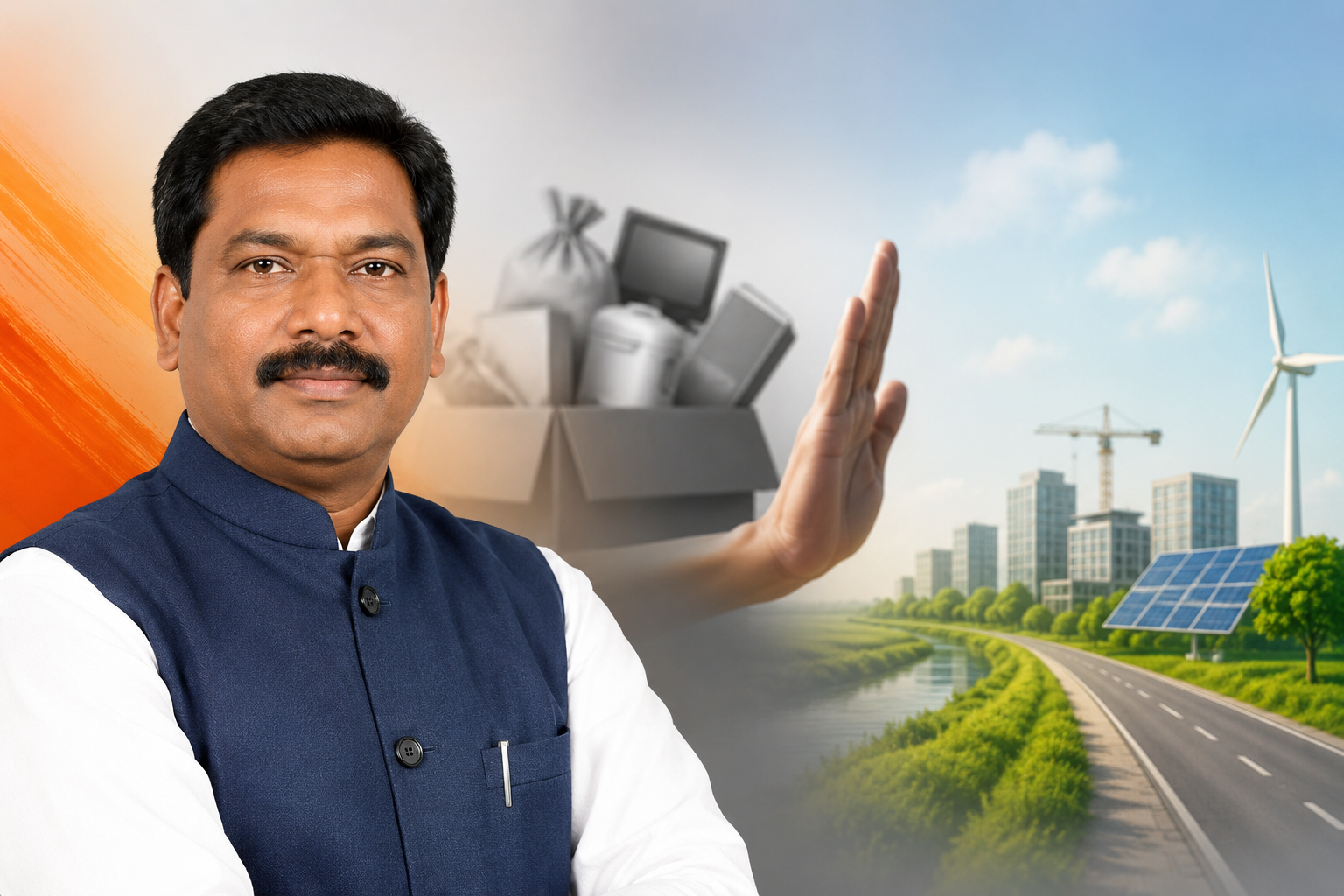
Union Minister of State for Rural Development, Kamlesh Paswan, on Monday criticised the Aam Aadmi Party (AAP) government in Punjab over its welfare schemes, describing them as “freebies” that fail to address the state’s long-term developmental needs.
Addressing party workers and the media during his visit to Punjab, Paswan said that while short-term financial assistance may provide temporary relief to people, it cannot replace policies focused on employment generation, infrastructure development, and economic growth. He argued that governments should prioritise creating opportunities that empower citizens rather than increasing dependence on state aid.
“The future of Punjab lies in sustainable development. Investments in rural infrastructure, skill development, agriculture, and employment generation are essential to ensure lasting prosperity,” Paswan said. He added that the central government’s development-oriented approach aims to strengthen villages, improve livelihoods, and promote self-reliance among citizens.
The minister also accused the AAP government of focusing more on populist measures than implementing structural reforms needed to address Punjab’s pressing challenges. He pointed to issues such as unemployment, drug abuse, and the agrarian crisis, saying these require comprehensive policy interventions rather than election-driven promises.
Paswan highlighted several initiatives undertaken by the Union government in the rural development sector, including housing schemes, road connectivity projects, and livelihood programmes designed to improve living standards in villages across the country.
Reacting to his remarks, AAP leaders defended their welfare programmes, arguing that schemes such as free electricity and financial assistance provide much-needed support to ordinary families struggling with rising expenses. They maintained that social welfare and development can go hand in hand.
Paswan’s comments have reignited the debate over the balance between welfare measures and long-term economic planning, an issue that is expected to remain a key political talking point in Punjab ahead of future elections.