


Government Pushes Water-Saving Farming Technique
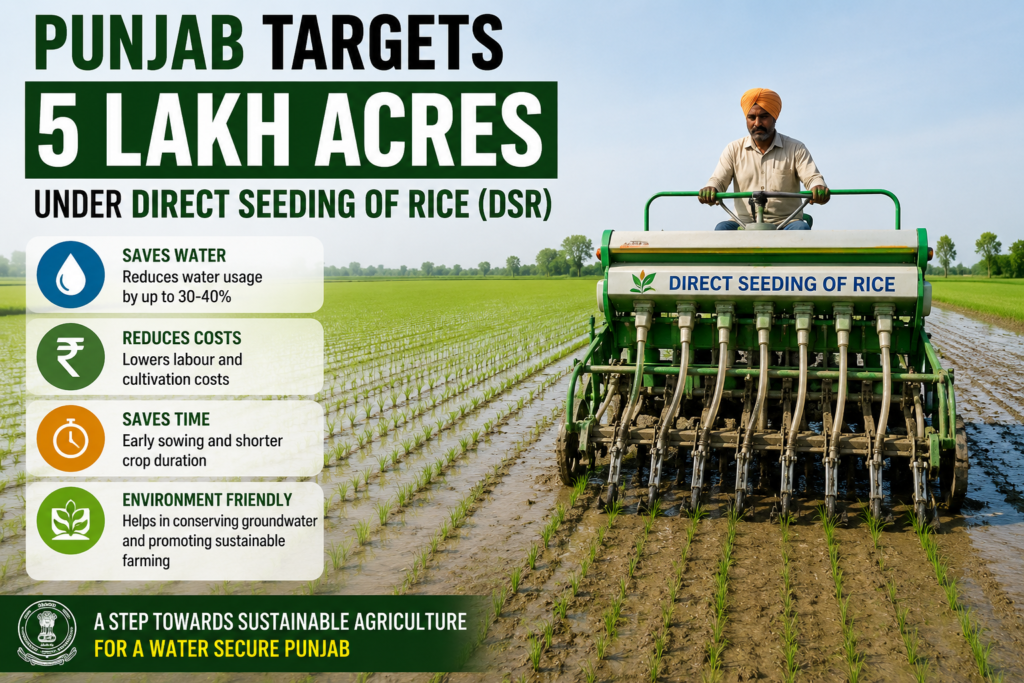
The Punjab government has intensified efforts to expand Direct Seeding of Rice (DSR) cultivation across the state, setting a target of bringing nearly five lakh acres under the water-saving farming method during the current paddy season. The initiative is part of the state’s broader strategy to conserve groundwater and promote sustainable agricultural practices.
Officials from the agriculture department stated that DSR technology allows farmers to sow paddy seeds directly into the soil without the need for traditional transplantation. Officials say the method can help reduce water usage, labour requirements, and cultivation costs compared to conventional paddy farming methods.
Incentives and Awareness Campaigns Introduced
To encourage farmers to adopt the technique, the state government has announced financial incentives and awareness programs in several districts. Agriculture officers are conducting field demonstrations and training sessions to educate farmers about the benefits and proper use of DSR technology.
The government is also encouraging the use of DSR-compatible machinery and farming equipment while urging farmers to register under state-supported schemes aimed at increasing DSR coverage. Officials say the initiative is intended to help reduce pressure on Punjab’s declining groundwater reserves.
Farmers Show Mixed Response
While many farmers have welcomed the move due to rising labour costs and increasing water shortages, some remain cautious about adopting the new method. Concerns related to weed management, crop yield, and unpredictable weather conditions continue to influence farmer decisions in certain areas.
Agriculture experts say proper training, weed management, and timely irrigation remain important for successful DSR cultivation. They believe wider awareness and technical support could help increase farmer confidence in the technology.
The Punjab government aims to further expand the use of sustainable farming technologies in the coming years as environmental concerns and water conservation challenges continue to grow across the state.