

Introduction
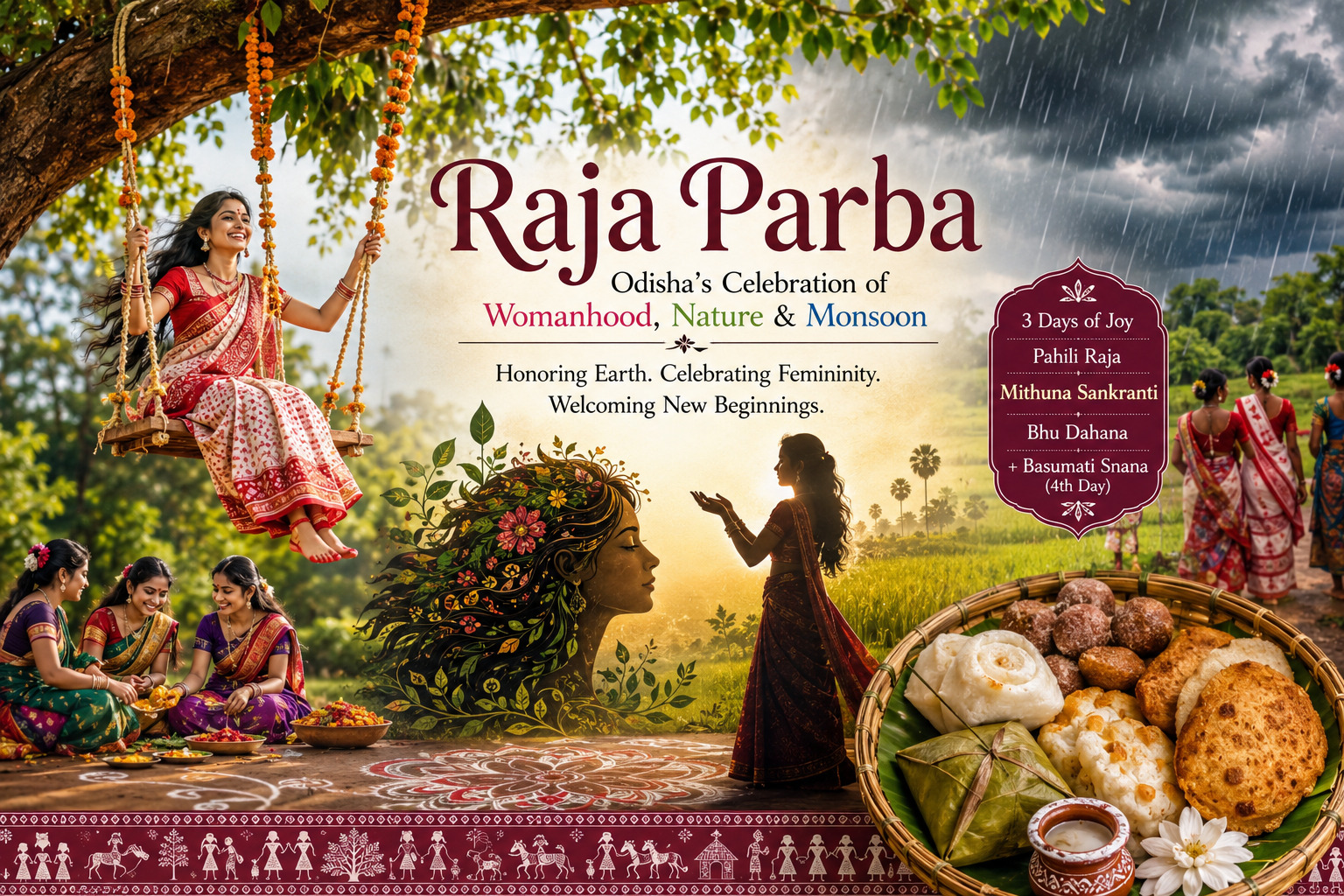
Raja Parba is one of the most vibrant and culturally rich festivals celebrated in the eastern Indian state of Odisha. Observed over three days, and sometimes extending to a fourth day known as Basumati Snana, the festival marks the arrival of the monsoon season and celebrates womanhood, fertility, and the rejuvenation of Mother Earth. Unlike many Indian festivals centered around rituals and temples, Raja Parba is deeply connected with nature, agriculture, and social joy.
The word “Raja” is derived from the Sanskrit term Rajaswala, meaning menstruation. According to traditional beliefs, Mother Earth undergoes her menstrual cycle during these days and is given rest, just like women are encouraged to rest and celebrate their femininity. This unique symbolism makes Raja Parba one of India’s most progressive and culturally significant traditional festivals.
When is Raja Parba Celebrated?
Raja Parba is usually celebrated in mid-June, coinciding with the beginning of the monsoon and the Hindu solar month of Mithuna. In 2026, the festival is expected to be observed from 14 June to 16 June.
The festival is divided into three main days:
- Pahili Raja – The first day of celebration
- Mithuna Sankranti – The second and most important day
- Bhu Dahana or Basi Raja – The third day
Some communities also observe a fourth day called Basumati Snana, during which Mother Earth is symbolically bathed and worshipped.
Cultural Significance of Raja Parba
Raja Parba holds immense cultural and social importance in Odisha. It celebrates femininity, fertility, and the power of creation. Traditionally, agricultural activities such as ploughing, digging, or cutting the soil are avoided during the festival as the Earth is considered to be resting.
Women and girls wear new clothes, apply alta on their feet, enjoy traditional swings tied to large trees, sing folk songs, and participate in games and festivities. The atmosphere across villages and cities becomes festive and joyful.
The festival also reflects Odisha’s agrarian roots. Since the monsoon season begins around this time, Raja Parba symbolically prepares the land for cultivation after giving it a period of rest and respect.
Traditions and Celebrations
One of the most recognizable aspects of Raja Parba is the beautifully decorated swings called Raja Doli. Swings are installed in courtyards, gardens, and village grounds, where children and women spend hours enjoying the festive spirit.
Traditional Odia delicacies are another highlight of the festival. Special dishes such as Poda Pitha, Manda Pitha, Arisa Pitha, and various rice-based sweets are prepared in households. Families gather together to celebrate with music, dance, and feasting.
Girls are traditionally exempted from household chores during the festival, symbolizing relaxation and celebration of womanhood. Many people also play indoor games like cards, ludo, and traditional rural sports.
Modern Relevance
In recent years, Raja Parba has gained wider recognition beyond Odisha because of its strong message about respecting nature and acknowledging menstruation as a natural biological process rather than a taboo subject. Cultural organIntroduction
Raja Parba is one of the most vibrant and culturally rich festivals celebrated in the eastern Indian state of Odisha. Observed over three days, and sometimes extending to a fourth day known as Basumati Snana, the festival marks the arrival of the monsoon season and celebrates womanhood, fertility, and the rejuvenation of Mother Earth. Unlike many Indian festivals centered around rituals and temples, Raja Parba is deeply connected with nature, agriculture, and social joy.
The word “Raja” is derived from the Sanskrit term Rajaswala, meaning menstruation. According to traditional beliefs, Mother Earth undergoes her menstrual cycle during these days and is given rest, just like women are encouraged to rest and celebrate their femininity. This unique symbolism makes Raja Parba one of India’s most progressive and culturally significant traditional festivals.
When is Raja Parba Celebrated?
Raja Parba is usually celebrated in mid-June, coinciding with the beginning of the monsoon and the Hindu solar month of Mithuna. In 2026, the festival is expected to be observed from 14 June to 16 June.
The festival is divided into three main days:
• Pahili Raja – The first day of celebration
• Mithuna Sankranti – The second and most important day
• Bhu Dahana or Basi Raja – The third day
Some communities also observe a fourth day called Basumati Snana, during which Mother Earth is symbolically bathed and worshipped.
Cultural Significance of Raja Parba
Raja Parba holds immense cultural and social importance in Odisha. It celebrates femininity, fertility, and the power of creation. Traditionally, agricultural activities such as ploughing, digging, or cutting the soil are avoided during the festival as the Earth is considered to be resting.
Women and girls wear new clothes, apply alta on their feet, enjoy traditional swings tied to large trees, sing folk songs, and participate in games and festivities. The atmosphere across villages and cities becomes festive and joyful.
The festival also reflects Odisha’s agrarian roots. Since the monsoon season begins around this time, Raja Parba symbolically prepares the land for cultivation after giving it a period of rest and respect.
Traditions and Celebrations
One of the most recognizable aspects of Raja Parba is the beautifully decorated swings called Raja Doli. Swings are installed in courtyards, gardens, and village grounds, where children and women spend hours enjoying the festive spirit.
Traditional Odia delicacies are another highlight of the festival. Special dishes such as Poda Pitha, Manda Pitha, Arisa Pitha, and various rice-based sweets are prepared in households. Families gather together to celebrate with music, dance, and feasting.
Girls are traditionally exempted from household chores during the festival, symbolizing relaxation and celebration of womanhood. Many people also play indoor games like cards, ludo, and traditional rural sports.
Modern Relevance
In recent years, Raja Parba has gained wider recognition beyond Odisha because of its strong message about respecting nature and acknowledging menstruation as a natural biological process rather than a taboo subject. Cultural organizations, schools, and social groups now organize special Raja celebrations to promote awareness about women’s health and traditional heritage.
The festival also contributes significantly to Odisha’s tourism and cultural identity. Visitors from across India come to witness the colorful celebrations, traditional attire, folk music, and authentic Odia cuisine associated with Raja Parba.
A Festival That Celebrates Life, Nature and Feminine Strength
Raja Parba is far more than just a seasonal celebration. It is a festival that beautifully combines respect for nature, appreciation of womanhood, agricultural traditions, and community joy. In an era where conversations around women’s health and environmental awareness are increasingly important, Raja Parba stands out as a timeless cultural tradition carrying a meaningful social message for generations to come.
izations, schools, and social groups now organize special Raja celebrations to promote awareness about women’s health and traditional heritage.
The festival also contributes significantly to Odisha’s tourism and cultural identity. Visitors from across India come to witness the colorful celebrations, traditional attire, folk music, and authentic Odia cuisine associated with Raja Parba.
A Festival That Celebrates Life, Nature and Feminine Strength
Raja Parba is far more than just a seasonal celebration. It is a festival that beautifully combines respect for nature, appreciation of womanhood, agricultural traditions, and community joy. In an era where conversations around women’s health and environmental awareness are increasingly important, Raja Parba stands out as a timeless cultural tradition carrying a meaningful social message for generations to come.
Read more about the festivals in June.