

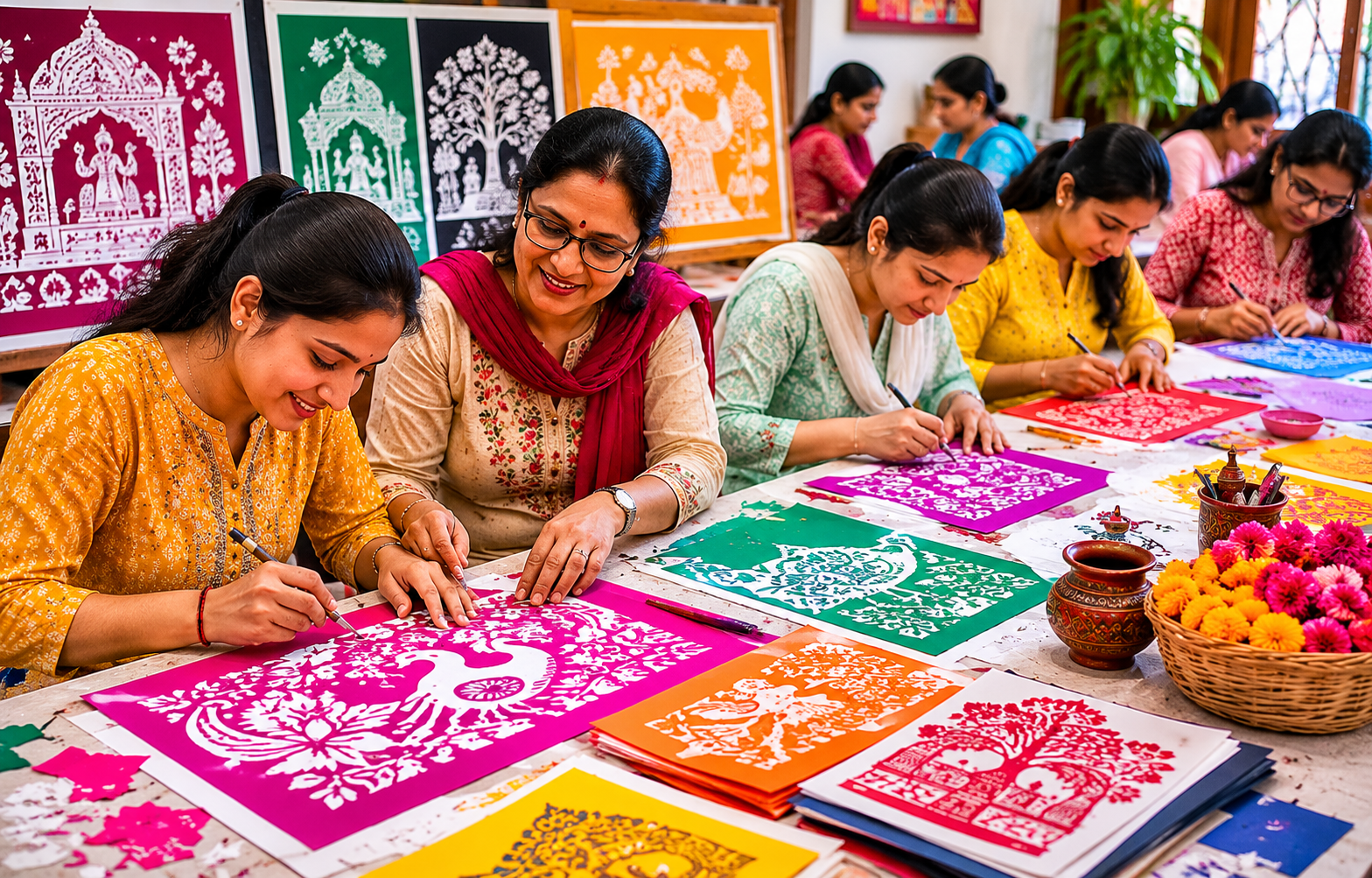
A Sanjhi art workshop aimed at preserving and promoting India’s rich cultural heritage concluded successfully in Kurukshetra. The event witnessed enthusiastic participation from women, who learned the traditional techniques of creating Sanjhi artworks under the guidance of experienced artists and cultural experts.
The workshop was organized to introduce participants to the historical and artistic significance of Sanjhi, a traditional folk art form associated with devotion and creativity. During the program, women were trained in designing intricate patterns, preparing decorative motifs, and using traditional methods to create visually appealing Sanjhi compositions.
Experts explained that Sanjhi art originated in the Braj region and is closely linked with the worship of Lord Krishna. The participants gained hands-on experience in cutting delicate designs and arranging them into beautiful artistic displays. The workshop also highlighted the importance of preserving traditional art forms in the modern era.
Organizers expressed satisfaction over the active involvement of women from different age groups. They noted that such initiatives help strengthen cultural awareness while providing a platform for artistic expression. Participants appreciated the opportunity to learn a unique folk art form and interact with skilled practitioners.
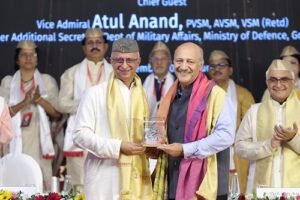
During the concluding session, organizers encouraged attendees to continue practicing Sanjhi art and share their knowledge with others. Certificates of participation were also distributed to recognize the efforts and dedication of the women who took part in the workshop.
Speaking on the occasion, cultural experts emphasized that traditional art forms like Sanjhi play a vital role in preserving India’s cultural identity. They urged educational institutions and community organizations to conduct similar workshops regularly.
The successful completion of the workshop reflected the growing interest among women in traditional arts and cultural activities. Organizers expressed hope that such programs would inspire more people to learn and preserve India’s valuable folk art traditions for future generations.