


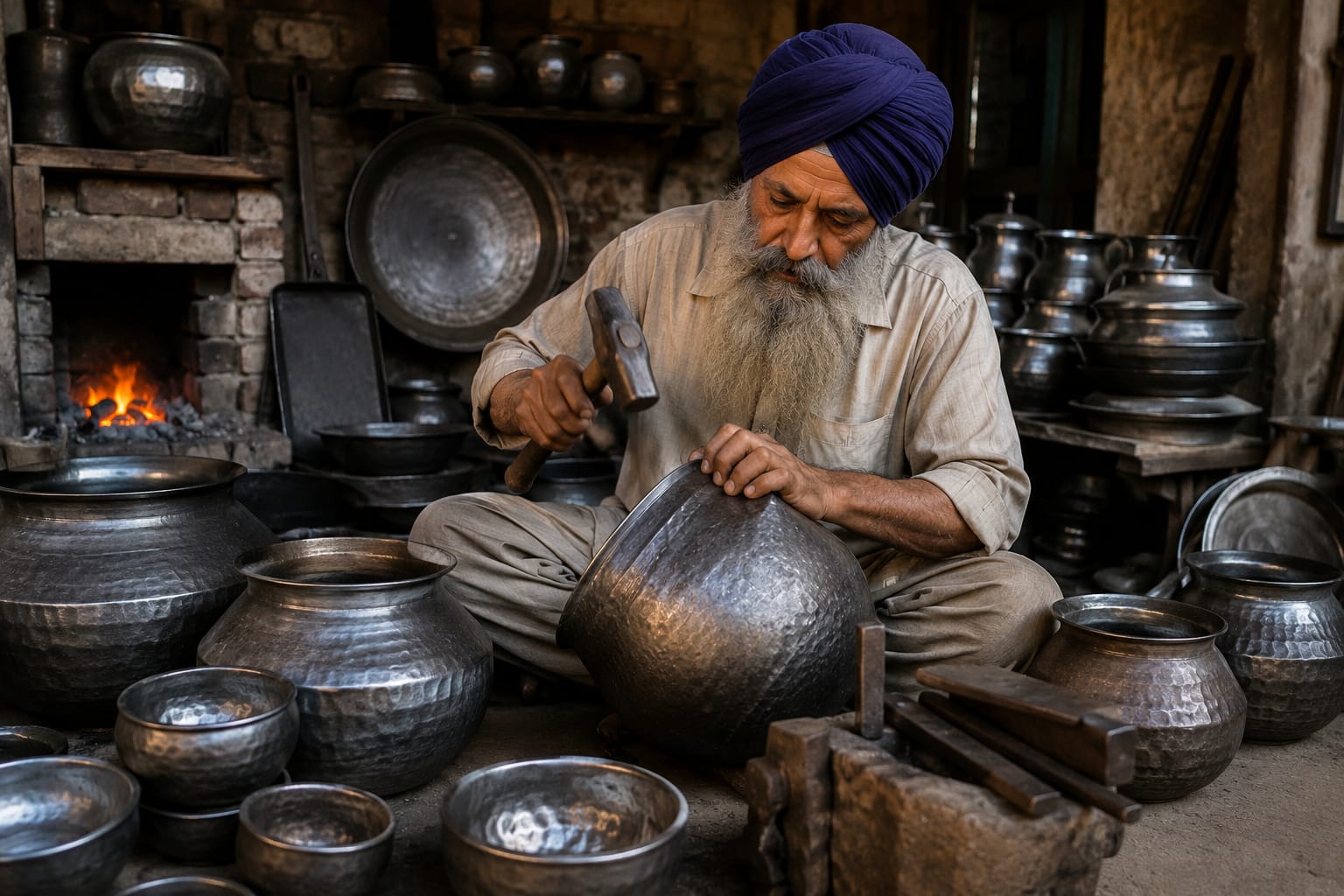
In the town of Gharuan in Punjab’s Mohali district, a small community of artisans continues to preserve a centuries-old craft that holds deep cultural and religious significance within Sikh tradition. Despite changing consumer preferences and growing competition from modern materials, these skilled craftsmen remain dedicated to producing utensils made from sarbloh, a traditional form of iron revered in Sikh heritage.
Sarbloh has long been associated with Sikh history and religious practices. It is commonly used in the preparation and serving of food in some Sikh institutions and is valued by many for its cultural and spiritual significance. The utensils crafted in Gharuan are sought after by individuals, families, and religious organizations that wish to maintain traditional practices.
The manufacturing process remains largely manual and requires years of experience to master. Artisans shape iron sheets using specialized tools, carefully hammering, heating, and polishing the metal to create durable utensils. Each piece is produced through a labor-intensive process that reflects techniques passed down through generations.
Local craftsmen say that sustaining the trade has become increasingly challenging. The availability of cheaper alternatives made from stainless steel and other modern materials has reduced demand for traditional sarbloh utensils. Rising production costs and limited market access have also added pressure on artisan families who rely on the craft for their livelihood.
Historians and cultural experts view the tradition as an important part of Punjab’s cultural heritage. They note that preserving such crafts helps maintain historical knowledge and supports local communities that continue to practice traditional skills. Community members have also expressed appreciation for the artisans’ efforts to keep the craft alive despite economic difficulties.
Several cultural organizations and heritage advocates have called for greater awareness, training programs, and promotional initiatives to support traditional artisans. Such measures, they argue, could help create new opportunities while preserving valuable cultural practices.
As interest in heritage crafts grows, artisans in Gharuan remain hopeful about the future. Their work not only supports local livelihoods but also serves as a living connection to Sikh history and Punjab’s rich cultural traditions, ensuring that the legacy of sarbloh craftsmanship continues for future generations.