

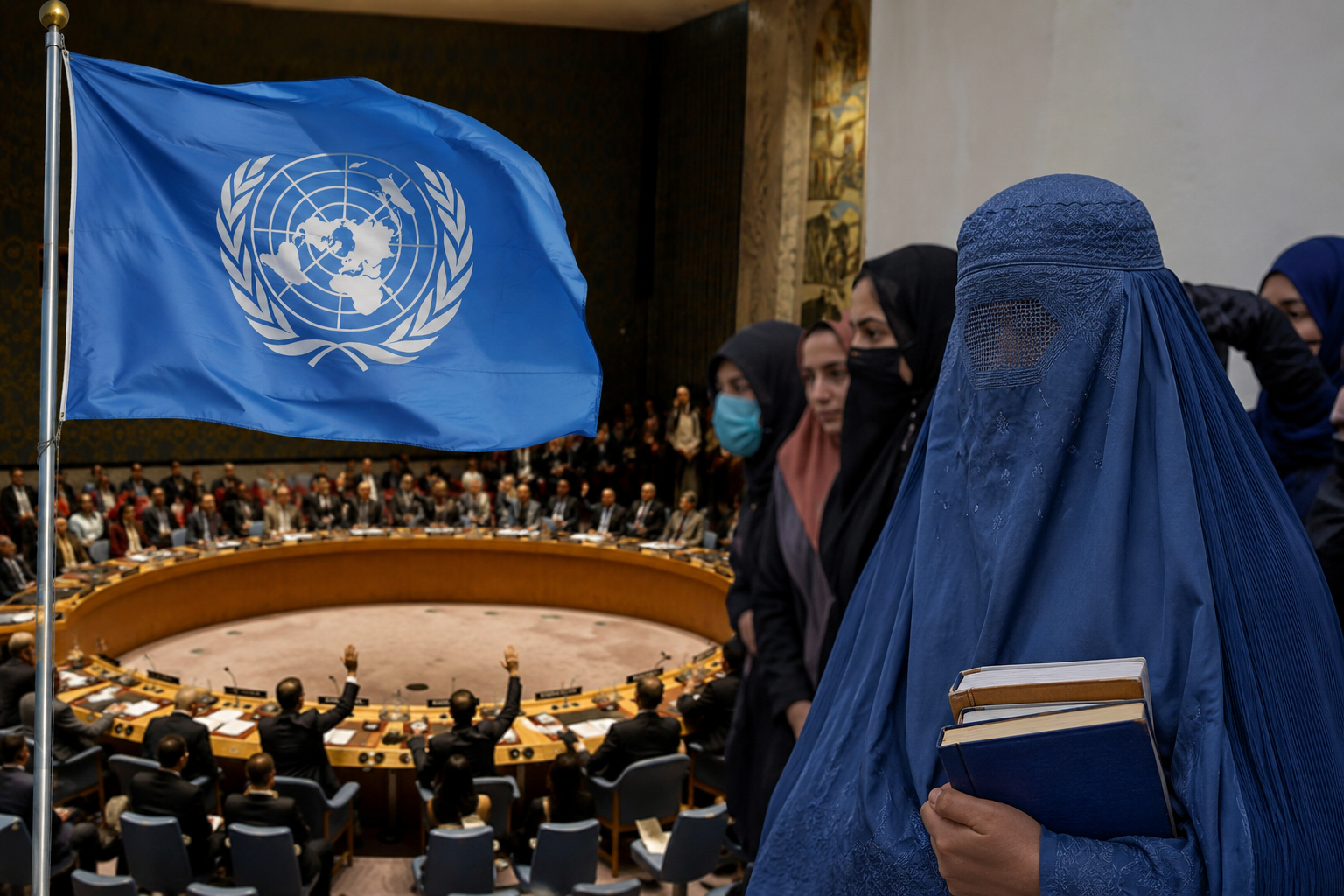
The United Nations Security Council (UNSC) has adopted a new resolution calling on Afghanistan’s Taliban rulers to reverse restrictions imposed on women and girls. The resolution reflects growing international concern over the continued erosion of women’s rights since the Taliban returned to power in 2021.
Resolution Highlights Global Concerns
The UNSC resolution urges the Taliban to lift policies that limit women’s access to education, employment, and public life. Council members stressed that the participation of women is essential for Afghanistan’s stability, development, and long-term prosperity.
The resolution also reaffirmed support for the human rights of all Afghans and called for greater engagement with international organizations working in the country.
Restrictions Remain in Place
Since taking control of Afghanistan, the Taliban have imposed a series of restrictions on women and girls. Authorities have barred girls from attending secondary schools and universities in many areas. Women also face limitations on employment, travel, and participation in public activities.
Human rights groups and international agencies have repeatedly criticized these measures. They argue that the restrictions have deepened social and economic challenges across the country.
International Community Seeks Change
Several UN member states welcomed the resolution and urged the Taliban to respond positively. Diplomats said the international community remains committed to supporting the Afghan people while encouraging respect for fundamental rights.
The Security Council also emphasized the need for humanitarian assistance and continued efforts to address Afghanistan’s economic difficulties.
Uncertain Response from Taliban
The Taliban have previously defended their policies, stating that they are based on their interpretation of Islamic law and Afghan cultural values. However, many governments and rights organizations reject that justification and continue to call for policy changes.
The resolution is not legally binding, but it sends a strong political message. It highlights the growing pressure on Afghanistan’s rulers to improve conditions for women and girls and engage more constructively with the international community.