

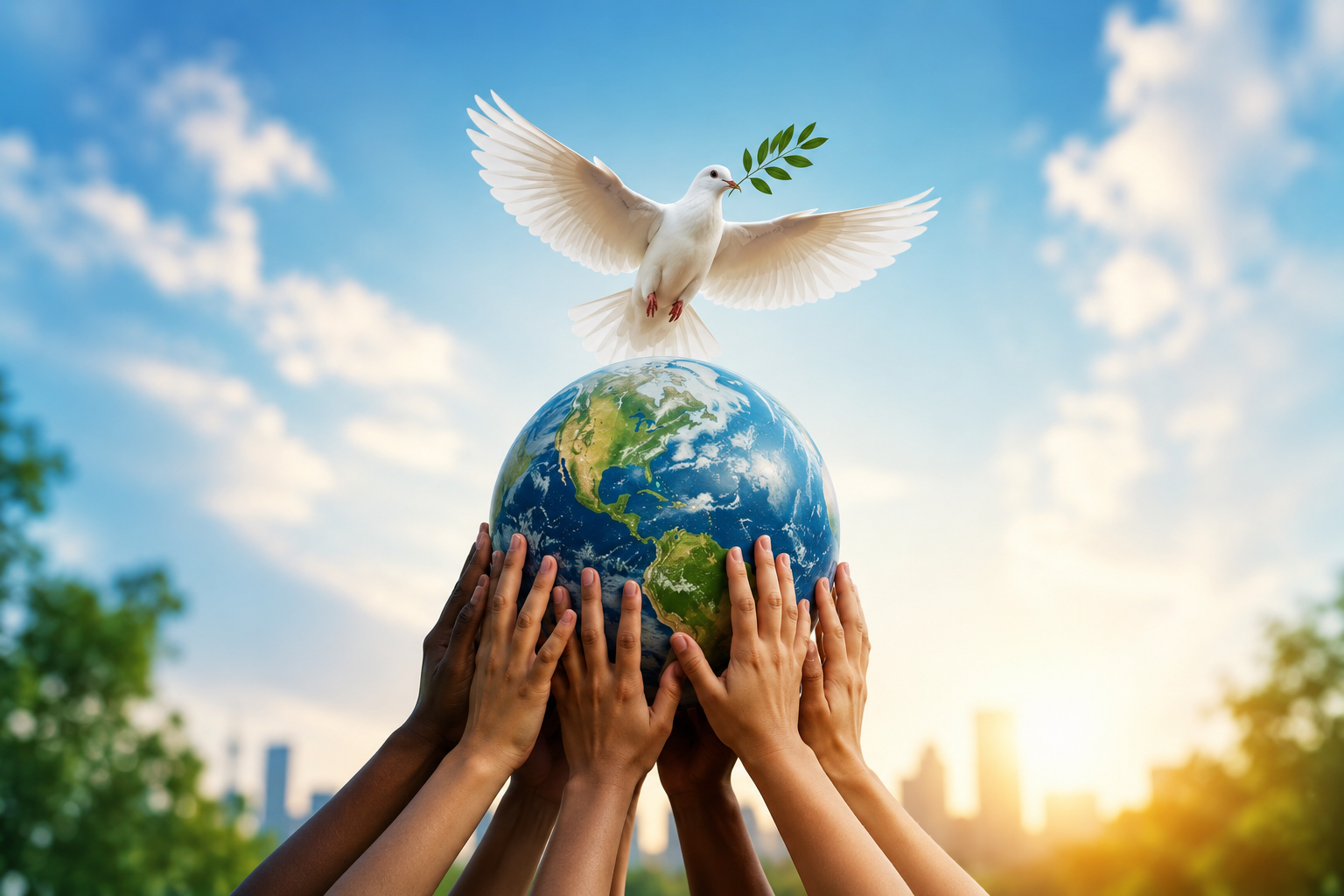
The International Day of Peace is observed every year on September 21 to strengthen the ideals of peace among nations and people around the world. Established by the United Nations, the day encourages individuals, communities, and governments to promote dialogue, tolerance, and non-violence. It serves as a reminder that lasting peace begins with mutual respect, understanding, and collective action.
History of International Day of Peace
The International Day of Peace was established by the United Nations General Assembly in 1981. Initially, it was observed on the opening day of the General Assembly session each September. In 2001, the General Assembly designated September 21 as the permanent date for the observance and declared it a day of global ceasefire and non-violence. Since then, the day has become a worldwide occasion to encourage peaceful conflict resolution and strengthen international cooperation.
Importance of the International Day of Peace
Peace is essential for sustainable development, human rights, and social progress. The International Day of Peace highlights the importance of resolving conflicts through dialogue instead of violence. It encourages people to embrace compassion, equality, and inclusion while rejecting discrimination, hatred, and intolerance. The observance also raises awareness about global challenges such as poverty, climate change, inequality, and humanitarian crises, emphasizing that lasting peace requires collective efforts from everyone.
How the International Day of Peace Is Celebrated
The day is marked by peace marches, educational workshops, cultural programs, interfaith prayers, art exhibitions, community service activities, and discussions on conflict resolution. Schools and universities organize essay writing, debates, and poster-making competitions to educate students about the value of peace. The United Nations commemorates the occasion with the Peace Bell Ceremony at its headquarters in New York, where the Peace Bell is rung as a symbol of hope and unity. Individuals also participate by spreading messages of kindness, volunteering, supporting humanitarian causes, and promoting peaceful dialogue within their communities.
Conclusion
The International Day of Peace reminds us that peace is more than the absence of war—it is the presence of justice, equality, compassion, and respect for all. Every act of kindness, understanding, and cooperation contributes to building stronger and more harmonious communities. By embracing peaceful values in our daily lives and encouraging dialogue over conflict, we can help create a safer, more inclusive, and sustainable world for present and future generations.