


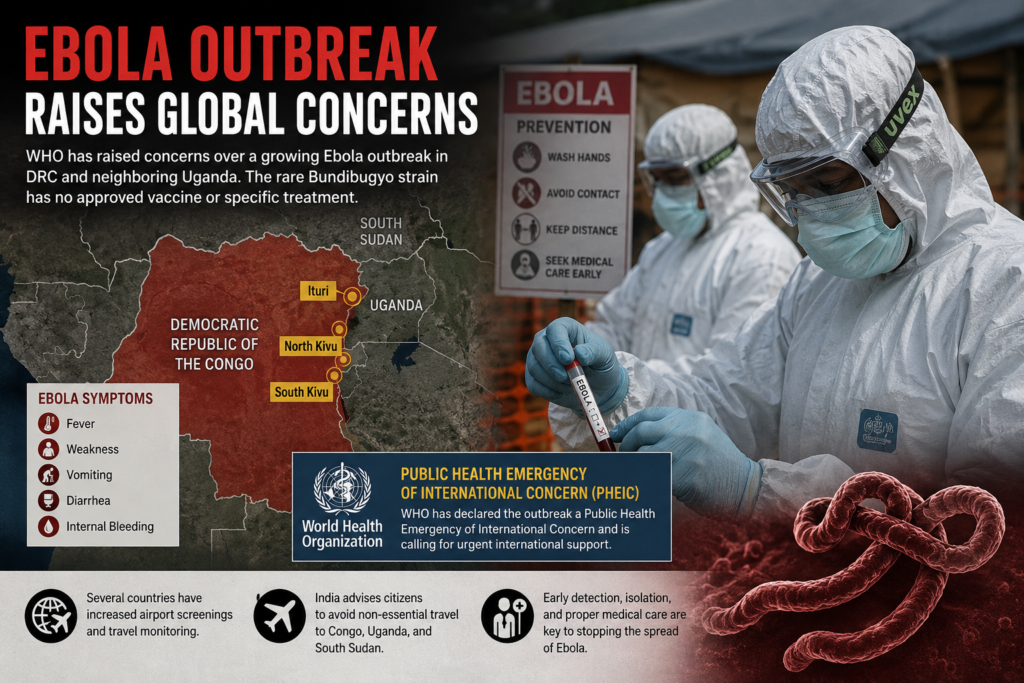
The World Health Organization (WHO) has raised concerns over a growing Ebola outbreak in Central Africa, particularly in the Democratic Republic of the Congo (DRC) and neighboring Uganda. The outbreak involves the rare Bundibugyo strain of the Ebola virus, which currently has no approved vaccine or specific treatment available.
According to recent WHO updates, both suspected and confirmed Ebola cases have continued to rise in several parts of eastern Congo, including the Ituri, North Kivu, and South Kivu regions. Health officials believe the actual number of infections could be higher because many affected areas have limited access to hospitals, testing facilities, and healthcare workers.
The outbreak response has become more difficult due to ongoing violence and instability in the region. Several healthcare centers are facing shortages of medicines, protective equipment, and transportation support for emergency teams. Reports have also highlighted attacks on treatment facilities and resistance from some local communities, slowing efforts to contain the disease.
WHO has officially declared the outbreak a Public Health Emergency of International Concern (PHEIC), calling for urgent international support and stronger monitoring systems. Medical researchers are currently working on possible vaccine candidates for the Bundibugyo strain, although experts say it may still take several months before they are ready for wider use.
As a precaution, some countries have increased health screenings and travel monitoring measures at airports. India has also advised citizens to avoid non-essential travel to Congo, Uganda, and South Sudan until the situation improves.
Ebola spreads through direct contact with infected bodily fluids and can cause symptoms such as fever, weakness, vomiting, diarrhea, and internal bleeding. Health experts continue to stress that early diagnosis, quick isolation, and proper medical care are the most effective ways to reduce the spread of the virus.
The latest outbreak has once again highlighted the importance of global cooperation, emergency healthcare support, and faster disease response systems to prevent future public health crises.