

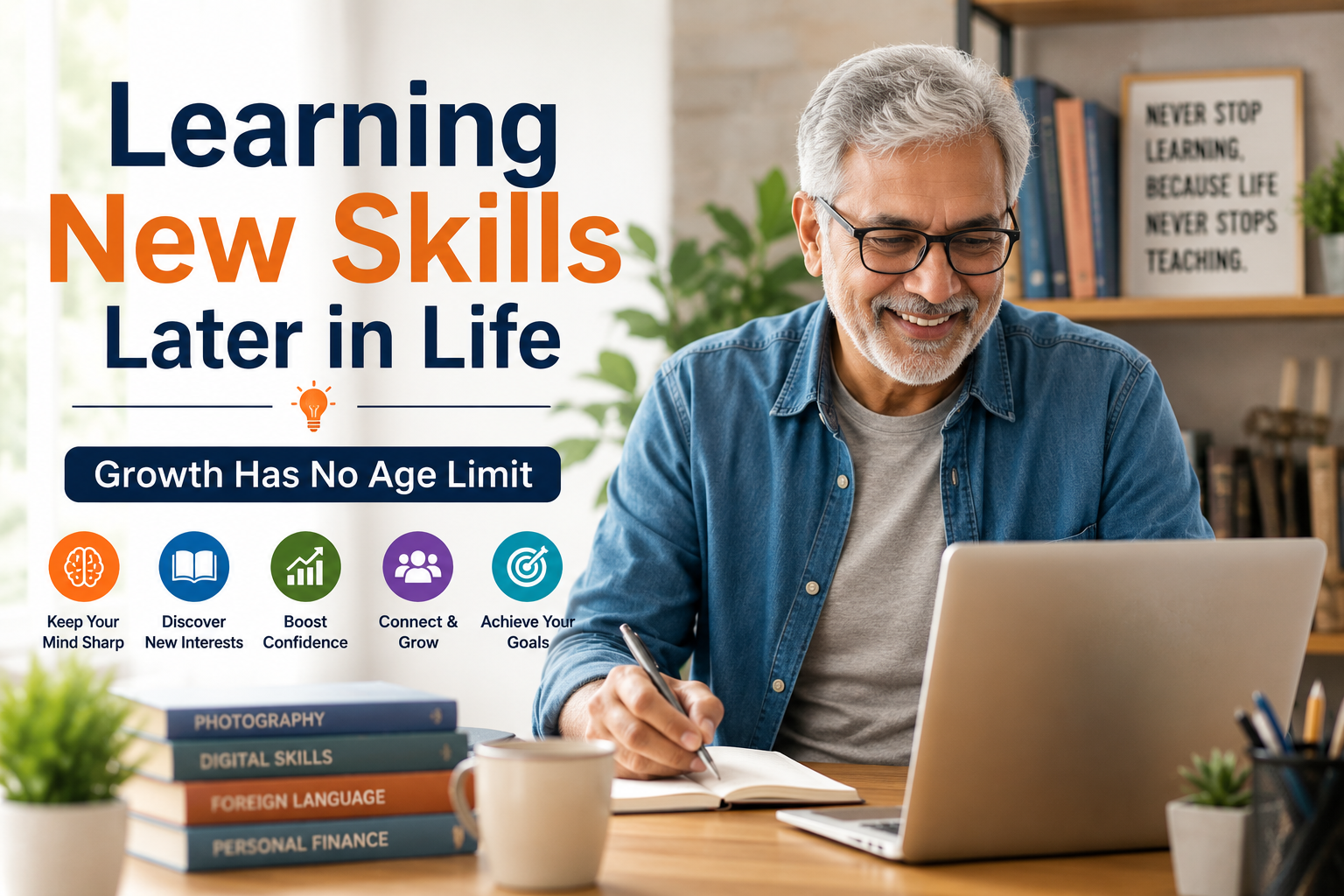
Many people believe that learning is only for children or young adults. Once formal education is completed and careers begin, it is easy to assume that the opportunity to learn new things gradually disappears. However, life often proves otherwise. Learning new skills later in life can be one of the most rewarding experiences a person can have. Whether it is learning a new language, using technology, pursuing a hobby, or even starting a new career, personal growth does not have an age limit.
I have met many people who once believed they were too old to learn something new. Over time, they discovered that age was not the real obstacle. What truly mattered was curiosity, determination, and a willingness to try something unfamiliar. Learning new skills later in life can boost confidence, provide a sense of purpose, and make everyday life more exciting.
Why Learning New Skills Should Never Stop
Learning is about much more than acquiring knowledge. It helps keep the mind active, improves problem-solving abilities, and encourages personal growth. Since the world is constantly changing, learning allows people to adapt and remain connected to new ideas, technologies, and opportunities.
Many adults find that learning becomes even more meaningful as they grow older. Unlike children who often learn because they are required to, adults usually choose to learn because they genuinely want to. This personal motivation often makes the learning process more enjoyable and rewarding.
Learning also creates a sense of accomplishment. Every new skill mastered serves as a reminder that growth and self-improvement are possible at any stage of life.
The Benefits of Learning New Skills
Learning new skills provides a wide range of benefits beyond practical knowledge. One of the most important advantages is increased self-confidence. Successfully learning something unfamiliar proves that challenges can be overcome through effort and persistence.
Learning also supports brain health. Studies have shown that keeping the mind active through learning can improve memory, concentration, and cognitive function. Activities such as reading, playing a musical instrument, solving puzzles, or studying a new subject help keep the brain engaged.
Another benefit is improved emotional well-being. Achieving personal goals often creates a sense of pride and satisfaction. Learning can reduce boredom, stimulate creativity, and provide a positive focus during different stages of life.
Additionally, learning often leads to new friendships and social connections. Joining workshops, classes, clubs, or online communities introduces people to others who share similar interests and passions.
Overcoming the Fear of Starting Late
One of the biggest reasons people avoid learning later in life is fear. Many worry that they will learn too slowly, make mistakes, or struggle to keep up with younger learners.
The truth is that learning is not a competition. Adults often possess valuable qualities such as patience, discipline, life experience, and determination. While younger people may absorb information quickly, older learners often bring deeper understanding and practical wisdom to the learning process.
In my opinion, the hardest part is simply taking the first step. Once people begin learning and experience small successes, their confidence naturally grows. The fear of failure gradually becomes less important than the excitement of progress.
Mistakes should be viewed as part of the learning journey. Every expert was once a beginner, and every skill requires practice, persistence, and time.
Technology Has Made Learning Easier Than Ever
One of the greatest advantages of modern life is the accessibility of education. Technology has made learning opportunities available to people regardless of age or location.
Today, anyone can access online courses, educational videos, podcasts, webinars, digital libraries, and virtual workshops from the comfort of home. Whether someone wants to learn photography, graphic design, coding, cooking, writing, or a foreign language, resources are available for every skill level.
Many educational platforms also offer free or affordable courses, making learning more accessible than ever before.
For many adults, learning technology itself becomes an important skill. Understanding digital tools helps people stay connected, access information, manage daily tasks, and participate more actively in modern society.
Popular Skills People Learn Later in Life
Many individuals choose skills that align with their personal interests, hobbies, or future goals. Some of the most popular skills learned later in life include:
- Learning a new language
- Improving computer and digital literacy
- Photography and videography
- Playing a musical instrument
- Creative writing and storytelling
- Cooking and baking
- Gardening and home improvement
- Public speaking and communication
- Financial planning and investing
- Yoga, fitness, and wellness practices
Some people even return to university, earn professional certifications, or pursue entirely new careers. These examples show that personal reinvention is possible at any age.
The Importance of Patience and Consistency
Learning new skills requires patience. Progress may seem slow at times, especially when balancing learning with work, family responsibilities, and other commitments.
The key to success is consistency rather than perfection. Spending a small amount of time practicing every day is often more effective than studying intensely once in a while. Small improvements gradually build into significant achievements over time.
Setting realistic goals can also help maintain motivation. Celebrating small milestones creates positive momentum and encourages continued effort.
It is important to remember that learning is a personal journey. Comparing progress with others can lead to unnecessary discouragement. Success should be measured by individual improvement rather than competition.
Learning New Skills as a Source of Purpose
For many people, learning later in life provides a renewed sense of purpose. Retirement, career changes, or major life transitions can sometimes leave individuals searching for meaningful ways to spend their time.
Learning introduces fresh challenges and opportunities for growth. It encourages curiosity, engagement, and optimism about the future. It also reminds people that personal development does not end at a certain age.
Many older adults discover interests and passions they never had the chance to explore earlier in life. Pursuing these interests often leads to greater fulfillment, happiness, and self-discovery.
Conclusion
Learning new skills later in life is a powerful reminder that personal growth never truly stops. Age should never be viewed as a barrier to education, creativity, or achievement. Whether learning for practical reasons, personal enjoyment, or career advancement, every new skill creates opportunities and enriches life.
The journey may require patience, effort, and courage, but the rewards are well worth it. Learning builds confidence, keeps the mind active, creates meaningful connections, and opens doors to experiences that might otherwise remain unexplored.
Ultimately, learning new skills later in life proves that curiosity and determination matter far more than age. As long as there is a willingness to learn, there is always an opportunity to grow, adapt, and thrive.