


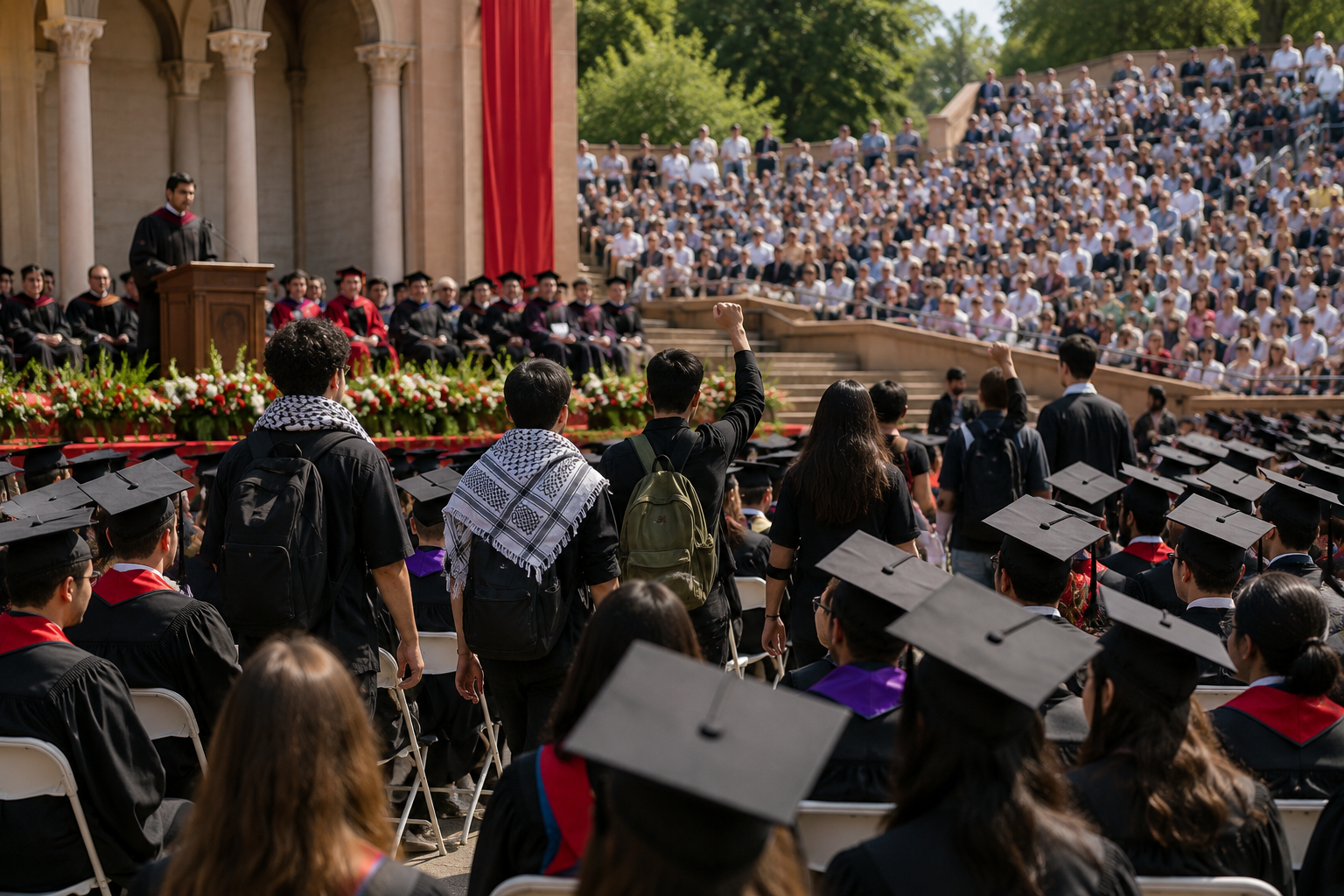
Several students staged a walkout as Google CEO Sundar Pichai began delivering the commencement address at Stanford University’s 135th Commencement ceremony, drawing attention to ongoing debates surrounding technology, corporate responsibility, and student activism.
The ceremony, held before more than 20,000 attendees, including approximately 3,600 graduating students, marked one of the university’s largest annual gatherings. As Pichai took the stage to address graduates, a group of students reportedly stood and left the venue in a coordinated protest. Organizers of the demonstration said the action was intended to highlight concerns related to issues including artificial intelligence, labor practices, free expression, and broader social and geopolitical matters connected to the technology industry.
Despite the walkout, the ceremony continued without major disruption. Pichai’s speech focused on themes of innovation, adaptability, responsible leadership, and the opportunities and challenges presented by rapidly advancing technology. University officials acknowledged the protest while emphasizing Stanford’s commitment to free expression and respectful dialogue within the academic community.
Students participating in the demonstration described the walkout as a peaceful effort to draw attention to issues they believe deserve greater public discussion. Supporters argued that commencement ceremonies provide a visible platform for civic engagement, while critics contended that graduation events should remain focused on celebrating academic achievement.
The incident reflects a broader trend of student activism on university campuses across the United States. In recent years, commencement addresses by corporate executives, politicians, and public figures have occasionally prompted protests over social, political, environmental, and labor concerns. Stanford itself has experienced demonstrations on a range of issues, mirroring developments at other leading institutions.
Observers say the walkout highlights the increasingly complex relationship between higher education, technology companies, and public debate. While opinions differ on the appropriateness of protests during graduation ceremonies, many view such demonstrations as part of ongoing discussions about accountability, free speech, and the role of universities as spaces for civic participation. The event concluded with graduates receiving their degrees and celebrating the completion of their academic journeys.