


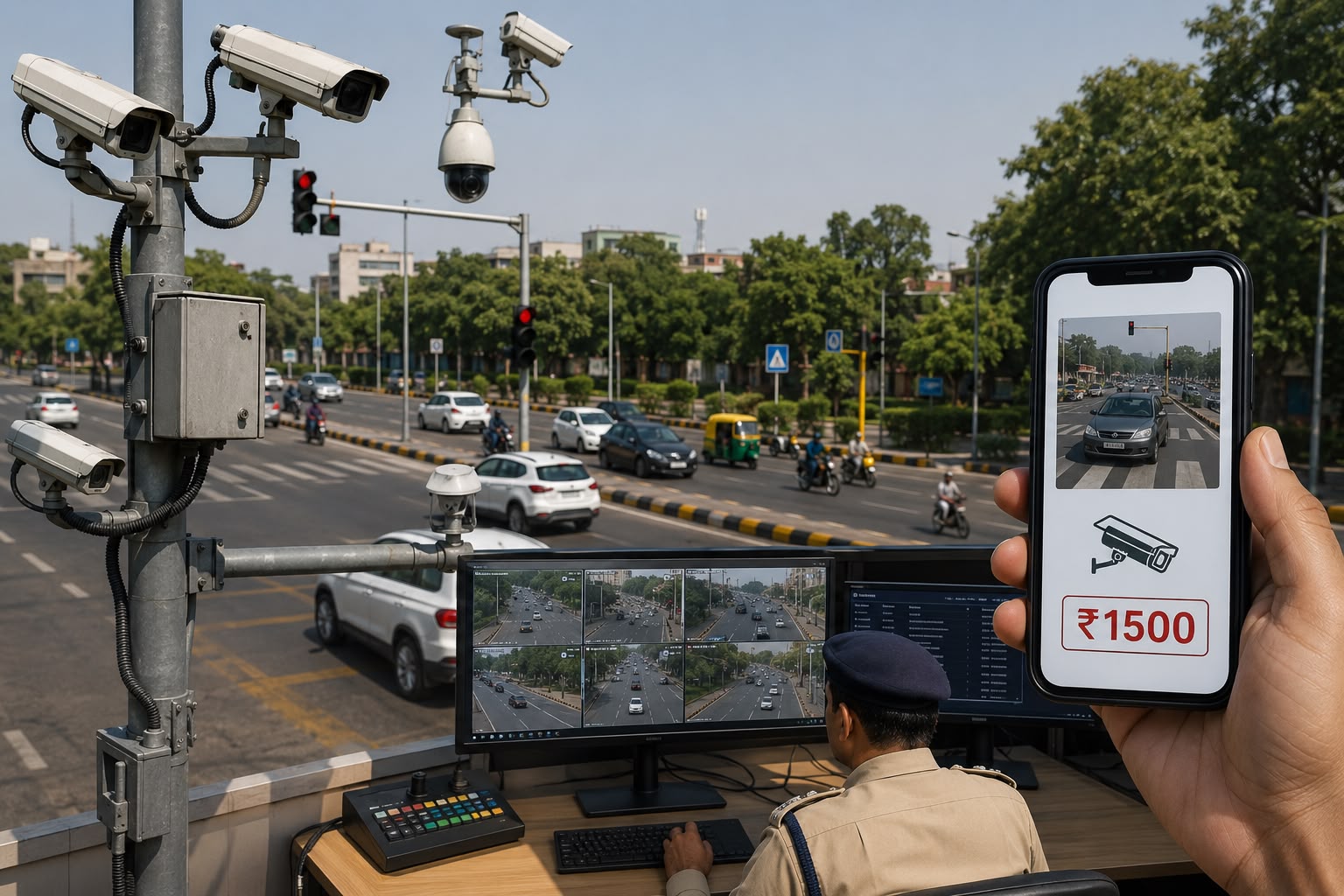
Motorists in Chandigarh are increasingly contesting camera-based traffic challans issued through automated enforcement systems, raising questions over the accuracy, transparency, and reliability of digital policing mechanisms deployed across the city.
Over the past several months, several vehicle owners have approached the Chandigarh Traffic Police and appellate forums claiming discrepancies in e-challans generated through CCTV surveillance networks, Automatic Number Plate Recognition (ANPR) systems, red-light violation cameras, and speed detection devices installed at key intersections. In multiple instances, citizens have alleged errors such as incorrect number plate readings, mismatch in vehicle categories, duplicate penalties for a single offence, and challans issued despite vehicles not being present at the recorded location.
The enforcement system, operated under the supervision of the Chandigarh Traffic Police and supported by the Chandigarh Administration, relies on a network of high-resolution cameras and centralized software that automatically detects violations and generates digital fines. Officials maintain that each challan is backed by photographic or video evidence before being issued to registered vehicle owners through SMS and online portals under the national e-challan framework.
However, motorists disputing fines argue that procedural gaps and technical glitches sometimes undermine the system’s reliability. Legal experts note that while the automated process is designed to improve efficiency and reduce human error, it must also ensure strong verification and accessible grievance redressal mechanisms.
Under current procedures, citizens can challenge challans online through the national e-challan portal, submit representations to the traffic authorities, or escalate cases to traffic courts and Lok Adalats. In some reviewed cases, challans have reportedly been modified or cancelled after verification, though officials have not released consolidated figures.
A Chandigarh Police spokesperson has reiterated that all disputed cases are reviewed individually with supporting evidence, while emphasizing the system’s role in improving road discipline and reducing violations.
Experts in urban governance and civil rights groups have flagged broader concerns around surveillance oversight, data accuracy, and privacy safeguards in smart-city traffic systems. They stress the need for stronger audit trails, transparent evidence-sharing, and public awareness campaigns.
The issue highlights a growing tension between technology-driven enforcement and procedural fairness, with implications for trust in automated policing as Chandigarh expands its smart traffic management infrastructure.