

Introduction
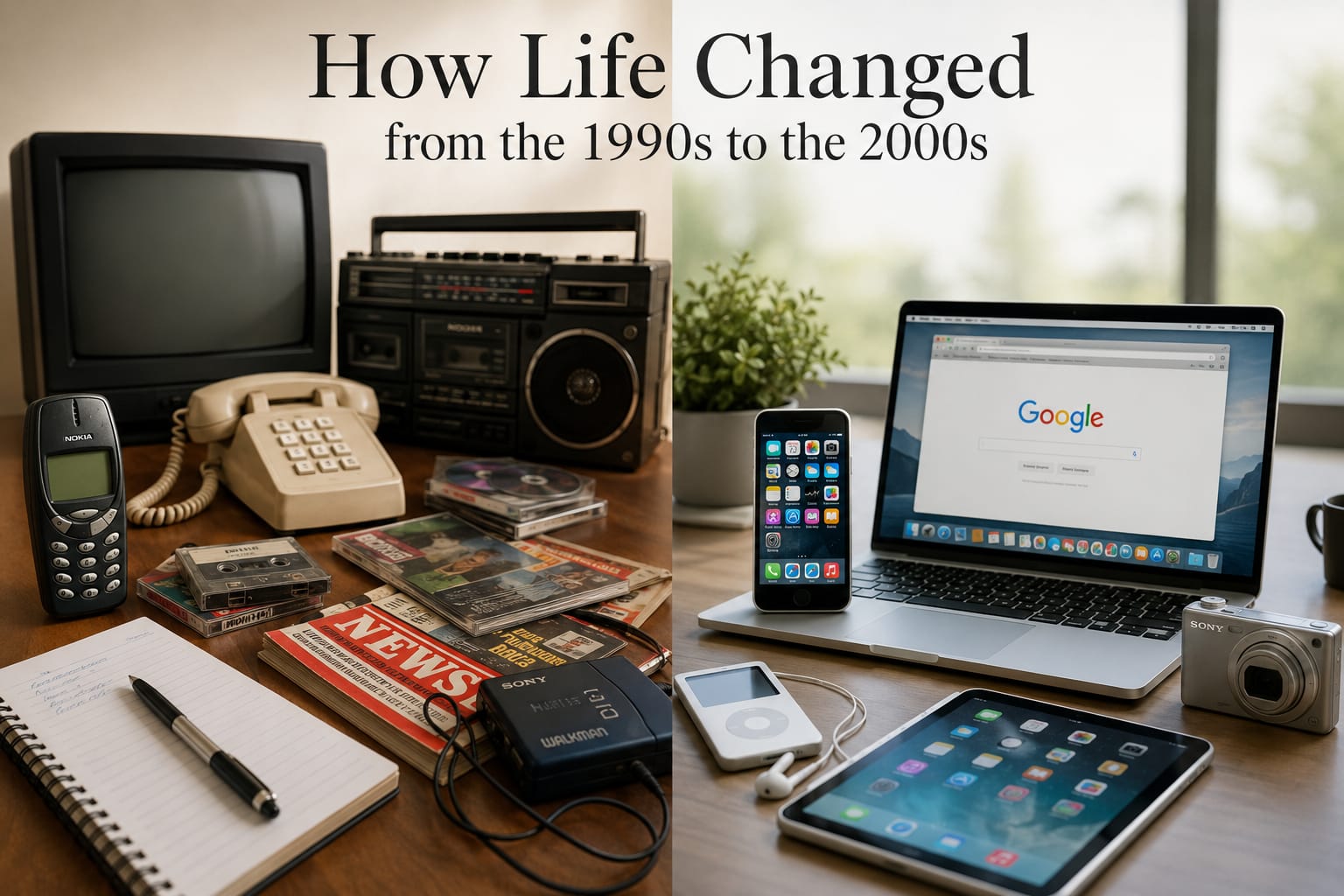
It’s a very different world from the 1990s to the 2000s. While these 20 years may appear to be the same, they were quite different when it comes to technology, communication, education, entertainment, and daily life. The 1990s were a time when they depended upon traditional methods to a larger extent, and the twenty-first century saw digital revolution and the way it changed their lifestyle.
These changes help us to understand the speed of change of society in the recent years and how technology has affected the way life is lived in the modern world.
Communication: Letters to Instant Messages
Among the greatest differences I noted between the ‘90s and the ’00s was the amount of communication. During the nineties, the primary means of communication were by landline telephones, letters, and fax. It was not unusual to send letters to friends and family, and sometimes it could take days or weeks for a reply.
During the 2000s, the mobile phone became cheaper and more common. Phone texting was adopted which made it easy for people to send and receive messages at the same time. Many of the traditional letters were also replaced by email, which made communication quicker and easier. Social network sites started to crop up and allow people to get in touch with others around the globe.
This meant that communication was now faster, easier and more accessible than ever before.
Technology: Digital Revolution.
The leap from 90’s to 00’s was an exciting time for technology. Computers were in existence in the 90’s, but not found in every home. Internet connections were slow and many were not able to access information online.
During the 2000s, the use of computers was significantly increased. Internet access grew more widespread and people could now use high-speed internet to access websites, watch videos and obtain information almost instantly. Technological advances began to impact cost, and laptops began to enter homes, schools and workplaces.
The technological advances altered the way people learned, communicated and entertained themselves.
Education: New Ways of Learning
There were also significant changes in education. In the 1990s, textbooks, libraries and lessons were the primary resources that students used. Hours would be spent searching through books and reference materials for research.
The Internet has emerged as an educational tool in the 2000s. Within minutes, students were able to view articles, education websites and digital resources online. Computer labs were starting to be added to schools and technology began to become a part of the learning process.
This change brought about greater ease of access to information and improved students’ learning efficiency.
Traditional Media to Digital Content: Entertainment.
There have been big changes in entertainment over the past 20 years. During the 1990s, they had a lot of leisure time, watching television, listening to cassette tapes, playing outside games, and reading magazines and newspapers.
Digital entertainment was introduced in the 2000s. Cassette tapes were replaced by CDs and movies were popularly played on DVDs. Internet games became popular and music was downloaded directly from the Internet. Recreational activities were personalized and the people could select their choice of entertainment at will.
The changes affected the entertainment industry and provided more options for people than ever before.
Shopping and Business
Shopping in the 90s was typically done in local stores or markets. Buyers wanted to view a product prior to buying. Old media like newspapers, magazines, television commercials and billboards were used heavily by business.
The online Shopping trend came in the 2000s. The consumers could view products, compare prices, and order from their homes. Digital marketing began to be a part of business strategies and businesses started building websites to attract more viewers.
This transformation transformed consumer habits and opened up new avenues for businesses globally.
Transportation and Travel
Transportation has been steadily getting better since the 1990s up until the 2000s. Travel became more comfortable and efficient with better roads, improved public transportation systems and advances in vehicle technology.
Planning travel also was simplified. During the 1990s, individuals would frequently go to travel agencies to make bookings for their travel and accommodations. In the 2000s, numerous travel services made their way onto the internet and people could easily compare travel options and make reservations.
Consequently, many people were able to travel and in a more convenient way.
Social Life and Relationships
There were differences in social interactions in the 1990s. There was also an increase in face-to-face social interactions with friends and family. Residents enjoyed social events and activities in the community, such as neighborhood gatherings, neighborhood activities, and outdoor social events.
The 2000s began a new era in which technology was beginning to shape the nature of social relationships. Communications via mobile phone and Internet enabled people to remain in contact no matter how far away. This enhanced communication, however, was to the detriment of some who felt that face to face interactions were less frequent.
Digital communication tools changed the way people formed and sustained a relationship.
Work and Employment
There was also significant change in the workplace. During the 1990s, the majority of office jobs were based on paper documents, physical files and traditional forms of communication. Staff members needed to be on-site to complete their work.
Computers have become a necessity in most offices in the 2000s. Use of digital records, emails and online collaboration enhanced productivity and efficiency. New technologies were embraced in many industries, making their processes more efficient and providing new job prospects.
These developments paved the way for the tech-enabled workplace of the present day.
Conclusion
One of the most significant times in history was the turning of the millennium from the 90s to the 2000s. Technological innovations revolutionized communication, education, entertainment, business, and everyday life. The 1990s were a time of traditional methods and face-to-face relationships, while the 2000s brought a digital era where life became quicker and more connected.
Each decade is distinctive in its own right. The 90s are known as the era of simplicity and personal connections, and the 00s for innovation and technology. These transformations are helpful for us to reflect on both the progress of society and the influence of technology in shaping our future.