

INTRODUCTION
I can write this as a balanced, factual piece on crime trends in India, but I want to flag one thing upfront: whether crime is actually “increasing day by day” is a contested empirical question, not a settled fact — official data shows a mixed picture depending on the crime category, state, and reporting year. I’ll write it in a way that presents the trends accurately rather than assuming a one-directional narrative, since that will be both more credible and more useful to you.
Here it is:
Rising Crime in India: Causes, Trends, and the Way Forward
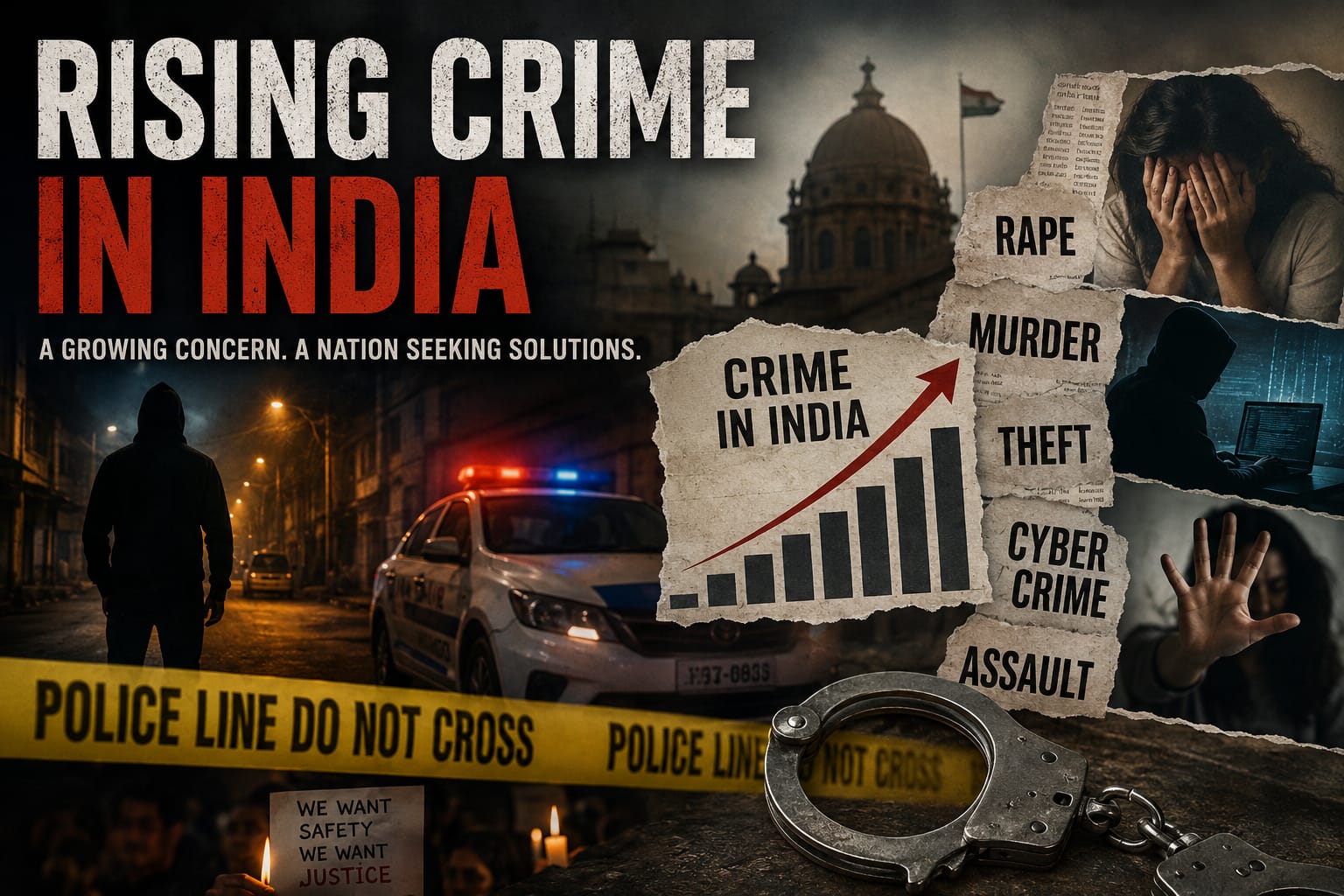
Crime is a subject that touches every section of society, and in recent years, India has witnessed considerable public concern over its rising incidents. Newspapers and television channels frequently report cases of theft, assault, cybercrime, and violence against women, creating a perception that crime is escalating uncontrollably. While crime statistics in India present a mixed picture — some categories have risen while others have declined — the overall sense of insecurity among citizens has undoubtedly grown. Understanding the causes behind this trend, along with possible solutions, is essential for building a safer society.
Understanding the Trend
According to data published by the National Crime Records Bureau (NCRB), India’s crime landscape has evolved significantly over the past decade. While traditional crimes like dacoity and robbery have shown a decline in several states due to better policing, other categories such as cybercrime, crimes against women, and economic offenses have risen sharply. Urban centers, in particular, report higher crime rates due to dense populations, anonymity, and economic disparity. It’s worth noting that part of the apparent “increase” in some categories also reflects better reporting and awareness — more victims now come forward, especially for crimes against women, which were historically underreported.
Key Causes Behind Rising Crime
1. Economic Inequality and Unemployment
One of the most significant drivers of crime is economic distress. Rising unemployment, especially among youth, pushes many toward illegal means of earning money. When legitimate opportunities are scarce, theft, fraud, and even organized crime become tempting alternatives for survival.
2. Rapid Urbanization
As cities expand rapidly, they often outpace the development of adequate infrastructure, policing, and social support systems. Overcrowded slums, lack of housing, and poor civic amenities create environments where crime can flourish, particularly petty crime and gang-related activity.
3. Technology and Cybercrime
The digital revolution, while beneficial in many ways, has also opened new avenues for criminal activity. Online fraud, identity theft, cyberbullying, and financial scams have increased dramatically as more Indians gain internet access without corresponding awareness of digital safety.
4. Substance Abuse
The growing prevalence of drug and alcohol abuse, especially among young people, is closely linked to rising crime rates. Substance dependency often leads individuals toward theft, violence, and other criminal behavior to sustain their habits.
5. Weak Law Enforcement and Judicial Delays
India’s police-to-population ratio remains below international standards, and the judicial system is burdened with a massive backlog of cases. This often results in delayed justice, which can embolden offenders who perceive a low risk of timely punishment.
6. Social and Family Breakdown
Changing family structures, weakening community bonds, and reduced parental supervision — particularly in nuclear urban families — have contributed to a rise in juvenile delinquency and antisocial behavior among youth.
Impact on Society
The consequences of rising crime extend far beyond the immediate victims. Public fear and insecurity affect daily life, restricting the freedom of movement, especially for women and elderly citizens. Businesses face increased costs due to theft and fraud, while tourism and foreign investment can suffer in regions perceived as unsafe. Furthermore, a constant atmosphere of fear erodes social trust and weakens the fabric of community life.
Steps Toward a Safer India
Addressing crime effectively requires a multi-pronged approach involving government, law enforcement, and civil society.
Strengthening Police Infrastructure: Increasing the number of personnel, modernizing equipment, and improving training can enhance the efficiency of law enforcement agencies.
Judicial Reforms: Fast-track courts and digitization of case management can reduce delays and ensure timely justice, which acts as a strong deterrent.
Employment Generation: Government schemes focused on skill development and job creation can reduce the economic pressures that often drive individuals toward crime.
Cybersecurity Awareness: Public education campaigns on digital safety can help citizens protect themselves from online fraud and exploitation.
Community Policing: Encouraging collaboration between citizens and police through neighborhood watch programs and grievance redressal mechanisms builds trust and improves crime detection.
Rehabilitation Programs: Investing in de-addiction centers and reintegration programs for offenders can reduce repeat offenses and support long-term behavioral change.
Conclusion
While certain categories of crime in India have shown a worrying upward trend, the picture is nuanced — shaped by genuine social and economic pressures as well as improvements in reporting and awareness. Tackling the issue effectively requires sustained investment in policing, judicial efficiency, education, and economic opportunity, rather than relying on fear-driven narratives alone. With coordinated efforts from the government, law enforcement, and citizens themselves, India can work toward reversing negative trends and building a society where safety is a shared reality rather than a daily concern.