

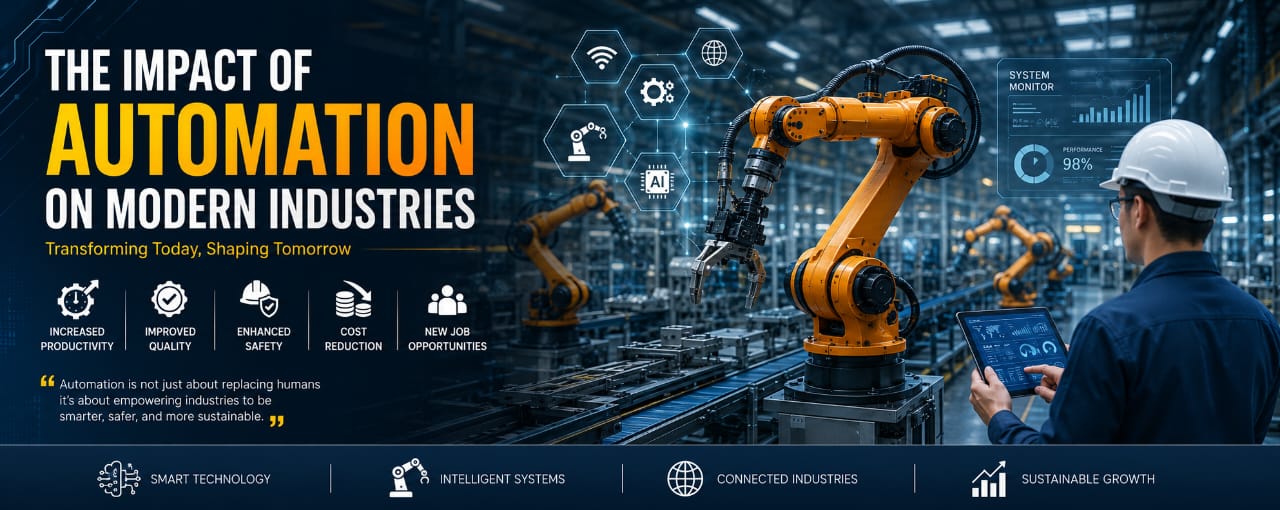
The Impact of Automation on Modern Industries
Automation has reshaped the global economic landscape over the past few decades, transforming how goods are produced, services are delivered, and businesses operate. From robotic arms assembling cars to algorithms managing customer service interactions, automation technologies have penetrated nearly every sector of modern industry. This transformation brings both remarkable opportunities and significant challenges that societies must navigate carefully.
The Rise of Automation
Automation refers to the use of technology to perform tasks with minimal human intervention. While mechanization began during the Industrial Revolution, the current wave—often called the Fourth Industrial Revolution—is driven by artificial intelligence, robotics, machine learning, and the Internet of Things. Unlike earlier automation, which primarily replaced physical labor, today’s technologies increasingly handle cognitive tasks, including data analysis, decision-making, and even creative work.
This shift has been accelerated by falling technology costs, improved computing power, and growing pressure on businesses to remain competitive in global markets. Industries ranging from manufacturing and agriculture to healthcare, finance, and retail have all integrated automated systems into their core operations.
Positive Impacts on Industries
Increased Productivity and Efficiency
One of automation’s most significant benefits is the dramatic increase in productivity. Machines can operate continuously without fatigue, perform repetitive tasks with greater precision, and process information far faster than humans. In manufacturing, robotic assembly lines have reduced production times and minimized errors, allowing companies to produce more goods at lower costs. Similarly, in agriculture, automated machinery and precision farming techniques have boosted crop yields while reducing waste.
Improved Quality and Consistency
Automated systems excel at maintaining consistent quality standards. Human workers, however skilled, are subject to fatigue and variability, whereas machines perform identical tasks with the same level of precision every time. This consistency is particularly valuable in industries like pharmaceuticals and electronics, where even minor defects can have serious consequences.
Enhanced Workplace Safety
By taking over dangerous or physically demanding tasks, automation has improved workplace safety significantly. Robots now handle hazardous materials, work in extreme temperatures, and perform tasks in environments unsuitable for humans, such as deep mining or nuclear facility maintenance. This reduces workplace injuries and protects human workers from harm.
Cost Reduction and Economic Growth
Although the initial investment in automation technology can be substantial, long-term operational costs typically decrease. Reduced labor costs, lower error rates, and increased output contribute to higher profit margins. These savings often translate into lower prices for consumers and increased competitiveness for businesses in global markets, contributing to overall economic growth.
New Job Creation
While automation eliminates certain jobs, it simultaneously creates new ones. The technology sector has seen explosive growth in roles related to robotics engineering, software development, data science, and systems maintenance. New industries have emerged entirely because of automation, generating employment opportunities that did not exist a generation ago.
Challenges and Negative Impacts
Job Displacement
Perhaps the most discussed consequence of automation is job displacement. Routine, repetitive tasks—particularly in manufacturing, data entry, and customer service—are highly susceptible to automation. Workers in these roles often face unemployment or are forced to transition into new careers, sometimes requiring significant retraining. This displacement disproportionately affects low-skilled workers who may lack access to educational resources needed to adapt.
Skills Gap and Inequality
As automation advances, the demand for highly skilled technical workers grows while demand for low-skilled labor shrinks. This creates a widening skills gap, where workers without technical training struggle to find employment, while specialized professionals see growing demand and rising wages. This dynamic can exacerbate income inequality, both within countries and globally, as wealthier nations with better educational infrastructure adapt more quickly than developing economies.
Economic Disruption in Specific Regions
Communities heavily reliant on industries vulnerable to automation, such as traditional manufacturing towns, often experience significant economic disruption. When factories automate or relocate, local economies can suffer from reduced employment, declining tax revenues, and population decline, creating ripple effects throughout the community.
Ethical and Social Concerns
The growing reliance on automation raises ethical questions about accountability, particularly when algorithms make decisions that affect people’s lives, such as in hiring, lending, or healthcare diagnostics. Questions about data privacy, algorithmic bias, and the appropriate balance between human judgment and machine efficiency remain unresolved in many sectors.
Adapting to the Automated Future
Governments, businesses, and educational institutions must collaborate to address these challenges effectively. Investment in education and vocational training programs can help workers develop skills relevant to an automated economy. Policies such as unemployment support, retraining subsidies, and incentives for businesses to invest in human capital can ease the transition for displaced workers.
Businesses, too, bear responsibility for managing automation thoughtfully—considering not just efficiency gains but also the social impact of their decisions. Some companies have adopted a hybrid approach, combining automation with human oversight to balance efficiency with employment preservation and quality control.
Conclusion
Automation is fundamentally reshaping modern industries, delivering substantial gains in productivity, safety, and economic growth while simultaneously presenting serious challenges related to employment and inequality. Rather than viewing automation as inherently positive or negative, society must approach this transformation thoughtfully, harnessing its benefits while proactively addressing its disruptive effects. The successful integration of automation into the global economy will depend on collaborative efforts between policymakers, businesses, and educational institutions to ensure that technological progress benefits society as a whole, rather than deepening existing divides. As automation continues to evolve, adaptability and forward-thinking policies will be essential for building a future where humans and machines work together productively.