

Introduction
The digital world is becoming more connected, and there are billions of smart devices producing immense amounts of data every second. Whether it’s autonomous vehicles, industrial robots, wearable health monitors or smart city infrastructure, modern technologies need immediate data processing to work efficiently. Cloud computing has changed the way that organizations store and manage information, but having all of the information stored on a distant cloud server can lead to delays, bandwidth consumption, and the impact of information on real time decision-making.
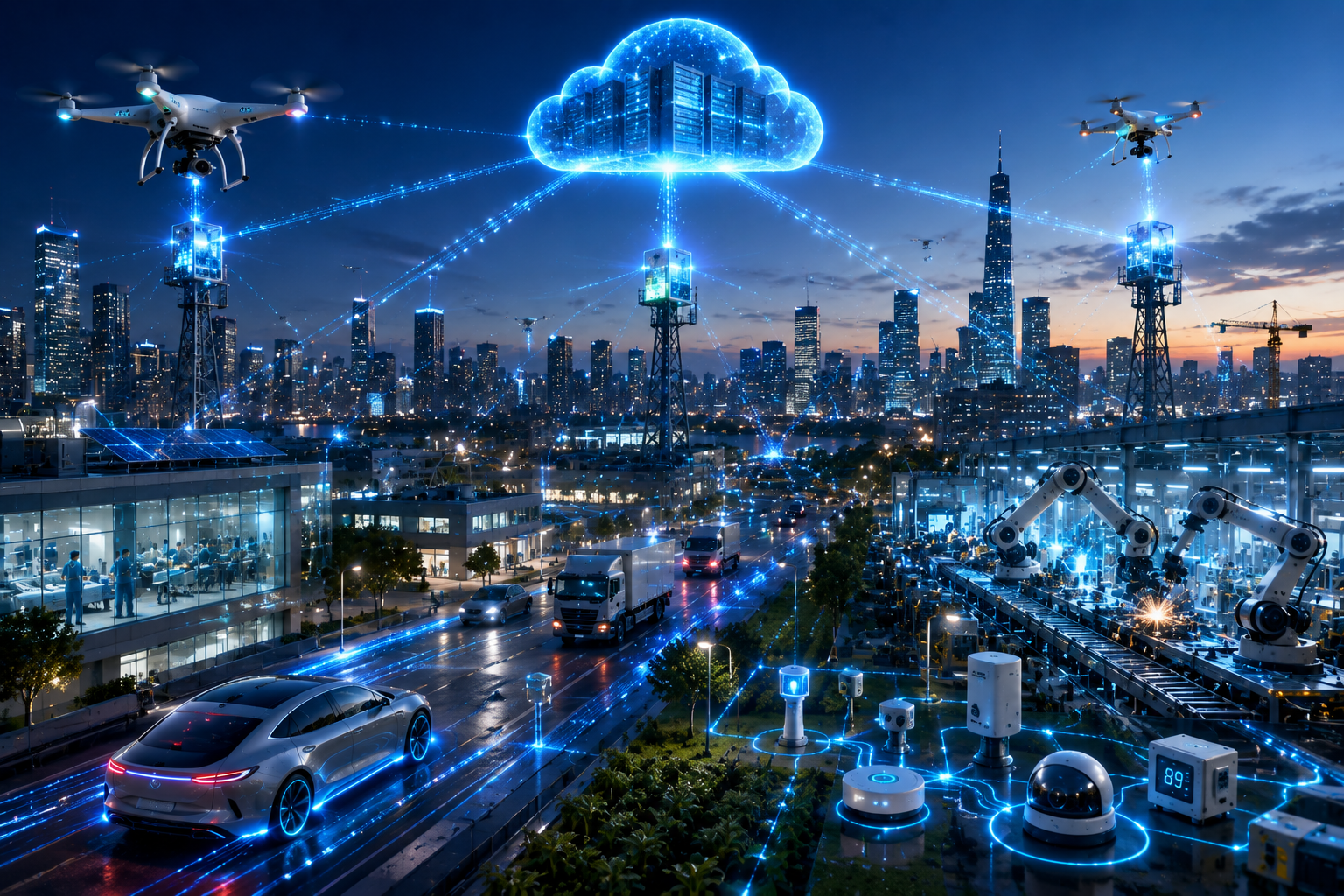
To address these restrictions, technology experts have devised a decentralized computing system known as Fog Computing, which processes data near the user, in addition to cloud computing. Fog computing lies between edge devices and cloud data centers and is an important part of future digital ecosystems.
What is Fog Computing? Fog Computing – What is it?
Fog Computing is a distributed computing system that brings the power of cloud computing nearer to the data sources. Many pieces of data are processed locally by the fog nodes (gateways, routers, switches, local servers) rather than sent directly to the centralized cloud servers.
Only necessary data is sent to cloud to be stored or analyzed in more depth. This method helps to alleviate network congestion, enhance latency, and provide quicker response times for time-sensitive applications.
The significance of Fog Computing. The relevance of Fog Computing.
Traditional cloud systems find it difficult to work efficiently with all the data requests as IoT devices keep multiplying. It is possible for large quantities of sensor data to be transmitted over long distances, leading to delays and impacting performance.
Fog computing addresses this problem by spreading out computing across local networks. Devices can connect to one another and to nearby fog nodes, so that applications can react almost instantaneously without having to wait for clouds to process.
This is particularly useful for sectors that require real-time decision-making, like healthcare, transportation, and manufacturing, as well as public safety.
Applications Across Industries
Fog computing is changing the way many industries operate and making it faster and smarter.
In manufacturing, fog nodes can be used to track the production equipment in real time and identify abnormalities before the failure of the equipment. This means less downtime and increased efficiency in operations.
Fog computing is employed in healthcare to enable instant analysis of patient monitoring devices, which helps to respond faster in emergencies and safeguard patient data privacy.
Fog computing is used in smart transportation systems to manage traffic lights, self-driving cars, and road sensors, enhancing safety and minimizing traffic jams.
Energy companies also gain from the ability to track smart grid, renewable energy and power distribution networks without significant latency.
Supporting Artificial Intelligence
Large datasets are frequently needed for immediate processing in Artificial Intelligence applications. Fog computing delivers the computing power required to deploy AI algorithms near the data.
AI-enabled security cameras don’t constantly upload video to cloud servers; instead, they can alert security personnel of suspicious activity immediately. Industrial robots can make split second adjustments during the production process and agricultural drones can analyze the crop condition in real time.
AI and fog computing enhance efficiency and minimize reliance on high-speed internet connections.
Security & Privacy Benefits
By handling information at the local level, there is increased protection of cybersecurity, as there are less sensitive data sent across public networks. Only relevant information will be sent to cloud platforms and organizations can now filter, encrypt, and analyze data before they send it out.
This decentralized approach helps minimize cyber attack risk and meet the growing compliance demands for data privacy. In sectors like banking, healthcare, and government, enhanced security and better access to and control over important data are of particular benefit.
Challenges to Adoption
Although it has some benefits, there are also challenges in implementing fog computing. Distributed hardware, network management systems, and multiple fog node security solutions must be purchased to ensure protection for multiple fog nodes.
Skilled professionals with cloud computing, networking, AI, and IoT skills are also essential for the management of large clusters of interconnected devices.
Another challenge is interoperability between various manufacturers’ devices, while industries develop common technical standards.
The future of Fog Computing is a fascinating one. The future is exciting for Fog Computing.
Fog computing is anticipated to gain momentum across the globe because of the rollout of 5G networks, AI, and the Internet of Things. Decentralized computing will be essential for ensuring speed, reliability, and scalability as billions of connected devices enter into daily life.
Going forward, fog computing will be essential for enabling efficient processing of information and facilitating increasingly complex applications in future smart factories, autonomous transportation systems, digital healthcare platforms, and intelligent cities.
Businesses that invest in fog infrastructure now will be better prepared to serve the needs of the connected economy in the future.
Conclusion
Fog computing is a technology that helps to combine the best of cloud and edge computing by bringing computing power nearer to where data is generated. It is a critical technology for the future of Digital Transformation due to its ability to lower latency, enhance security and optimize bandwidth usage, and enable real-time Artificial Intelligence. The proliferation of connected devices in a variety of industries will make fog computing an important factor in faster, smarter and more resilient digital ecosystems.