

Introduction
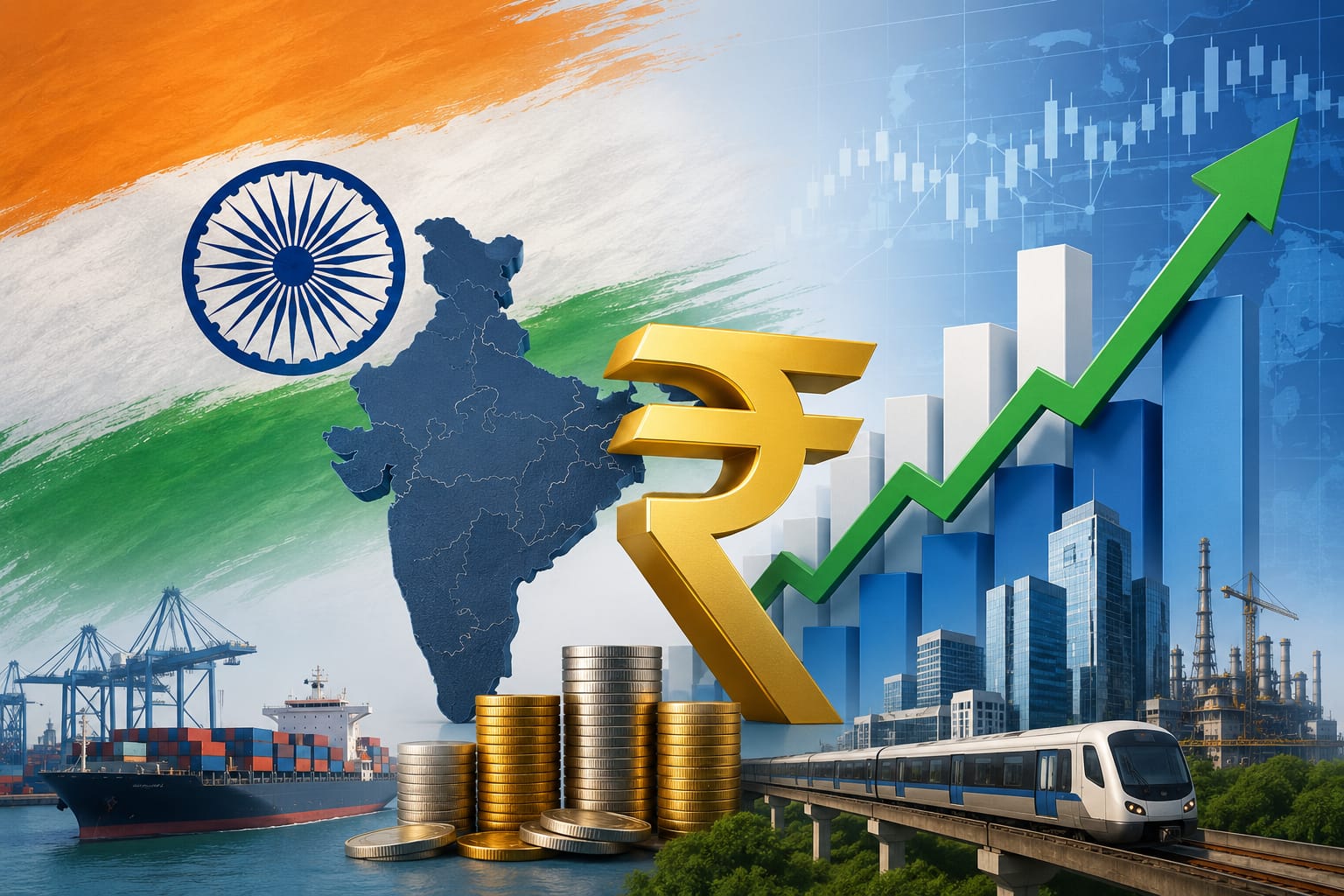
The Indian economy is one of the fastest-growing major economies in the world. It is a mixed economy, combining elements of both capitalism and socialism, where the private and public sectors coexist and contribute to economic development. Over the years, India has transformed from an agrarian economy to a diversified one with strong industrial and service sectors. With a large population, abundant resources, and increasing globalization, India plays a significant role in the global economic landscape.
—
Structure of the Indian Economy
The Indian economy is broadly divided into three sectors:
1. Primary Sector (Agriculture)
This sector includes agriculture, forestry, fishing, and mining. Agriculture has historically been the backbone of the Indian economy, providing livelihood to a large portion of the population. Although its contribution to GDP has declined over time, it still employs nearly half of the workforce.
2. Secondary Sector (Industry)
The industrial sector includes manufacturing, construction, and utilities. It contributes significantly to economic growth by producing goods, generating employment, and supporting exports. Initiatives like “Make in India” have boosted industrial development.
3. Tertiary Sector (Services)
The service sector is the largest contributor to India’s GDP. It includes banking, education, healthcare, tourism, information technology, and communication. India’s IT sector, in particular, has gained global recognition and drives foreign exchange earnings.
—
Economic Growth and Development
India has experienced significant economic growth, especially after the economic reforms of 1991. These reforms liberalized the economy by reducing government control, encouraging private investment, and opening markets to foreign trade and investment.
Key factors contributing to growth include:
– Rapid urbanization
– Expansion of infrastructure
– Growth of the middle class
– Technological advancements
– Increased foreign direct investment (FDI)
India is now among the top economies globally in terms of GDP. The country has also made progress in poverty reduction, literacy, and life expectancy.
—
Role of Government in the Economy
The government plays a crucial role in regulating and promoting economic activities. Its functions include:
– Framing economic policies
– Managing public expenditure
– Controlling inflation and unemployment
– Providing public goods like education and healthcare
– Encouraging balanced regional development
Government schemes such as Digital India, Skill India, and Startup India aim to boost economic growth and employment.
—
Major Challenges Facing the Indian Economy
Despite progress, the Indian economy faces several challenges:
1. Unemployment
A large population leads to high unemployment and underemployment, especially among youth.
2. Poverty and Inequality
Income inequality remains a concern, with a significant gap between rich and poor.
3. Inflation
Rising prices affect purchasing power and standard of living.
4. Agricultural Issues
Farmers face problems like low productivity, lack of irrigation, and dependence on monsoons.
5. Infrastructure Deficiency
Inadequate infrastructure hampers industrial growth and efficiency.
6. Corruption and Bureaucracy
These issues can slow down economic progress and discourage investment.
—
Impact of Globalization
Globalization has significantly influenced the Indian economy by:
– Increasing trade and investment
– Promoting technological transfer
– Enhancing competitiveness
– Creating job opportunities
However, it also exposes the economy to global risks such as economic crises and market fluctuations.
—
Recent Trends in the Indian Economy
In recent years, India has seen several important trends:
– Growth of digital economy and e-commerce
– Expansion of fintech and digital payments
– Rise of startups and entrepreneurship
– Focus on renewable energy and sustainability
– Increased government spending on infrastructure
The COVID-19 pandemic temporarily slowed economic growth, but recovery has been strong due to policy support and resilience of the economy.
—
Future Prospects of the Indian Economy
India’s future economic outlook is promising due to:
– Young and growing population (demographic dividend)
– Rapid technological adoption
– Increasing global integration
– Government reforms and policies
With proper planning and implementation, India can achieve sustainable and inclusive growth, becoming a leading global economic power.
Role of Technology and Innovation in the Indian Economy
Technology and innovation have become key drivers of growth in the Indian economy in recent years. The rapid expansion of digital infrastructure, including internet connectivity and smartphone usage, has transformed the way businesses operate and consumers interact. Initiatives such as Digital India have promoted e-governance, digital payments, and online services, making the economy more transparent and efficient. The rise of fintech companies has revolutionized banking and financial inclusion by providing easy access to financial services even in rural areas. Moreover, India has emerged as a global hub for startups, especially in sectors like information technology, e-commerce, artificial intelligence, and renewable energy. Innovation is also enhancing productivity in agriculture through modern techniques and smart farming. Additionally, advancements in manufacturing technologies, such as automation and robotics, are improving efficiency and competitiveness. As India continues to invest in research, skill development, and digital transformation, technology will play an increasingly important role in shaping a more robust, inclusive, and globally competitive economy
Conclusion
The Indian economy has undergone remarkable transformation over the decades. From a primarily agricultural base to a modern, diversified economy, India has shown resilience and adaptability. While challenges remain, the country’s strengths—such as a large workforce, strong service sector, and growing industrial base—offer immense potential. With continuous reforms, innovation, and inclusive policies, India is well-positioned to achieve long-term ec
onomic prosperity.