

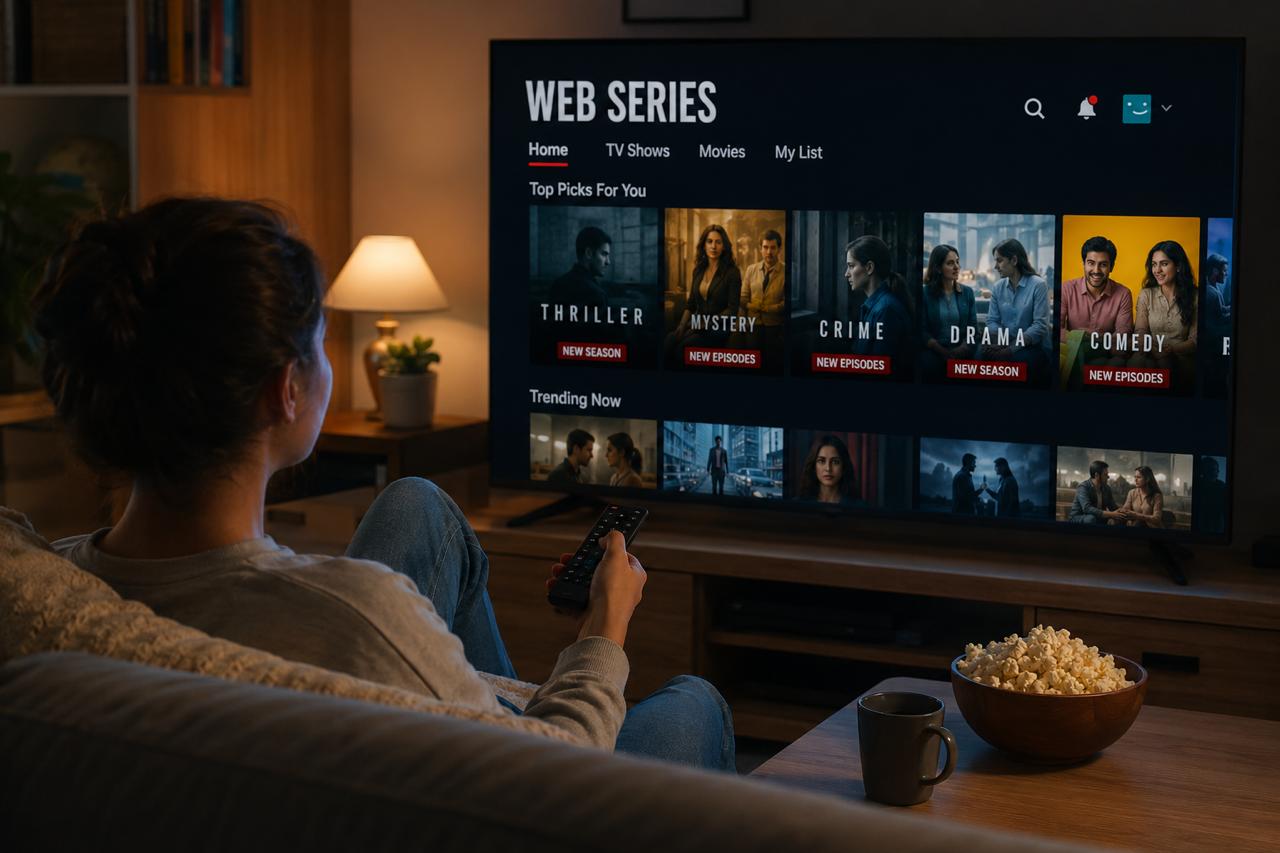
Introduction
Be mindful of the days when we had to wait a whole week to see the next episode of our beloved TV show? When we were forced to watch commercials every 15 minutes anyway? It seems like ages ago those days. Today, seasons come and go as quickly as a blink and we can see them whenever and on any screen we choose. It’s not that that change occurred for no reason — it was a result of the proliferation of web series and, to be honest, it has revolutionized the way we watch entertainment.
So What is a Web Series?
A web series is just a scripted or non-scripted presentation developed and produced expressly for web streaming systems, such as Netflix, Amazon Prime, YouTube, Disney+, or in India, JioCinema, Zee5 and SonyLIV. Web series aren’t based on a regular schedule, which is a major difference from TV shows. You binge them. You pause them. If you want to, you return to them at 2 AM!
The format also can be quite different. Episodes can be 10 minutes in length, or an hour. Some seasons are 6 episodes and some seasons are 20 episodes. No rules, and that’s what’s so exciting about web series.
How It All Began?
Web series were not a stroke of a pen. In the early 2000s, makers began to explore the medium of short video on the Internet. In the early 2000s, video makers began to experiment with short video on the Internet. They were low-budget, raw and often made in a person’s bedroom. However, the authenticity was great with the audience.
So when it came to Netflix, that was another big game changer. House of Cards was a full-season drop on Netflix in 2013, and the whole industry was fascinated with it.” The show offered cinematic quality , a captivating plot, and complete accessibility in one place “. No waiting. No ads. Just the content whenever you need it! At this point , the modern web series format emerged.
What is making Web Series so popular?
The popularity of web series has stemmed from multiple factors, all of which seem like logical explanations in hindsight.
Freedom of choice. Conventional TV provided you with a schedule. You either saw it on TV at 9 PM or you didn’t. Streaming put the power in the hands of people to control their own time. But that was a huge transition.
Better storytelling. The creators of these stories had more freedom, since they had no need to fit within a pre-defined 22-minute format, and no need to sanitize the story for broadcast TV. They might have a darker story, a more complex story, and a more honest story. Fewer shows could have been done on traditional TV such as Breaking Bad, Sacred Games and Mirzapur exploring themes that were more suited to film.
Global access. In a small town in Rajasthan, you can now watch Korean drama with Hindi subtitles on your cell phone. In Brazil, it is possible for a teen to binge an Indian thriller at midnight. Unlike the traditional TV, web series overcame geographical and cultural barriers.
Easier to get started for creators. No big production house or TV channel’s approval required for making a show. Platforms such as YouTube have given many independent creators the opportunity to build their own audience. Many of these creators have progressed to professionally-produced shows for mainstream platforms.
The Indian Web Series Boom
India can be singled out here. With the arrival of Netflix and Amazon Prime in the Indian market, with investments in original Indian content, something clicked. Sacred Games (2018) was India’s first Netflix original and was a huge success – both domestically and globally. ” From then on , the industry experienced rapid growth .”
It is a cultural moment now because of shows like Panchayat, Scam 1992, Delhi Crime, The Family Man and Kota Factory. They are talked about in the work place, the dining room, on social media. The idea isn’t just web series, it’s a conversation that the entire country is engaged in.
What’s even more interesting is that Indian web series are now delving into stories from small towns, regional cultures and real incidents, which mainstream Bollywood didn’t care to venture into. That’s a huge deal.
Where is all this going?
Web series is looking bright in the future. As the creators have gained in popularity, a new micro-series format has come to the fore — stories that are 60 seconds or less in length.
Meanwhile, large-scale web productions are beginning to match the scale and quality of Hollywood films. AI is helping with production, regional language content is exploding and interactive story (where the viewer decides what happens next) is slowly gaining traction.
There’s one thing we know for sure: The old TV model is not returning. The public has shifted and the industry is following.
Conclusion
Web series, as a whole, are not a fad, but a fundamental shift in storytelling. It has empowered creators, granted audiences choices, and provided a global platform to stories without a voice. From casual viewers seeking relaxation after a long day to creators with a story to tell, web series have something for everyone.