


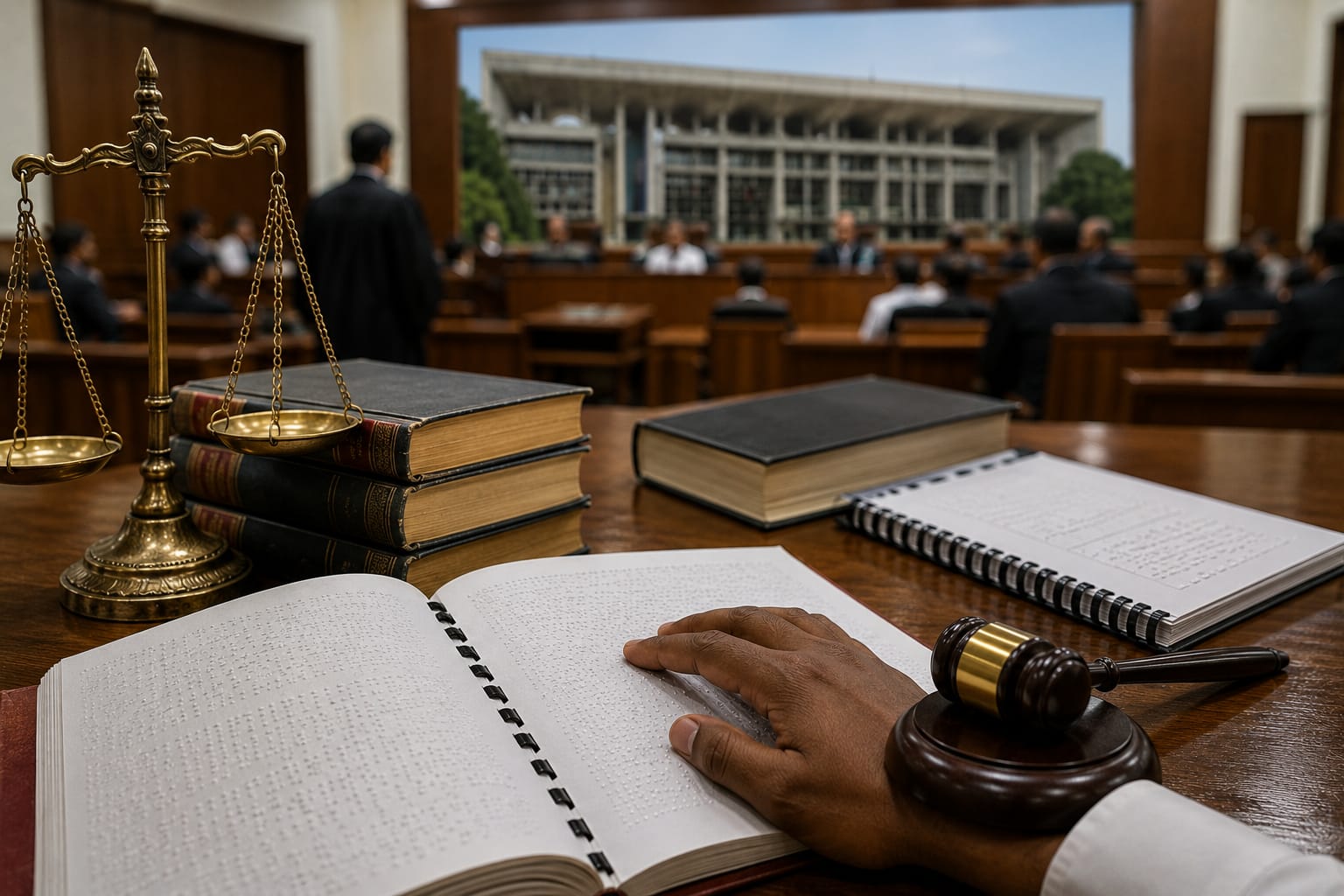
A public interest litigation (PIL) has been filed before the Punjab and Haryana High Court challenging the existing school syllabus and learning framework for visually impaired students in Punjab, raising concerns over accessibility, inclusivity, and equal educational opportunities.
The petition has been filed by an education rights activist and social welfare group working for persons with disabilities. The plea argues that the current curriculum and examination system are not adequately designed to meet the needs of visually impaired students, thereby placing them at a disadvantage compared to other students. It has been contended that several learning materials are not fully available in accessible formats such as Braille or audio-based resources, leading to unequal learning conditions.
The petition further states that despite legal provisions under the Rights of Persons with Disabilities Act, 2016, and constitutional guarantees of equality under Article 14 and right to education under Article 21A, implementation at the ground level remains inconsistent. It seeks directions to the state education authorities to revise the syllabus, improve accessibility standards, and ensure the timely availability of inclusive learning materials.
In response, preliminary observations from the court have indicated the need to examine whether adequate provisions and infrastructure are currently in place to support visually impaired students in mainstream and special education systems. The court has reportedly asked the state government and education department to submit a detailed status report.
Authorities from the Punjab education department have been asked to clarify existing measures being implemented to support inclusive education, including the availability of assistive learning tools, trained special educators, and accessible study content.
The petition highlights broader concerns regarding educational equality and stresses that inclusive education is not only a policy goal but a fundamental right. It also draws attention to the gap between policy formulation and actual implementation in schools across the state.
The High Court is expected to hear the matter further in the coming weeks after reviewing submissions from both sides. Meanwhile, disability rights advocates have welcomed the legal intervention, stating that it could lead to meaningful reforms in the education system for visually impaired students.