


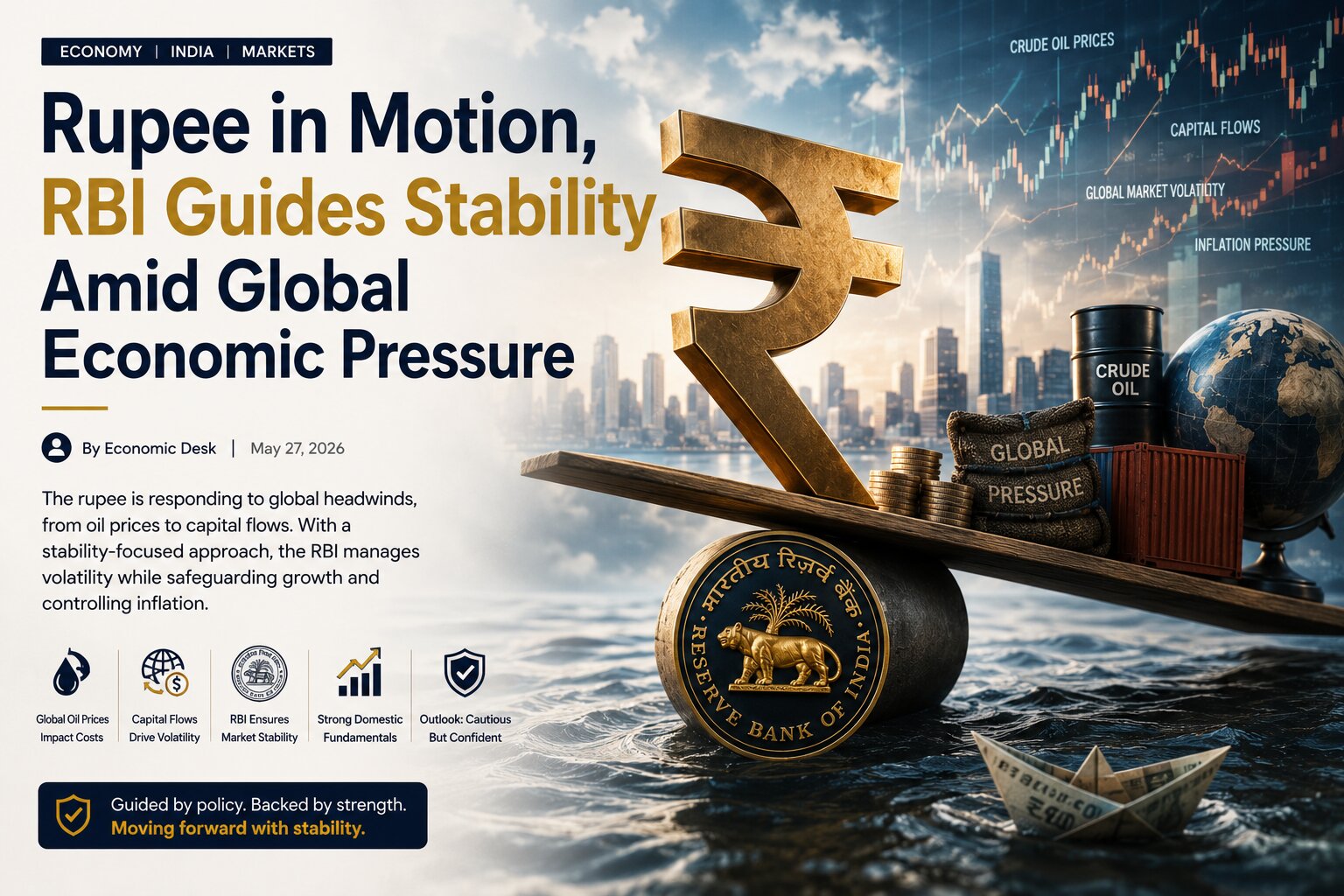
The Indian financial sector is entering a period of gradual and nuanced adaptation, with the global economic environment remaining a factor in the dynamics of currency flows and investor sentiment. The rupee is not in a critical state, but reacting to the continuous change in the international economy.
Presently, one of the major influencing factors is the price of crude oil around the world. India is oil-import dependent and even slight price movements in the global market have a cascading impact on costs of trade and sentiment on currency. It is essentially a mechanism for orderly price adjustment and fluctuation as opposed to abrupt adjustments.
Further, global capital flows are helping to drive short-term volatility. The interest rate and investment income in the main economic powers is a variable that is taken into account and foreign investors constantly review their portfolios. The result of such actions is a regular volatility in emerging market currencies like the Indian rupee.
The Reserve Bank of India (RBI) has been adopting a balanced stance which aims at maintaining stability in these situations. The central bank does not fix a target exchange rate, rather it keeps the rupee in the market freely and only intervenes in the market when it is too volatile. RBI’s efforts to prevent disorderly market conditions through liquidity operations and foreign exchange management are highlighted.
Another issue is inflation. Increasing costs—food, fuel and other—continue to affect household budgets. The approach of the RBI’s policy is directed towards maintaining price stability without undue impact on the economic growth.
India’s internal economic factors are robust even in the face of external pressures. Factors that are supporting the economy include continued demand by consumers, a stable banking system, growing digital financial use, and a healthy foreign exchange reserve.
Economists, however, are still warning of global risks, particularly volatility in the oil market, geopolitical events and the fluctuation of international monetary policy.