

Introduction
India is a land of festivals where every month brings new reasons to celebrate, reflect, and connect with one another. June is no different. As the intense summer heat slowly gives way to the first signs of monsoon, the month welcomes a vibrant mix of festivals rooted in devotion, history, culture, and nature.
From the fertile lands of Odisha, where people worship the Earth for its life-giving power, to the grand temples of Puri that attract millions of pilgrims, June showcases India’s extraordinary cultural diversity. At the same time, the month also honours the heroic legacy of Rajasthan and the spiritual remembrance observed by the Islamic community during Muharram.
Each festival carries a unique story shaped by centuries of tradition. Together, these celebrations highlight India’s shared spirit of faith, unity, gratitude, and remembrance. Here is a closer look at the five major festivals of June 2026 and their cultural significance.
1. Raja Parba : 14–16 June
Region: Odisha
Raja Parba is a vibrant three-day festival that celebrates the arrival of the monsoon season in Odisha. During the festival, people honour the Earth as a feminine force preparing for fertility and cultivation. As a result, families temporarily pause agricultural activities to allow the land to rest and rejuvenate.
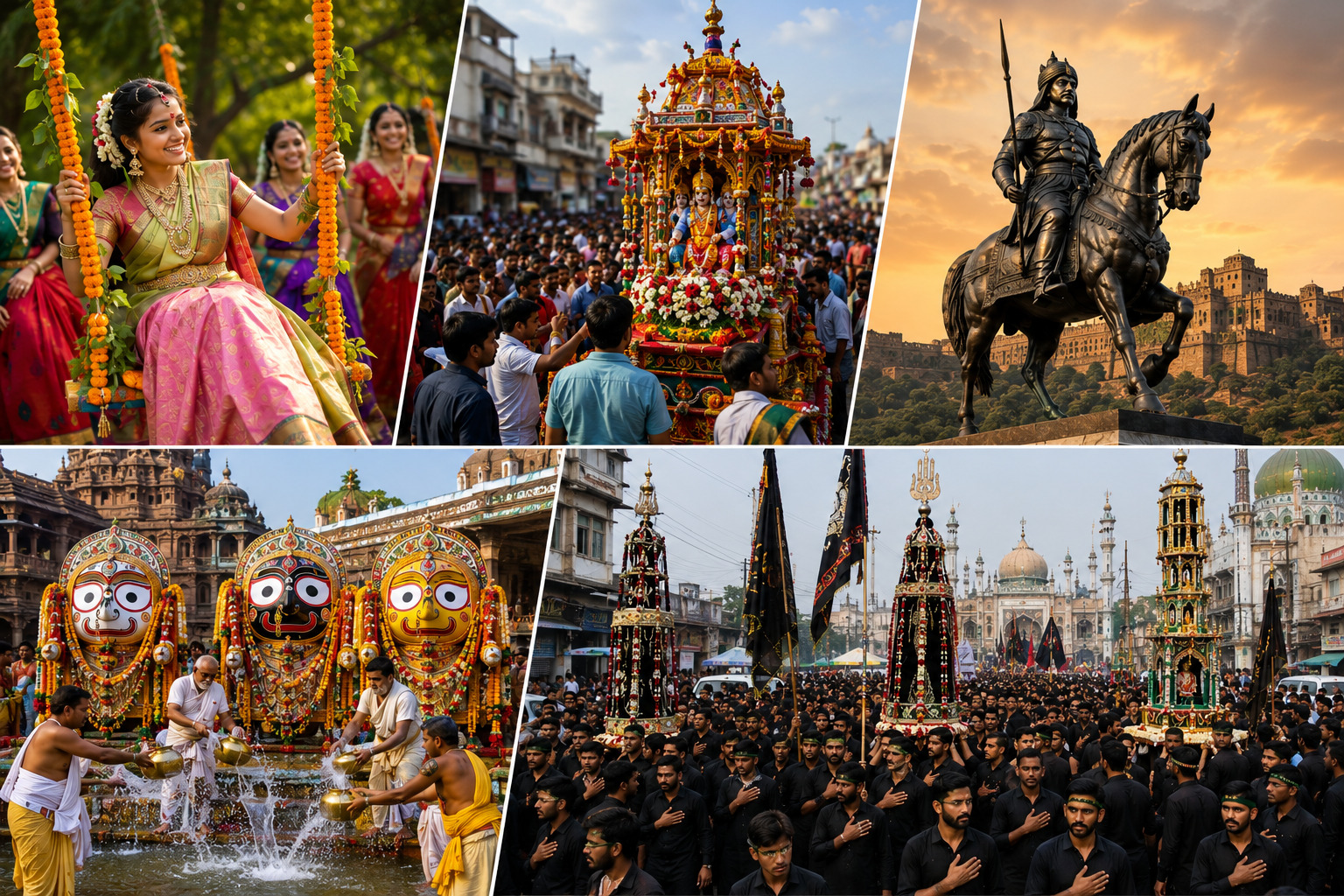
Women and young girls play a central role in the celebrations. They wear new clothes, enjoy swings, play traditional games, and prepare festive delicacies. Moreover, villages and towns come alive with music, laughter, and cultural activities. Through these traditions, Raja Parba beautifully reflects the deep connection between nature, agriculture, and daily life in Odisha.
2. Sital Sasthi : 20 June
Region: Odisha (especially Sambalpur and western Odisha)
Sital Sasthi celebrates the divine marriage of Lord Shiva and Goddess Parvati and stands among the grandest festivals in western Odisha. Every year, devotees celebrate the occasion with enormous enthusiasm and spiritual devotion.
The festivities include elaborate wedding rituals, colourful processions, folk music, and traditional dance performances. In addition, beautifully decorated tableaux move through crowded streets while thousands of devotees participate in the celebrations. Because of its lively atmosphere and deep religious significance, Sital Sasthi remains one of Odisha’s most visually spectacular cultural festivals.
3. Maharana Pratap Jayanti : 22 June
Region: Rajasthan (observed across India)
Maharana Pratap Jayanti honours the birth anniversary of Maharana Pratap Singh, the legendary Rajput ruler of Mewar. People remember him for his courage, patriotism, and fearless resistance against the Mughal Empire, especially during the famous Battle of Haldighati in 1576.
Across Rajasthan and several other states, communities organize rallies, cultural programmes, and tribute ceremonies to celebrate his legacy. Furthermore, people continue to admire the story of his loyal horse Chetak, who carried the injured king to safety despite suffering fatal wounds. Even today, Maharana Pratap inspires generations with his unwavering commitment to freedom, dignity, and self-respect.
4. Jagannath Snana Yatra : 24 June
Region: Puri, Odisha (observed across India)
Jagannath Snana Yatra marks one of the most sacred rituals in the Jagannath tradition. On this day, priests bring Lord Jagannath, Lord Balabhadra, and Devi Subhadra out of the temple sanctum and place them on a special bathing platform.
Priests then bathe the deities with 108 pitchers of fragrant, herb-infused water while devotees gather in large numbers to witness the ceremony. After the ritual, temple traditions state that the deities fall ill and enter a fifteen-day period of seclusion known as Anasar. Consequently, this sacred interval builds anticipation for the world-famous Rath Yatra that follows soon after.
The festival not only strengthens spiritual devotion but also highlights Odisha’s rich temple traditions and cultural heritage.
5. Muharram : 26 June
Region: Pan-India (Islamic community)
Muharram marks the beginning of the Islamic lunar calendar and remains one of the most spiritually significant periods for Muslims around the world. The tenth day, known as Ashura, commemorates the martyrdom of Imam Hussain ibn Ali, the grandson of Prophet Muhammad, during the Battle of Karbala in 680 CE.
Shia Muslims observe the occasion through mourning processions, prayers, and remembrance ceremonies, while many Sunni Muslims observe fasting and reflection. Across India, people carry beautifully crafted taziyeh through the streets as a tribute to Imam Hussain’s sacrifice.
In addition, many communities organize charity drives, water stalls, and food distribution camps to honour the values of compassion and humanity associated with Karbala. Through its message of courage, justice, and sacrifice, Muharram continues to inspire millions across generations.
Leave a Reply