


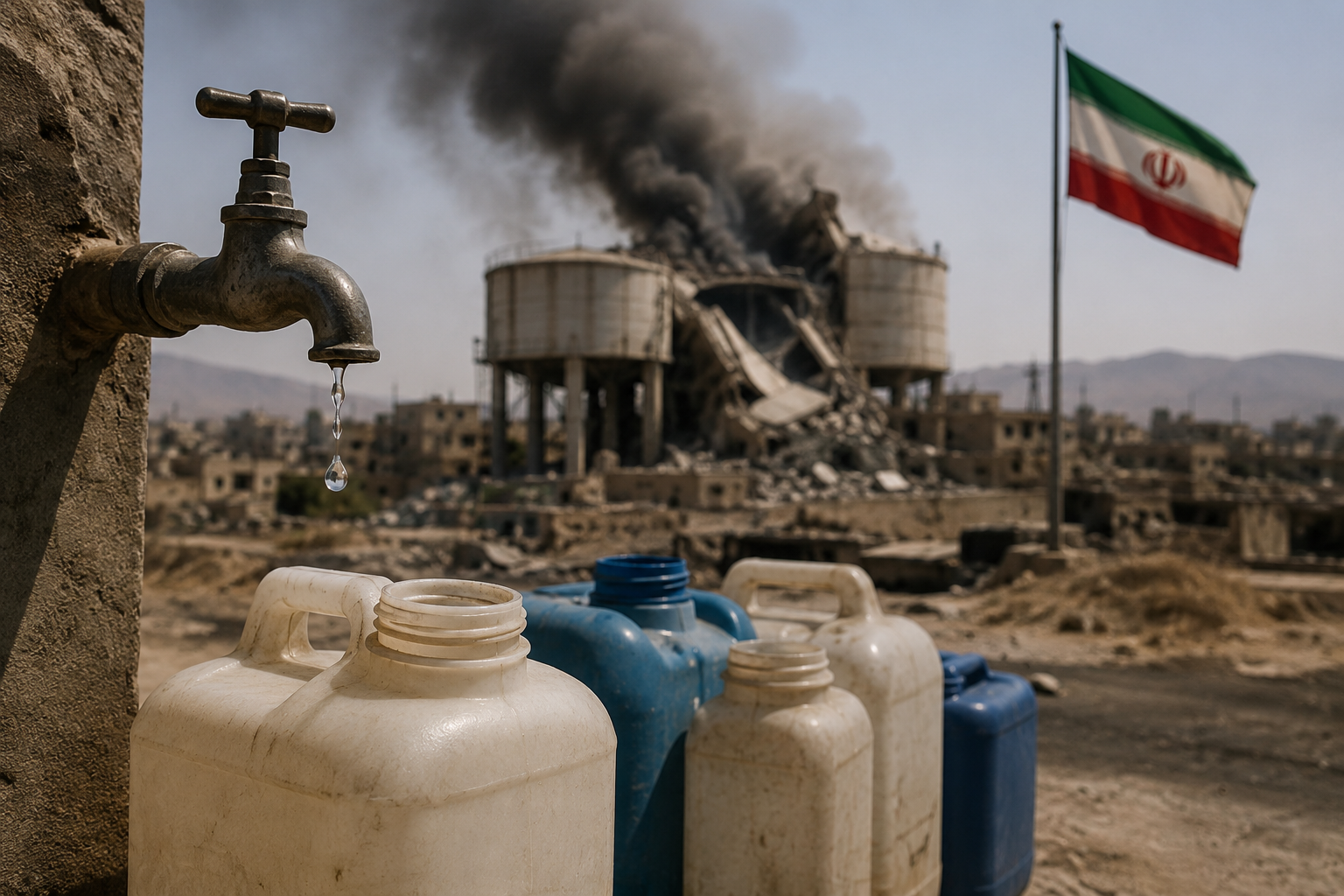
Thousands of residents in southern Iran have been left struggling for access to clean water after recent U.S. military strikes reportedly damaged critical water infrastructure, further deepening the humanitarian impact of the escalating conflict between Washington and Tehran.
Iranian authorities said that attacks on facilities linked to water production and distribution disrupted supplies to several communities, particularly in coastal regions near the Strait of Hormuz. Local officials reported that families have been forced to rely on emergency water deliveries as repair crews work to restore damaged systems. Iran accused the United States of targeting civilian infrastructure, a claim that has intensified international concern over the growing regional crisis.
The disruption comes amid a sharp rise in hostilities between the two countries. U.S. forces recently carried out strikes against Iranian military and surveillance installations following a series of drone and missile incidents in the Gulf. Tehran responded with retaliatory attacks on U.S. assets and allied targets in the region, raising fears of a wider conflict.
Humanitarian organizations have warned that damage to water facilities could have serious consequences for civilians, particularly as Iran faces ongoing drought conditions and existing water shortages. Experts note that many parts of the country were already under pressure from years of water mismanagement, climate-related challenges, and economic sanctions, leaving communities vulnerable to further disruptions.
The latest developments have also complicated diplomatic efforts aimed at restoring a ceasefire and reopening negotiations between the United States and Iran. Regional mediators continue to push for dialogue, but renewed military exchanges have reduced hopes for an immediate breakthrough.
As repair operations continue, residents in affected areas face uncertainty over when normal water services will return, while international observers warn that attacks on essential civilian infrastructure risk worsening an already fragile humanitarian situation.