

Introduction
Plastic is everywhere in our lives. We use it to pack things make household items, medical equipment and electronic devices. This is because plastic is cheap lightweight and lasts a time.. These good things about plastic also cause big problems for the environment. Plastic does not break down easily. Can stay in the environment for hundreds of years. As more and more plastic waste is generated around the world its impact on nature is becoming a concern.
I think plastic pollution is one of the obvious environmental problems we face today. We see plastic bags on the side of the road bottles floating in rivers and trash piling up in spaces. These sights remind us that the convenience we enjoy often comes at a cost to the world. To protect the environment for generations we need to understand what plastic pollution does.
Understanding Plastic Pollution
Plastic pollution happens when plastic materials build up in the environment and harm ecosystems, wildlife and human life. Most plastic products are meant to be used and then thrown away but they stay in nature for a very long time. When we do not dispose of waste properly use many single-use plastics and do not recycle enough it makes this problem worse.
Every year millions of tons of waste enter our rivers, lakes, forests and oceans. A lot of this waste breaks down into pieces called microplastics. These tiny pieces are hard to get rid of. Can spread through the soil, water and air.
Causes of Plastic Pollution
One of the reasons we have plastic pollution is because we use so many single-use plastic products like shopping bags, straws, disposable cups, food wrappers and bottles. We use these things for a minutes but they stay in the environment for decades.
Another big reason is waste management. In places trash is not collected or recycled properly so plastic ends up in natural ecosystems. As cities grow and people want things we make and throw away more plastic.
Also many people do not know how bad plastic pollution is so they litter without thinking about it. When people throw trash on the streets in parks or into water bodies it eventually reaches bigger ecosystems and causes long-term damage.
Impact on Wildlife
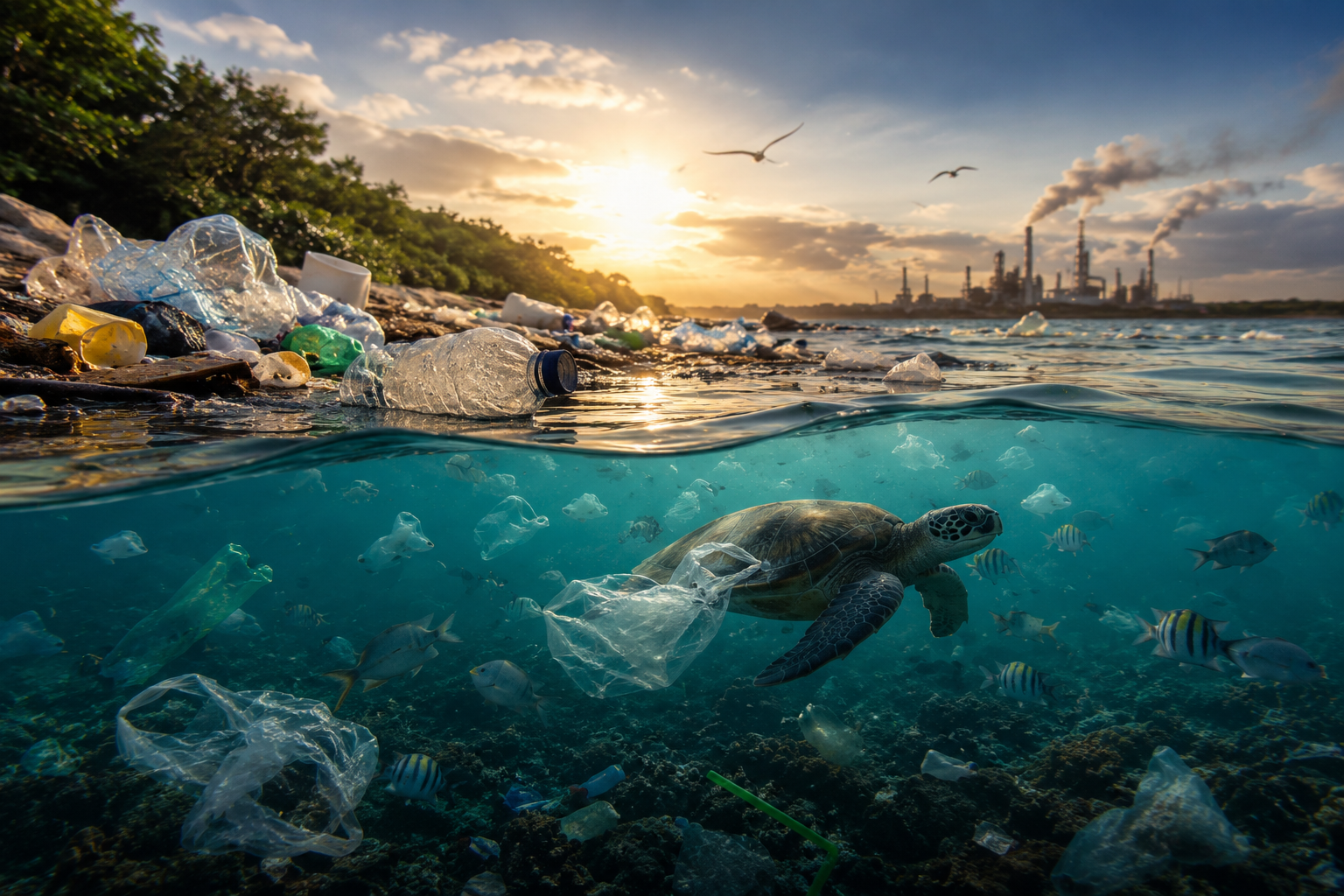
Plastic pollution is very bad for animals. They often mistake trash for food. Birds, fish, turtles and marine mammals might eat plastic pieces, which can block their systems and hurt or kill them.
Many animals get trapped in old plastic items like fishing nets, rings and packaging materials. These things stop them from moving cause wounds and make it hard for them to find food or escape from predators.
I find this part of pollution very disturbing. Animals do not make trash. They suffer because of what we do. To protect wildlife we need to be more responsible with how we use and get rid of products.
Impact on Water Bodies and Oceans
Rivers lakes and oceans are hurt a lot by pollution. Trash carried by rainwater and drainage systems eventually reaches these water bodies. Once its there it builds up. Harms the aquatic ecosystems.
Marine animals often eat particles, which can move up the food chain. Coral reefs and other sensitive habitats are also damaged by debris. We have found patches of floating plastic trash in different parts of the worlds oceans showing how big this problem is.
Clean water is necessary for all living things. When plastic pollution contaminates water environments it threatens biodiversity. Disrupts the natural balance of ecosystems.
Impact on Soil and Plant Life
Plastic pollution does not just hurt water ecosystems. It also has effects on soil health. Plastic trash in farm land can reduce soil quality. Interfere with water movement and nutrient absorption.
Microplastics can build up in the soil. Change its properties. This might affect plant growth. Reduce how much food we can produce over time. Since healthy soil is necessary for growing food plastic pollution indirectly threatens our food supply.
Natural places lose their beauty when they are covered in litter. Forests, fields and parks become less attractive and less healthy for both animals and people.
Effects on Human Health
Although plastic pollution is often seen as an issue it also affects human health. Microplastics have been found in drinking water, food and even the air. Scientists are still studying the long-term effects on health. There is growing evidence that microplastics might be bad for us.
Burning plastic trash releases chemicals into the air contributing to air pollution and breathing problems. Communities living near managed trash sites are especially vulnerable.
As consumers we are connected to the environment that plastic pollution hurts. So protecting nature means protecting ourselves.
Solutions to Plastic Pollution
To fix plastic pollution we all need to work individuals, communities, industries and governments. One of the solutions is to reduce the use of single-use plastics. Using bags, bottles and containers can decrease waste a lot.
Improving recycling systems and encouraging trash disposal are also very important. Governments can make rules on plastic production and promote eco-friendly alternatives.
Education and awareness campaigns can help people understand the consequences of pollution and encourage them to make positive changes. Small actions done by millions of people can make a difference in the environment.
Practical Applications for Reducing Plastic Pollution
- Carry shopping bags instead of plastic bags.
- Use water bottles and containers.
- Separate recyclable waste from household trash.
- Join community up drives.
- Support businesses that use packaging.
- Avoid using single-use plastic products when not necessary.
- Encourage education in schools and colleges.
- Promote recycling and waste reduction at home and at work.
Conclusion
Plastic pollution is a growing problem that affects wildlife, water bodies, soil quality and human health. While plastic has made life easier in ways its careless use and disposal have caused serious ecological problems. To solve this we need awareness, responsibility and cooperation from everyone in society.
In my opinion reducing plastic pollution is not our duty, to the environment but also a moral responsibility. The choices we make today will decide the state of our planet tomorrow. By adopting habits and supporting eco-friendly practices we can help preserve nature and create a cleaner healthier future for generations to come.