

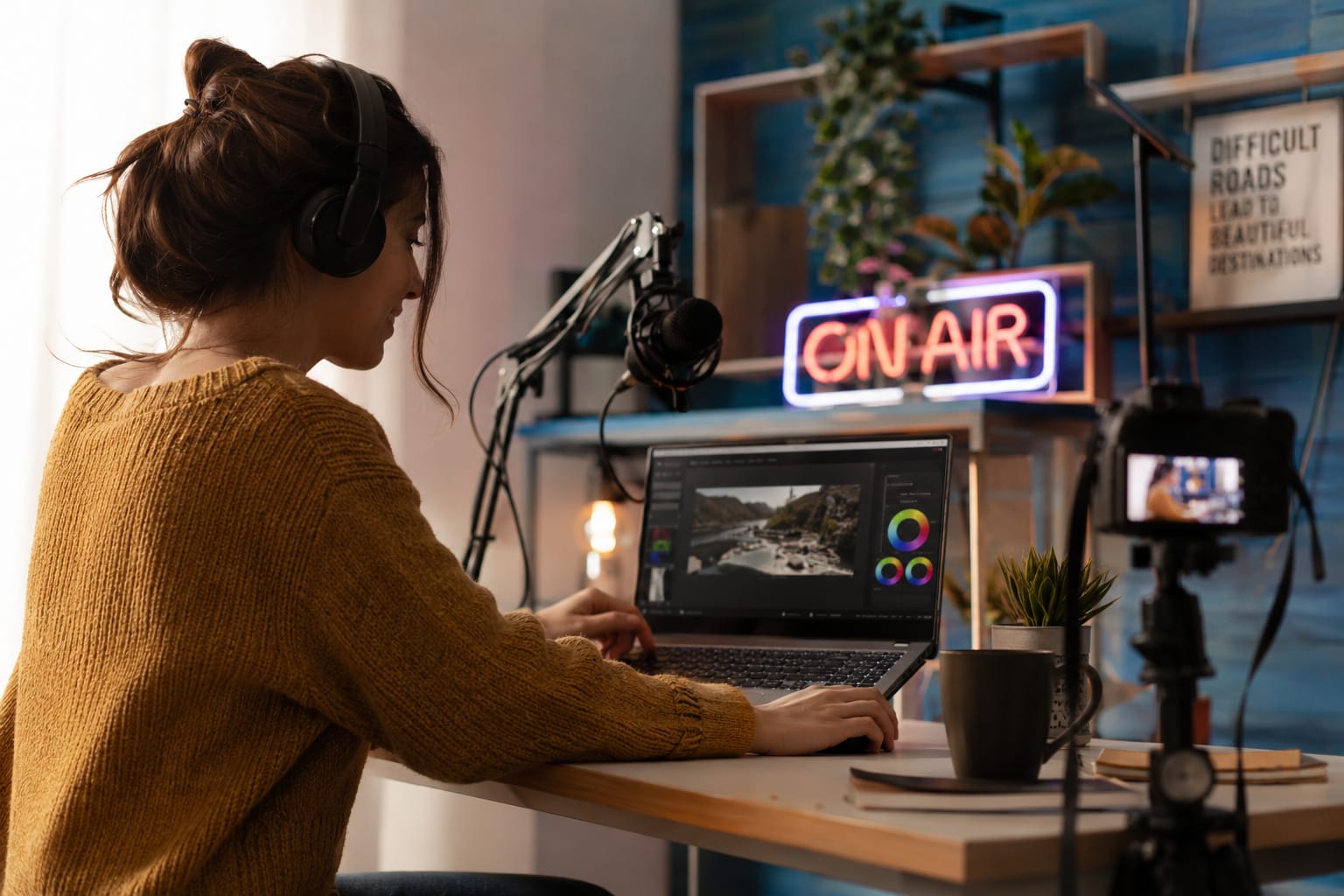
Introduction
It wasn’t that long ago that “content creator” was not a career title. Whether you were a filmmaker, an artist, or a writer, you had to have a publisher, a record label or a TV network at your back to publish what you did — whatever it was. The gatekeepers were a reality and most of people did not get past them.
Today, it’s a whole different story. Every day, millions of people are making content, writing blogs, making videos for YouTube, posting reels, making videos for podcasts, setting up newsletters, etc. Those walls have fallen, and what has replaced them is one of the fastest growing in modern times.
Then how did we come to this? So where are they going with this?
A blog and a forum to reflect on the Early Days.A blog and a forum to reflect on the Early Days.
The history of producing digital content starts to really begin in the late 1990s and early 2000s, when sites such as Blogger or Live Journal provided popular access to the Internet for ordinary people to write and publish their opinions. It was simple: no monetisation, no algorithms, no “personal brand” approach — but it got the ball rolling.
People got a glimpse into the idea of building an audience with forums such as Reddit (established in 2005) and communities on sites such as MySpace. It wasn’t pretty, but it was something they showed it was not just about content consumption. They wished to make it, as well.
The Social Media Explosion
After that came the platforms which changed everything.
YouTube launched in 2005. Facebook became mainstream at the same time. With each new iteration, Twitter, Instagram, Snapchat and TikTok made it a bit easier and a bit quicker to put your voice out in the world. More importantly, they put a potential audience right at your fingertips.
Then came the smartphone and things got even easier. Suddenly, having a good camera, a microphone and an internet connection is all you needed. No studio. No fancy equipment. No team. A teen in a rural area can shoot a video in their bedroom and get one million views the following morning. And some of them did.
The “YouTuber” had become a cultural icon by the early 2010s. Wealth was being generated from ad revenue, sponsorships and merchandise. Looking back on a few enthusiasts’ pastime was becoming a real occupation.
The Creator Economy is becoming a reality
The notion of the creator economy began to emerge in the late 2019-2020 period, and developed over the years. It describes the ecosystem of tools, platforms, and income streams that enable creators to put their material into effect their very own methods to develop their business.
Today that is a vast ecosystem. Creators can monetize via subscription and tips directly from fans on platforms such as Patreon, Substack, and Ko-fi. There’s also a Partner Program for YouTube. Instagram and TikTok have their own creator funds, and features on their platform for Instagram brands partnerships. Spotify, Apple and independent sponsors are how podcasters make money.
There are different estimates for the value of the creator economy, but it is already valued at more than $100 billion and is still expanding. It is thought that over 200 million people worldwide feel that they are content creators in some way, whether that’s through a full-time job or as a hobby.
What causes it to keep growing?
This expansion is fueled by a number of factors which reinforce one another.
Reduce entry costs
Some of the tools to make professional-looking content are now more affordable and more accessible. Starting a channel, or a newsletter, is quite easy today: there is free video editing software, microphones that are not too expensive, AI tools to write and design, and more.
Changing work culture-
It was particularly after COVID-19 that many began to doubt the nine-to-five paradigm. Many resorted to content creation as their side hustle, and some even made it their main profession. The lure of work for oneself, working on your own time and working something creative is irresistible.
Audience demand
Digital content consumption is on the rise. Spend time on screens has increased for nearly everyone, from streaming to social media to podcasts and newsletters. Of course the more we consume, the more there is to create.
AI and new tools
AI is beginning to make its way into the content making process, from research to script writing, editing, thumbnail design and beyond. There are indeed debates going around about how this impacts creativity and originality, but for now it’s helping many creators to work quicker and smarter.
This blog examines some of the challenges that few people discuss enough.
But it isn’t just about the “highlights”, nor is it just about the “brand deals”, either.
Creating content is really hard work. It takes several years to build an audience from scratch and most creators do not get there overnight and start earning big bucks, if at all, for a long time after. Burnout is very prevalent. Constantly posting content, being relevant and keeping up with changing algorithms can take its toll.
But there’s also a problem with income insecurity. A platform can decide to change its algorithm one day and destroy a creator’s reach. One piece of content can go viral in a positive or extremely negative fashion. That uncertainty is stressful for creators that rely on this income.
But there’s another issue: saturation. The days of being a standout on the internet are becoming increasingly difficult with everyone creating content on every topic imaginable. Consistency is important, as is quality.
What the Future Looks Like
The path of digital content production is still positive despite the obstacles.
We are witnessing new formats that are popping up: short-form video, interactive content, AI-generated media, virtual and augmented reality experiences. Platforms will continue to develop. New monetisation models will develop. Over time, the audience will be closer to the creators and more direct.
One thing is clear: The passive entertainment days are over. Users are not simply looking to view and scroll, but they want to engage in creation and connection. The tools are there. The audiences are present. For many, the drive to do it is even greater.
It’s one of the defining stories of our generation and something that affects everyone from creators to those who value what creators produce and share. And, in truth, it is only beginning and will keep going.