


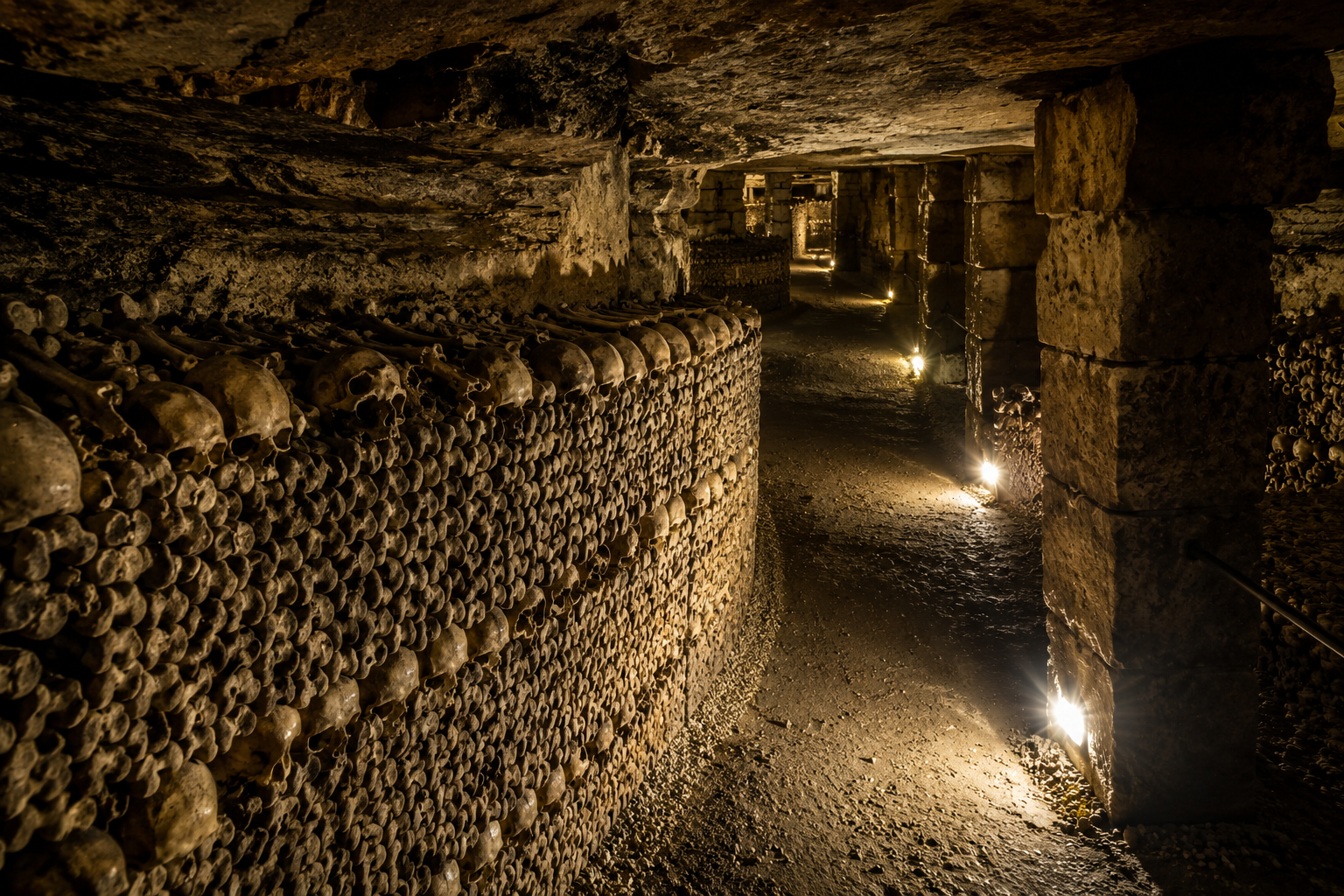
Beneath the busy streets of Paris lies a vast underground network that continues to intrigue historians, explorers, and adventure seekers. Known as the Paris Catacombs, this sprawling maze of tunnels stretches for hundreds of kilometers and preserves a remarkable chapter of the city’s history.
The underground passages began as limestone quarries that supplied building materials for Paris’s growth. As the city’s population increased during the 18th century, overcrowded cemeteries created serious health concerns. City officials moved millions of human remains into the abandoned tunnels, transforming them into one of the world’s largest underground burial sites.
Today, visitors can explore a small, officially managed section of the catacombs. However, most of the underground network remains off-limits and continues to attract urban explorers known as cataphiles. These adventurers navigate the maze-like tunnels in search of hidden chambers, forgotten passageways, and traces of Paris’s underground past.
Over the years, explorers have uncovered secret rooms, underground meeting spaces, and fascinating relics that reveal how people used the tunnels for different purposes. The discoveries have strengthened the catacombs’ reputation as a hidden underground city beneath Paris.
Despite its dark and mysterious atmosphere, the underground network offers valuable insights into the city’s history, architecture, and urban development. The catacombs showcase a side of Paris that most visitors never see, blending history, mystery, and exploration in one extraordinary location.
As interest in hidden places grows worldwide, the underground city beneath Paris continues to capture attention and inspire curiosity among those eager to uncover the secrets hidden below one of the world’s most famous capitals.