

Saudi Arabia has started scaling back parts of its ambitious NEOM megacity project after rising costs, construction challenges, and economic realities slowed progress on the futuristic development. The project, which Crown Prince Mohammed bin Salman launched as a centerpiece of Vision 2030, aimed to transform the country’s economy and reduce its dependence on oil revenues.
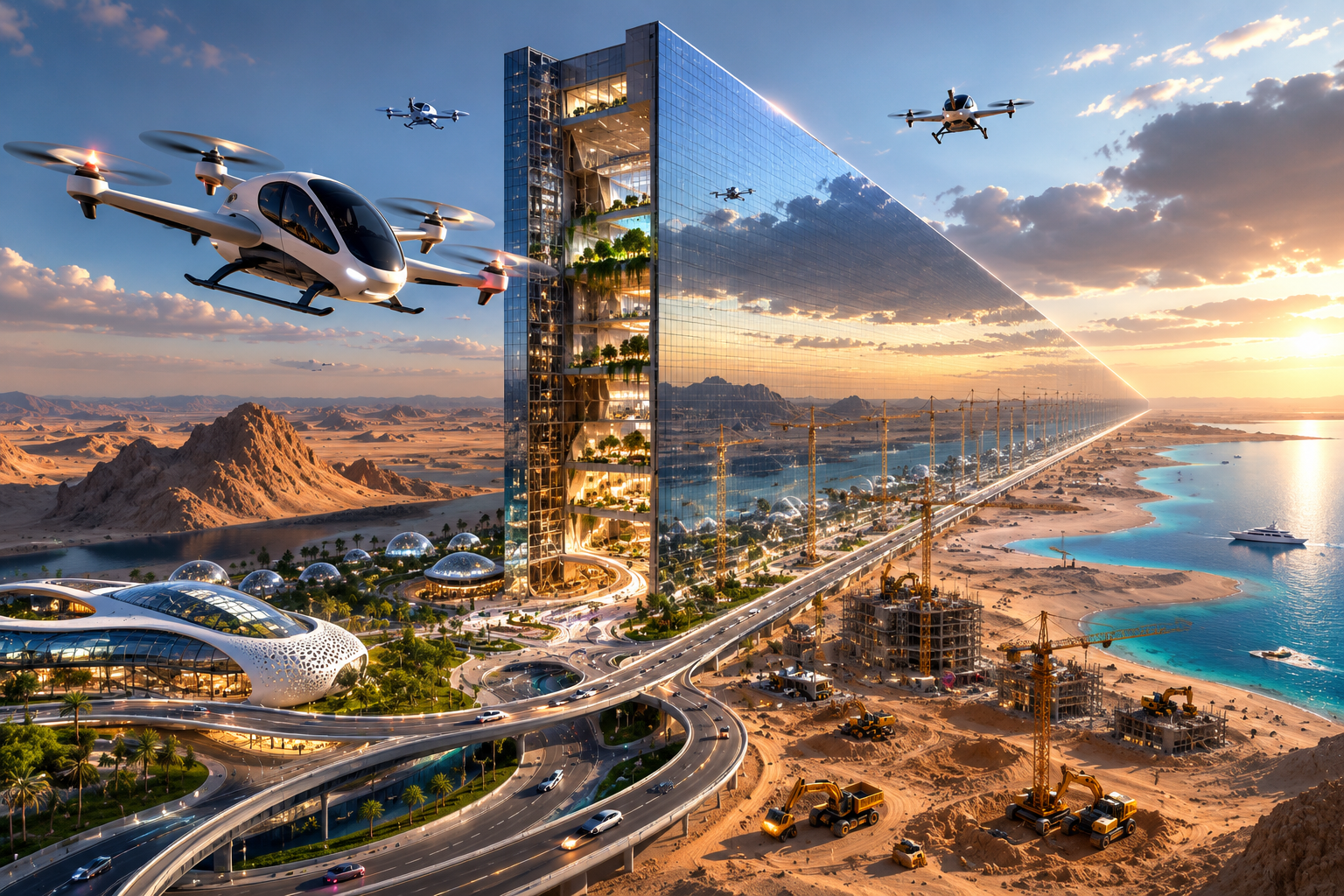
At the heart of NEOM stands The Line, a proposed 170-kilometer-long linear city designed to house millions of residents in a car-free environment. The project also promised cutting-edge technologies, including flying taxis, artificial intelligence-driven services, and sustainable urban infrastructure. Developers envisioned a city that would redefine how people live, work, and travel in the future.
However, the scale of the project has created significant obstacles. Construction costs have risen sharply, while global economic uncertainty and fluctuating oil revenues have increased financial pressure. Officials have reportedly adjusted timelines and reduced some development targets to align the project with available resources and practical realities.
Industry experts also point to engineering complexity as a major challenge. Building a massive mirrored skyscraper across desert terrain requires advanced technology, extensive infrastructure, and enormous investment. These factors have forced planners to reconsider the pace and scope of construction.
Despite the adjustments, Saudi Arabia continues to support NEOM as a long-term strategic project. Government officials insist that the vision remains intact, even as developers adopt a more gradual approach to implementation. The kingdom still views NEOM as a key driver of tourism, innovation, and economic diversification.
While the futuristic city may take longer to complete than originally expected, Saudi Arabia continues its effort to build one of the world’s most ambitious urban developments.