

Introduction
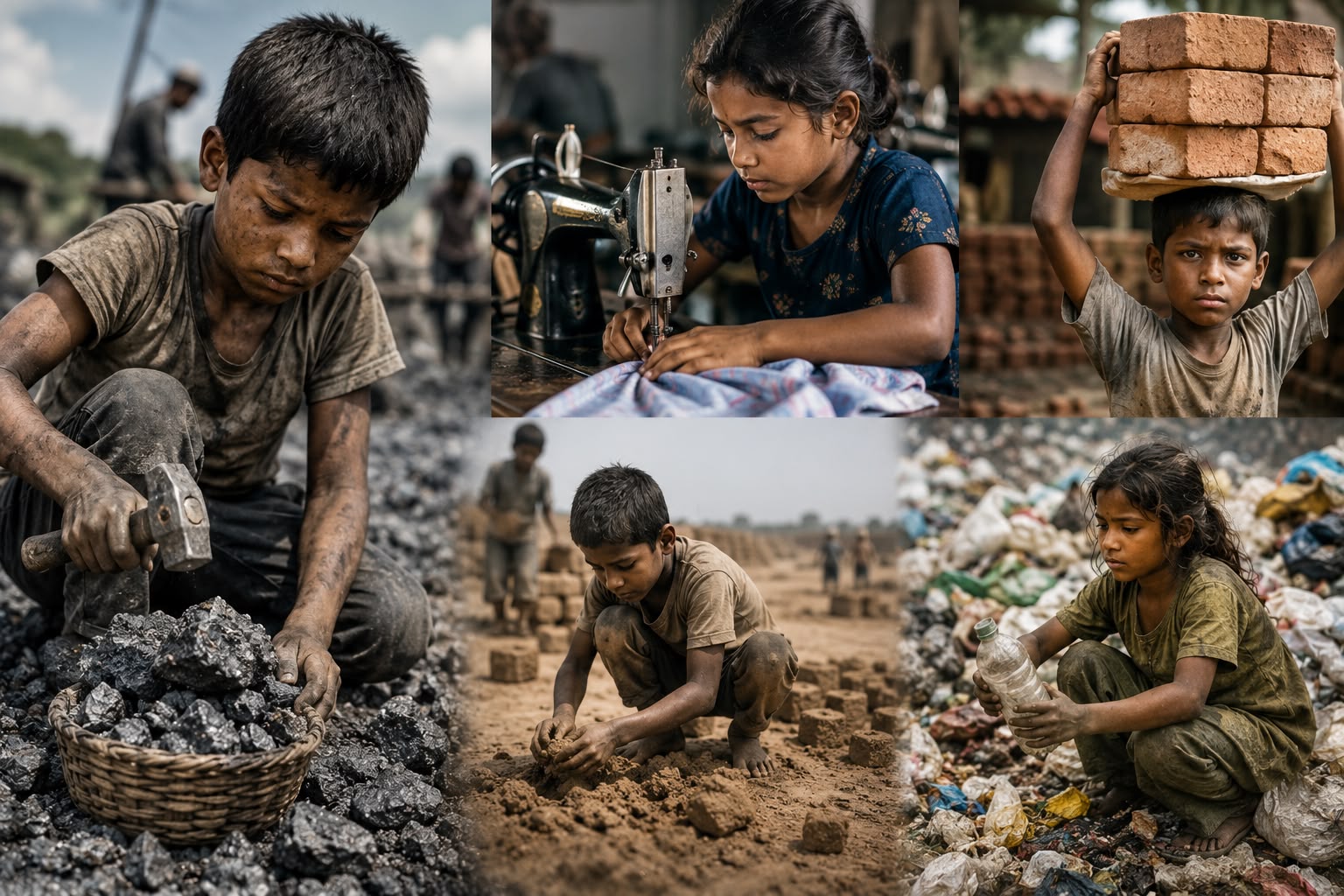
To begin with, child labor is a major social problem that affects millions of children around the world. Every child deserves a happy childhood, quality education, proper healthcare, and the opportunity to grow into a healthy and responsible adult. Unfortunately, many children are forced to work at a very young age because of poverty, lack of education, family responsibilities, and social inequality. Instead of going to school and playing with their friends, these children work in factories, farms, shops, construction sites, restaurants, and private homes, where they are often exposed to dangerous and unhealthy conditions.
Moreover, child labor not only harms children’s physical health but also affects their mental and emotional well-being. Although many countries have laws that prohibit child labor, it still exists in many forms. Therefore, governments, families, schools, employers, and communities must work together to eliminate this serious problem.
What is Child Labor?
In simple terms, child labor refers to the employment of children in work that is harmful to their health, education, safety, or overall development. It includes jobs that prevent children from attending school, force them to work long hours, or expose them to dangerous conditions.
However, not all work done by children is considered child labor. Helping parents with household chores or learning family skills for a limited time can contribute positively to a child’s development. On the other hand, any work that interferes with education or endangers a child’s physical or mental well-being is considered child labor and must be stopped.
Causes of Child Labor
There are several reasons why child labor continues to exist.
1. Poverty
Firstly, poverty is the biggest cause of child labor. When families struggle to meet their basic needs, they often depend on their children to earn money for food, clothing, and shelter.
2. Lack of Education
Secondly, many children do not have access to quality education. As a result, they are more likely to enter the workforce at an early age.
3. Unemployment of Adults
Thirdly, when adults cannot find stable employment, children are often forced to work to support their families.
4. Social Inequality
Furthermore, discrimination and unequal opportunities often push children from disadvantaged communities into labor instead of education.
5. Family Problems
Moreover, family breakdown, illness, death of parents, or natural disasters may force children to work to support themselves and their families.
6. Demand for Cheap Labor
Finally, some employers prefer hiring children because they can pay them lower wages and make them work longer hours.
Types of Child Labor
Child labor takes many different forms across the world. For example, children may be involved in:
Working on farms and plantations.
Working in factories and industries.
Working as domestic helpers in private homes.
Selling goods on the streets or begging.
Working in hotels, restaurants, and small shops.
Working on construction sites.
Working in mines and quarries.
Collecting and recycling waste.
Many of these jobs are extremely dangerous. For instance, children may be exposed to harmful chemicals, heavy machinery, extreme weather conditions, physical abuse, and exploitation.
Effects of Child Labor
Child labor has serious consequences for children, families, and society as a whole.
1. Loss of Education
Firstly, working children often miss school or drop out completely. Consequently, they remain uneducated and have fewer employment opportunities in adulthood.
2. Health Problems
Moreover, long working hours, physically demanding tasks, unsafe workplaces, and poor nutrition can lead to injuries, diseases, and permanent disabilities.
3. Mental and Emotional Stress
In addition, children engaged in labor frequently experience anxiety, fear, depression, and trauma. Furthermore, many become victims of physical, emotional, or sexual abuse.
4. Loss of Childhood
Above all, child labor robs children of their childhood. They lose valuable opportunities to learn, play, develop friendships, and enjoy a normal life.
5. Economic Impact
Finally, communities that rely on child labor often experience lower education levels, reduced productivity, and slower economic development.
Child Labor in India
In India, significant progress has been made in reducing child labor over the past few decades. However, it continues to exist, especially in agriculture, domestic work, small-scale industries, and the informal sector.
The Government of India has introduced several laws and welfare programs to protect children. In addition, the Constitution guarantees children’s right to education and protection from exploitation. Educational schemes, financial assistance, and public awareness campaigns have helped reduce child labor in many regions.
Nevertheless, poverty, population growth, migration, and lack of awareness continue to make the complete elimination of child labor a difficult task.
Laws Against Child Labor
To address this issue, many countries have enacted laws to protect children from exploitation.
In India, some important laws include:
The Child and Adolescent Labor (Prohibition and Regulation) Act, which prohibits the employment of children in most occupations and restricts hazardous work for adolescents.
The Right of Children to Free and Compulsory Education Act, which guarantees free education for children.
The Constitution of India, which protects children from exploitation and ensures their right to education, dignity, and development.
Furthermore, international organizations also work to eliminate child labor through global agreements, awareness campaigns, and support programs.
Measures to Eliminate Child Labor
To solve this problem, several effective measures should be taken.
* First, provide free and quality education for every child.
* Next, reduce poverty by creating employment opportunities for adults.
* Additionally, strictly enforce child labor laws.
* Furthermore, spread awareness about children’s rights.
* Moreover, support poor families through social welfare programs.
* Equally important, encourage businesses to follow ethical labor practices.
* Finally, provide vocational training and involve local communities in protecting children.
Role of Society
Everyone has an important role to play in eliminating child labor.
Parents should encourage their children to attend school rather than work. Similarly, teachers should support children who are at risk of dropping out. Employers must refuse to hire underage workers. Likewise, citizens should report cases of child exploitation to the authorities. Non-governmental organizations can provide education, healthcare, counseling, and rehabilitation for affected children.
Together, these efforts can ensure that every child receives education and has the opportunity for a better future.
Conclusion
In conclusion, child labor is a serious violation of children’s rights and a major obstacle to social and economic development. Every child deserves a safe childhood, quality education, proper healthcare, and equal opportunities to succeed in life. Although poverty, lack of education, and social inequality continue to fuel child labor, these challenges can be overcome through strong laws, effective government policies, quality education, and greater public awareness.
Ultimately, eliminating child labor is not only the responsibility of governments but also of families, employers, schools, communities, and every responsible citizen. Therefore, by ensuring that children are in classrooms instead of workplaces, we can build a brighter, more prosperous, and more compassionate society. Without a doubt, protecting children today is essential for building a stronger nation tomorrow