


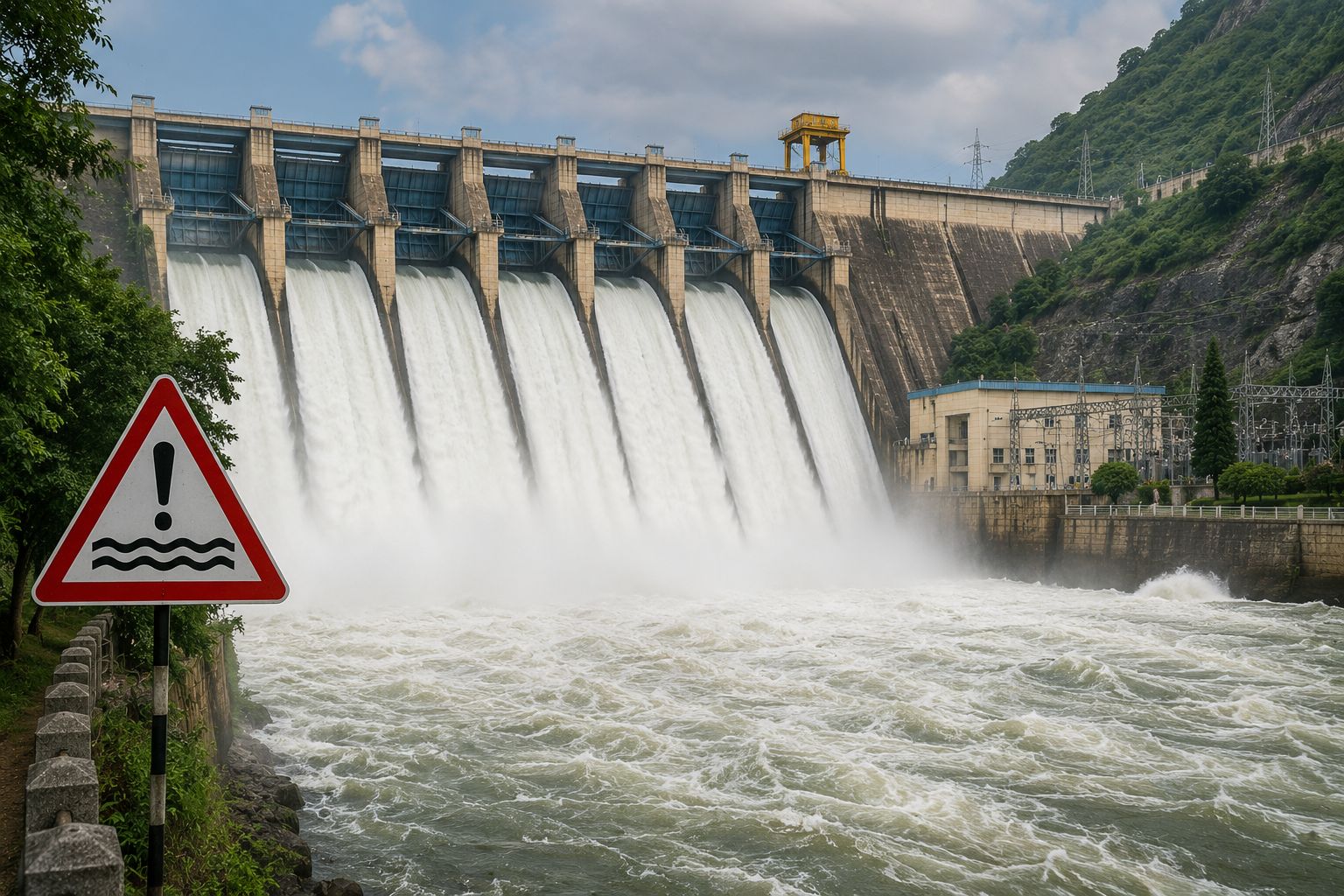
The Bhakra Beas Management Board (BBMB) has released 8,000 cusecs of water from the Bhakra Dam into the Sutlej River, prompting authorities to issue an alert for downstream areas in Punjab and adjoining regions. The controlled discharge has been carried out as part of ongoing dam management measures, with officials closely monitoring water levels in the reservoir and catchment zones.
According to officials, the release has been necessitated due to increased inflow into the dam, attributed to rainfall in the upper catchment areas of Himachal Pradesh and surrounding hill regions. The regulated discharge is aimed at maintaining safe reservoir levels and ensuring structural stability of the dam.
A “cusec” refers to a cubic foot per second, a unit used to measure the flow of water. In simple terms, 8,000 cusecs means 8,000 cubic feet of water is flowing out every second into the Sutlej River.
Following the release, an alert has been issued for several downstream districts along the Sutlej, including low-lying and river-adjacent areas in Punjab and parts of Himachal Pradesh. Local administrations have been advised to remain vigilant and take precautionary measures to prevent any untoward incidents.
Authorities have urged residents living near the riverbanks to avoid approaching the Sutlej, relocate livestock to safer locations, and stay updated with official advisories. Disaster management teams have been placed on alert, and monitoring systems have been activated to track water levels in real time.
BBMB officials have also coordinated with district administrations to ensure timely communication of any further increase in water discharge. Control rooms have been instructed to function round the clock to respond to emergencies, if required.
Bhakra Dam, located on the Sutlej River in Himachal Pradesh, is one of India’s largest and most important multipurpose river valley projects. It plays a crucial role in irrigation, hydroelectric power generation, and flood control across northern states, particularly Punjab, Haryana, and Rajasthan. The dam is a key component of the region’s water management system and is regularly monitored to balance storage and safety.
Officials have reassured the public that the current situation remains under control and that the water release is being carefully regulated. They added that further action will be taken if inflow levels rise or weather conditions change in the coming days.
Authorities continue to monitor the situation closely and have appealed to the public not to panic, while strictly following safety advisories issued from time to time.