


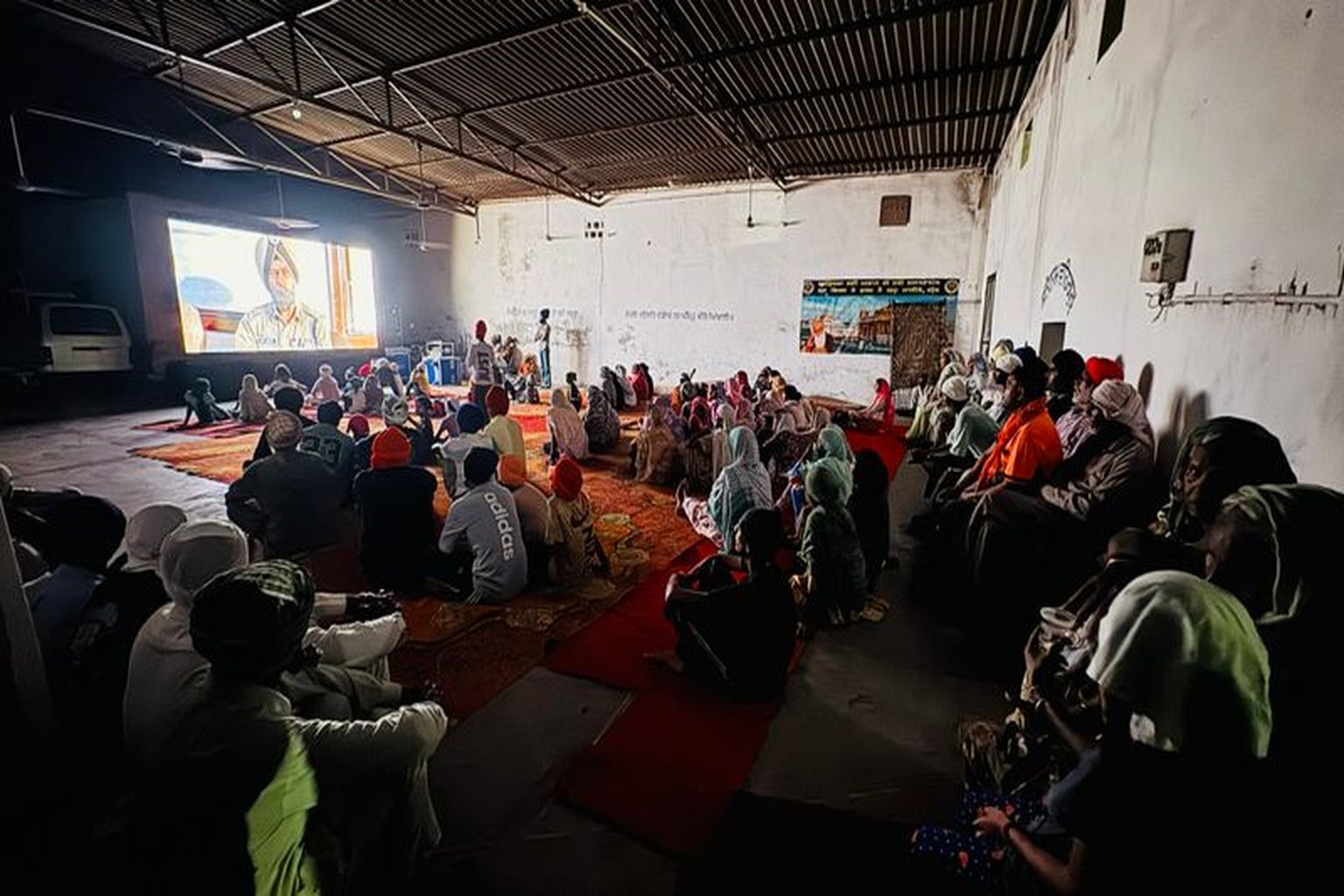
Chandigarh: The removal of Satluj, originally titled Punjab ’95, from an OTT platform has triggered an unusual response in several villages across Punjab. Instead of waiting for the film to return online, local residents and community groups have started organising public screenings. They say the aim is to ensure that people can still watch the film and understand the events it portrays.
The screenings have attracted large crowds. People of different age groups have gathered in village grounds, community halls, and open spaces to watch the film. The initiative has also revived discussions about Punjab’s militancy era, human rights, and freedom of expression.
Why Are Villages Organising Public Screenings?
Many organisers say they want younger generations to learn about an important period in Punjab’s history. They believe the film offers an opportunity to discuss events that shaped the state during the late 1980s and early 1990s.
The screenings also allow families and local residents to watch the film together. After each show, many people stay back to share their memories and discuss the issues raised in the movie.
Several organisers have described the screenings as community awareness events rather than entertainment programmes.
What Is Satluj About?
Satluj, previously titled Punjab ’95, is inspired by the life of Jaswant Singh Khalra, a human rights activist from Punjab.
Khalra investigated the alleged illegal cremation of unidentified bodies during the militancy period. His work drew national and international attention. In 1995, unknown men abducted him outside his home in Amritsar. A later investigation led to the conviction of several Punjab Police personnel for his kidnapping and murder.
The film highlights Khalra’s search for truth and justice. It also explores the wider debate over accountability and human rights during one of Punjab’s most difficult periods.
Why Was the Film Removed?
The film recently disappeared from an OTT platform, surprising many viewers. The platform has not publicly explained the reason for its removal.
The decision quickly sparked discussions on social media. Many users questioned why the film became unavailable after finally reaching audiences following years of delays.
As a result, community groups stepped forward to organise local screenings. They wanted to make sure people could still watch the film.
The Film Continues to Divide Opinion
The public response to Satluj remains mixed.
Supporters believe the film raises important questions about human rights and justice. They argue that movies based on historical events help preserve public memory and encourage meaningful discussion.
Others believe Punjab’s militancy period was far more complex than any single film can show. They say the state witnessed years of violence and terrorism. Security forces also faced enormous challenges while trying to restore peace. According to them, every account should reflect multiple perspectives.
Communities Reflect on Punjab’s Past
Many villagers have used these screenings as an opportunity to remember a difficult chapter in Punjab’s history.
Older residents have shared personal experiences from the militancy years. Younger viewers have listened to those stories and asked questions about the events shown in the film.
Historians often stress the importance of discussing such periods openly. They believe these conversations help future generations understand the cost of conflict and the value of peace.
A Debate That Continues
The growing number of community screenings shows that Satluj has become more than just a film. It has become part of a larger conversation about Punjab’s history, justice, and freedom of expression.
Whether people agree with its message or not, the film has encouraged fresh debate across the state. The public screenings have ensured that discussions continue even after the film’s removal from the OTT platform.
As more villages organise similar events, Satluj continues to bring people together to reflect on Punjab’s past and its lasting impact on the present.