

Introduction
Accounting was once seen as a discipline closely tied to national laws, local tax systems, and domestic business practices. That picture has changed dramatically over the past few decades. Companies now operate across continents, investors compare businesses from different countries, and financial decisions often have global consequences. As businesses become increasingly interconnected, the demand for professionals who understand finance beyond national boundaries continues to grow.
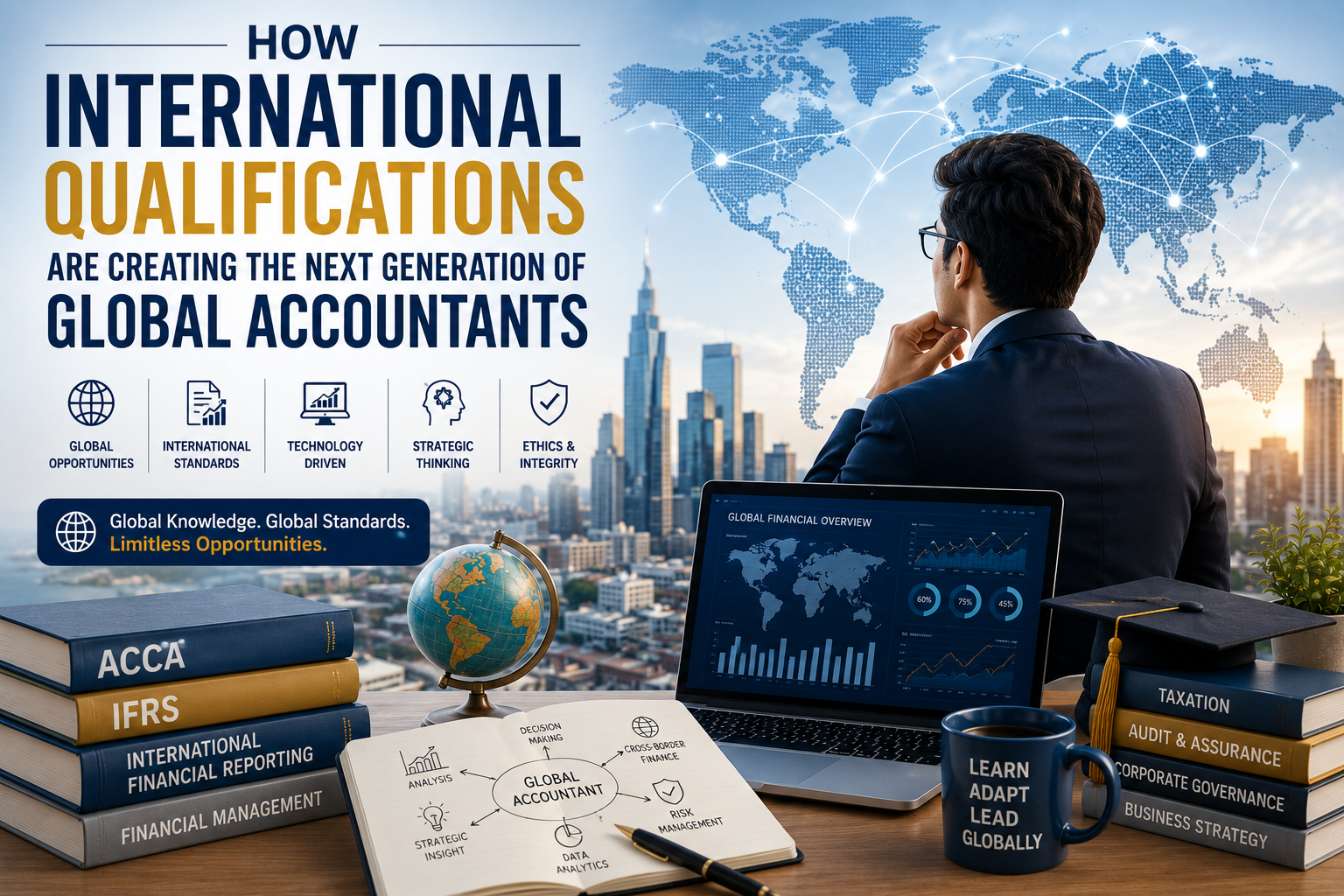
This transformation has given rise to a new category of professionals known as global accountants. These individuals possess not only technical accounting expertise but also a strong understanding of international financial standards, cross-border business operations, and global economic trends. As an ACCA student, I have witnessed how valuable international qualifications are becoming. Although pursuing such qualifications can be costly and demanding, they are shaping the future of finance and creating opportunities that were difficult to imagine a generation ago.
The Changing Face of the Accounting Profession
From Local Experts to Global Professionals
Traditionally, accountants focused on the regulations and reporting requirements of a single country. However, globalization has transformed the business environment. A company headquartered in India may have investors in Europe, suppliers in Asia, and customers in North America. Managing such operations requires professionals who understand international accounting practices and can work confidently across different business environments.
Financial reporting standards have also become more aligned across countries. Organizations seek consistency and transparency so that investors can compare businesses regardless of where they operate. As a result, employers increasingly value accountants who understand international frameworks and global business practices.
Why International Qualifications Matter
International qualifications such as ACCA, CIMA, and similar programs are designed with a global perspective. They teach far more than accounting principles. Students gain knowledge in ethics, strategic management, corporate governance, risk management, taxation, and financial reporting within an international context.
These qualifications encourage candidates to think beyond calculations and compliance. They develop analytical abilities, business awareness, and decision-making skills that are essential in modern finance roles. Employers often view these qualifications as evidence that a candidate can adapt to different business environments and contribute effectively within multinational organizations.
How International Qualifications Are Shaping Finance
Building a Common Financial Language
One of the greatest benefits of international qualifications is that they help create a common language for financial reporting and business practices. When professionals across different countries follow similar principles, communication becomes easier and decision-making becomes more reliable.
This consistency benefits investors, regulators, and businesses alike. It reduces confusion, improves transparency, and strengthens confidence in financial information. In a global economy where capital moves across borders every day, such consistency is more important than ever.
Preparing Professionals for Technology-Driven Finance
The accounting profession is evolving rapidly because of technological advancement. Automation now performs many routine tasks that once required hours of manual effort. Modern accountants are expected to interpret data, identify risks, and support strategic decision-making.
International qualifications have evolved to reflect these changes. Topics such as digital transformation, data analytics, cybersecurity risks, and sustainability reporting are becoming increasingly important. The accountant of the future will not simply record transactions; they will help organizations navigate complex business challenges and create long-term value.
Practical Examples and Real-World Observations
A Student’s Perspective
As an ACCA student, I often hear people say that international qualifications are expensive. In many cases, they are right. Registration fees, examination costs, study materials, and coaching expenses can place significant financial pressure on students.
However, I have also noticed that many students view these expenses as an investment rather than a cost. They are willing to make sacrifices because they understand the broader opportunities these qualifications can provide. The ability to work with multinational companies, pursue international careers, and gain globally recognized expertise often outweighs the initial financial burden.
The Growing Demand for Global Talent
Many multinational companies actively seek professionals who can work across borders and understand international business requirements. Employers increasingly look for candidates who combine technical accounting knowledge with communication skills, problem-solving abilities, and strategic thinking.
This trend suggests that future finance professionals will need more than academic degrees alone. Professional qualifications are becoming an important bridge between education and industry expectations. They equip individuals with the practical skills and global perspective required in today’s interconnected business environment.
Key Takeaways
- Globalization has increased the demand for accountants with international knowledge and skills.
- International qualifications provide exposure to global accounting, finance, and business practices.
- Modern accountants are expected to contribute to business strategy, not just financial reporting.
- Technology is reshaping finance, making analytical and advisory skills more valuable.
- Although international qualifications can be costly, they often provide long-term career benefits and broader opportunities.
- Continuous learning is becoming essential for success in the accounting profession.
Closing Thoughts
The rise of global accountants reflects a larger transformation taking place in the world of finance. Businesses no longer operate within isolated markets, and finance professionals can no longer rely solely on local knowledge. The future belongs to those who can understand different markets, adapt to changing technologies, and communicate effectively across borders.
For students like me, pursuing an international qualification is not simply about earning another credential. It is about preparing for a profession that is becoming increasingly global, digital, and dynamic. The journey requires commitment, perseverance, and significant investment, but it also opens doors to opportunities around the world. As finance continues to evolve, global accountants will play a crucial role in helping businesses navigate challenges, seize opportunities, and create value in an increasingly connected economy.