


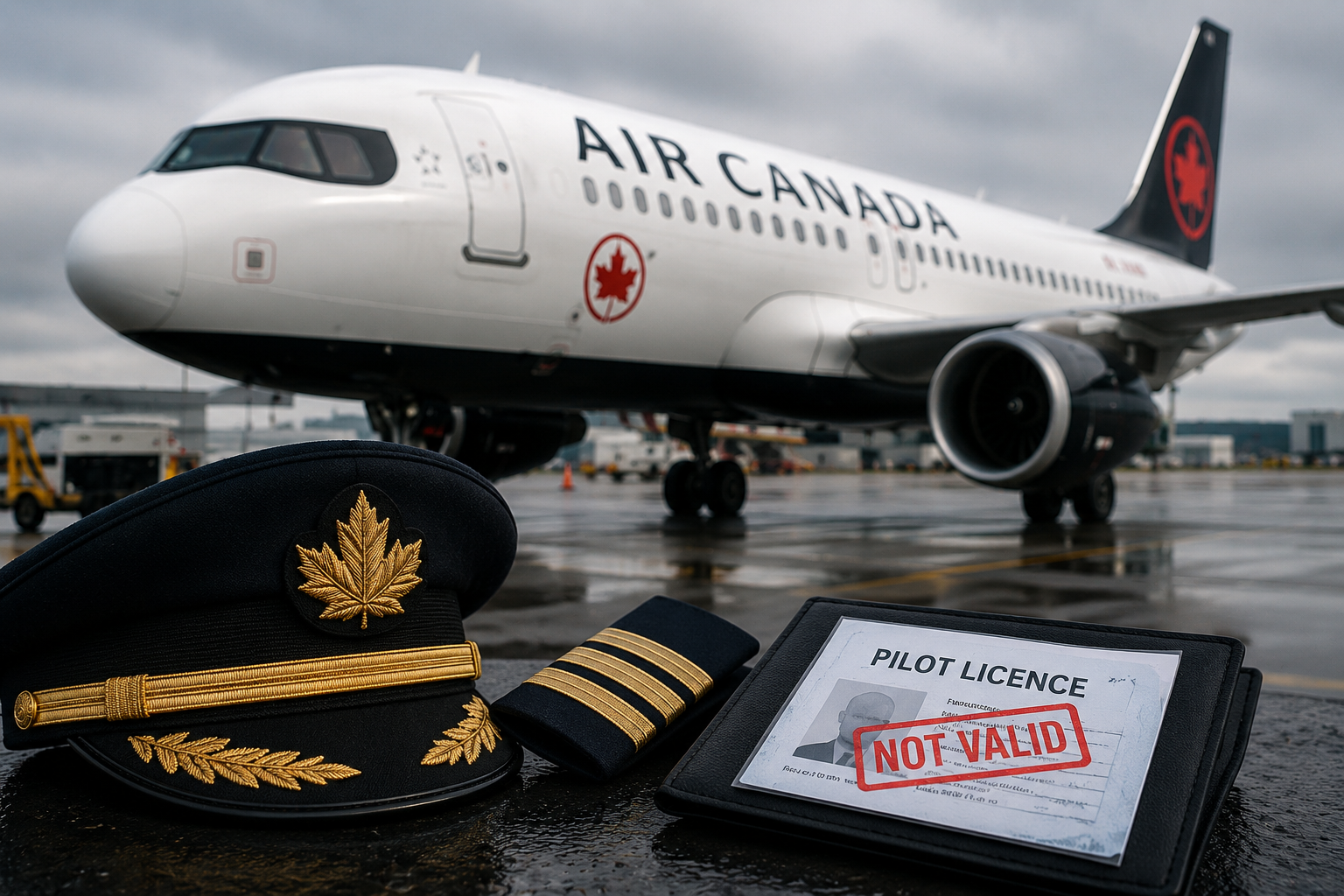
Canadian authorities have charged a former Air Canada pilot after alleging that he flew commercial aircraft for nearly 17 years without holding the required licence to serve as an airline captain. The case has sparked concerns about aviation oversight and credential verification within the industry.
According to Peel Regional Police, Geoffrey Wall, a 59-year-old former Air Canada captain, allegedly operated more than 900 domestic and international flights between 2009 and 2025 without possessing the mandatory Airline Transport Pilot Licence (ATPL). Investigators claim he used fraudulent documents to misrepresent his qualifications to both Air Canada and regulatory authorities.
Investigation Began After Document Review
Authorities said the investigation, known as “Project Icarus,” started after Transport Canada discovered irregularities during a routine review of pilot documentation. Police allege that Wall held a valid commercial pilot licence but lacked the higher-level certification required to command large commercial passenger aircraft.
Wall now faces multiple charges, including fraud, forgery-related offences, and public mischief. Police also allege that he filed a false report claiming pilot documents had been stolen.
Air Canada Responds
Air Canada stated that the pilot was removed from active duty immediately after the issue was discovered and that the matter was voluntarily reported to Transport Canada. The airline confirmed that the pilot is no longer employed by the company.
The airline emphasized that passenger safety was not compromised. Air Canada noted that all pilots undergo mandatory training every six months and annual flight evaluations conducted by certified examiners. The company has also completed an internal audit and reported no other cases of licensing non-compliance.
Calls for Stronger Oversight
The case has prompted renewed discussion about how professional credentials are verified within the aviation industry. Canadian officials have indicated that they will review the circumstances surrounding the case and determine whether additional safeguards are needed to prevent similar incidents in the future.

Leave a Reply