
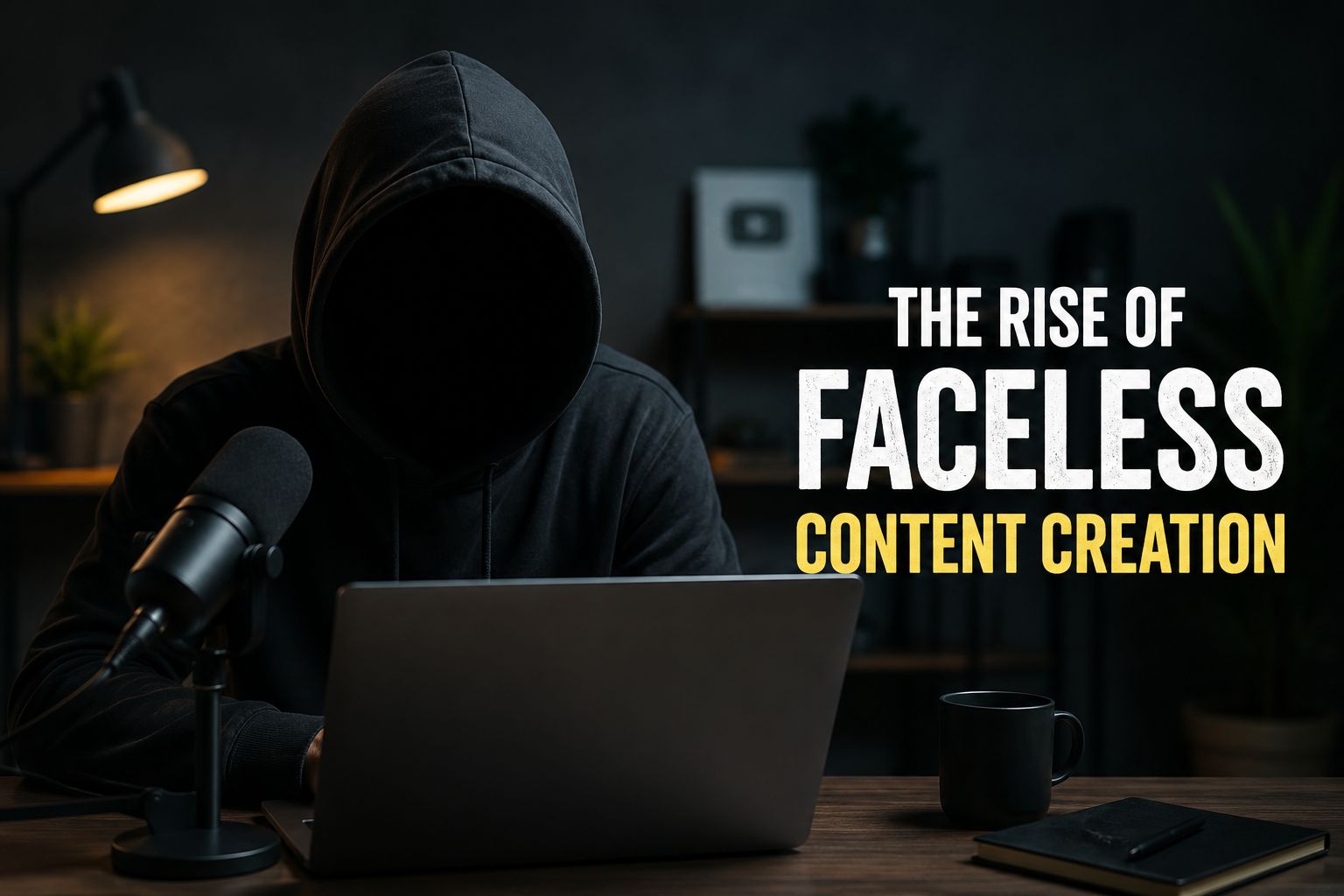
Introduction
In today’s modern world, people often have to show their face to gain an audience, but not so in the new world of faceless content creation.In the new world of content creation, people don’t need to show their face to build an audience.
The no-bullshit-of-showing-up-on-camera, creating a personal brand, and letting your personality carry the audience was the rule of content creation for years. But a mysterious change was afoot. A new generation of creators is creating huge audiences, incomes and doing it all without ever showing their face. Welcome to the time of content creation without faces.
Do you know what is faceless content creation?
Content making is what the name implies — creating video clips, podcasts, newsletters or social media content without putting yourself in the visual spotlight. Consider YouTube channels that share screen recordings and voiceovers, Instagram pages that share aesthetically pleasing content, or TikTok pages that share text and popular audio tracks. The creator is involved in their creation, but not in the image.
It is no longer a little experiment. There are many channels on YouTube today which are viewed without the use of a face. Whether it’s finance chatterboxes, meditation teachers, true crime storytellers, or study-with-me accounts, they’ve all shown there’s no need for the audience to see you to believe you.
Why is it getting so big?
The primary key to accessibility is making things easy to use. There was a big emotional hurdle for traditional content creation — being okay being on camera, okay with how you look, okay with some people sitting there, evaluating you, dissecting you. That was all that was required for that to be sufficient to convince millions of people not to begin.
With faceless content, there is no wall at all. Everyone with a good microphone, screen recorder, or good eye for graphics can now join the creator economy. The level playing field has truly been created.
Technology has also been a huge factor. The tools that allow for AI voice over have made it easier than ever to create quality content without having to actually appear in the video.The tools that enable AI voice over have made it easier than ever to create high-quality content without having to actually be on camera. It used to take a full production setup, but now it can be done from a laptop in an empty room in the spare bedroom.
But why does it work?
Did you know that people tend to connect with content that doesn’t contain any faces? Without a face to look at, viewers mentally fill in what they believe to be what that object looks like. A calm voiceover that explains a concept has a more conversational tone than a lecture. The beauty of an aesthetic video is that it is not a specific person’s video.
There’s also some element of curiosity. Mystery, it seems, is a strong hook to use. There are many channels that create loyal communities around the subject of who is behind the content – and that intrigue invites people back.
The Business Case Is Undeniable
The psychology isn’t all that’s driving this trend of creators going faceless, however, there is a very practical reason: It works better. The more content you can produce, the more you can produce when it doesn’t require your physical presence. You can outsource voiceovers, hire editors and set up systems — basically operate a media business instead of a single performer on a treadmill.
Monetisation options are the same as all creator channels: ad revenue, sponsorships, digital products, affiliate marketing. However, the flexibility in operation is higher. Faceless channels have been sold as businesses and handed over to teams and grown into networks of multiple channels — something almost impossible when your ‘face’ is your brand.
What is not mentioned is that it is not without its difficulties
Fair enough, there are challenges to creating content which is faceless. Trust without a face is hard to establish. People get warmed up towards people more quickly when they can see them, read their expressions and feel like they know them personally. So the only way faceless creators will get paid is by being consistent, high quality and having a distinct voice, literal or otherwise.
Authenticity is also an issue. With the rise of AI-generated voices and automated content on platforms, audiences have become more adept at discerning what feels insincere. The creators who are successful don’t shortcut the process; they are putting thought, skill, and care into the creation. A person’s face might be obscured, but the humanity of the content should still be there.
It is time to rethink what a personal brand is.It’s time for a new definition of a personal brand.
In essence, what faceless content creation has done is cause a change in the definition of a “personal brand.” Well, a brand doesn’t necessarily need to be a face. It may be a colour scheme, a tone of voice, a particular perspective or a specialty that is so popular that every time you pick up the phone, you know what to expect.
Now creators who previously felt left out of the digital economy due to anxiety, privacy concerns, cultural reasons or simply not wanting to be on camera have a viable and viable option to go forward.
Conclusion
The trend of creating content without faces isn’t going anywhere, it’s a loophole. It’s a true paradigm shift in thinking about creativity, influence and audience building online. It’s a testament to the fact that the 21st century is an attention economy and what you say and how you say it is a lot more important than how you look saying it.
This is the time you’ve been waiting for to get your hands dirty and get something created without showing your face.