


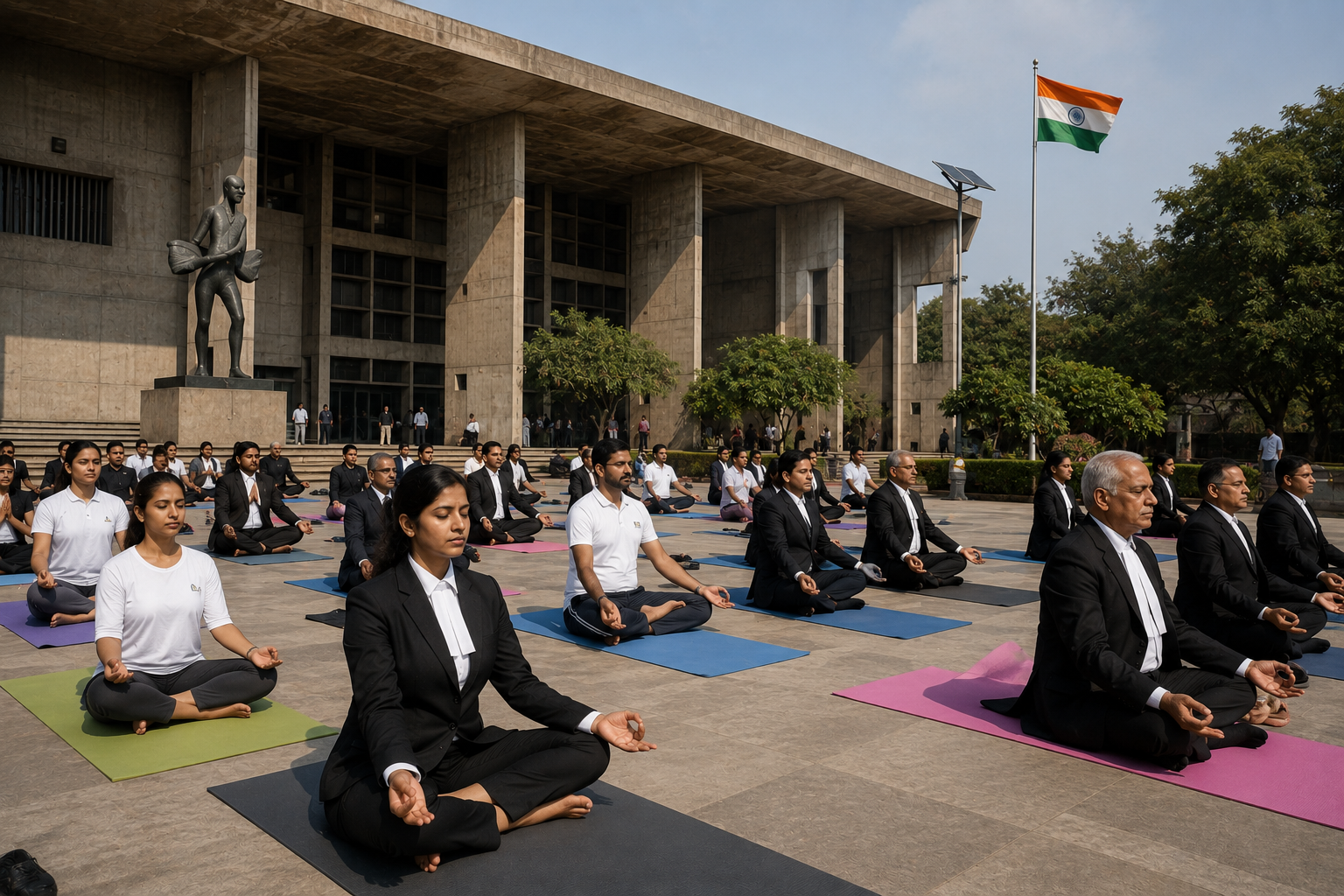
An unusual situation was witnessed at the Punjab and Haryana High Court when no regular judicial matters were listed on the court’s cause list, while activities related to the observance of International Yoga Day occupied the day’s schedule. The development attracted attention within legal circles, as cause lists ordinarily contain hundreds of matters scheduled for hearing before different benches.
A cause list serves as the official schedule of cases fixed for hearing on a particular day and is a key component of judicial administration. It enables lawyers, litigants, and court officials to track proceedings and ensure the smooth functioning of the justice delivery system. The absence of regular listed cases therefore stood out as a rare occurrence for one of the country’s busiest High Courts.
The day was primarily devoted to International Yoga Day-related activities organized within the judicial establishment. Judges, judicial officers, advocates, court employees, law students, and administrative staff reportedly participated in yoga sessions and wellness programs aimed at promoting physical fitness, mental well-being, stress management, and healthier work practices.
Court administration officials emphasized that the observance formed part of broader nationwide celebrations of International Yoga Day, which is marked annually across government institutions, educational establishments, and public organizations. Authorities clarified that while no regular matters appeared on the cause list, mechanisms remained available for urgent judicial work, including emergency hearings and other matters requiring immediate attention, in accordance with established procedures.
Members of the legal fraternity expressed mixed reactions. Some advocates welcomed the focus on wellness, noting that legal professionals often work under intense pressure and could benefit from initiatives promoting mental and physical health. Others stressed the importance of ensuring that access to justice remains uninterrupted and that litigants are not inconvenienced by administrative adjustments.
Legal experts observed that balancing employee well-being with judicial efficiency remains an important objective for modern institutions. They noted that wellness initiatives can contribute positively to workplace productivity, provided they are implemented without compromising the core function of timely justice delivery.
The observance highlighted both the growing emphasis on holistic well-being and the continuing importance of maintaining public confidence in the judicial system.